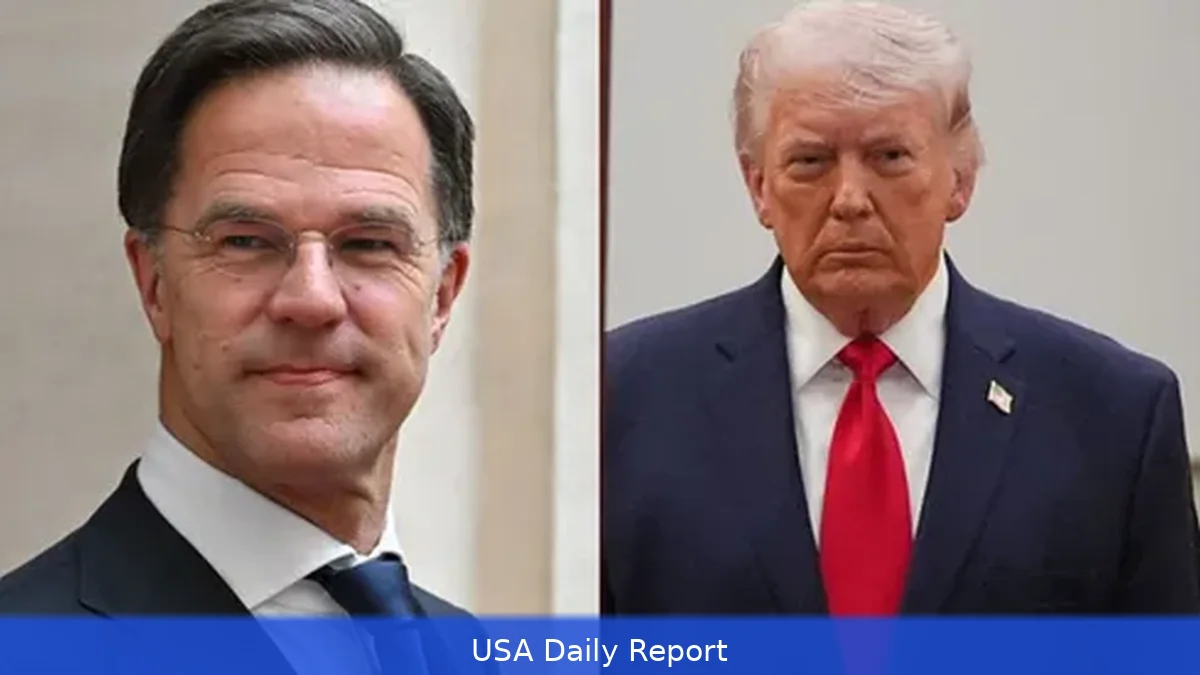
Former President Donald Trump met with NATO's Secretary General this week, aiming to strengthen the alliance’s ties as tensions simmer in the Gulf region. Despite a declared ceasefire between the U.S. And Iran, attacks continue to ripple across the area, raising questions about the stability of the fragile peace and its implications for American security and global diplomacy.
High-Level Diplomatic Talks Amid Unrest
In a rare meeting, Donald Trump and NATO Secretary General Jens Stoltenberg convened to discuss the evolving strategic partnership between the United States and NATO. The talks happened while violence keeps flaring up in the Gulf, even though the U.S. and Iran recently announced a ceasefire. Both leaders stressed working together to tackle new security threats and keep Western influence strong in this unstable region.
Right now, trump, who remains an influential figure in American politics, highlighted NATO’s role in countering threats posed by Iran and other regional actors. Stoltenberg reaffirmed NATO’s commitment to collective defense and expressed support for efforts to de-escalate conflicts that could destabilize global markets and energy supplies.
Ceasefire Claims and Conflicting Narratives
The ceasefire, brokered between the U.S. And Iran, was intended to curb hostilities after months of rising tensions that threatened to spiral into open conflict. However, attacks persist across the Gulf, underscoring the difficulty of enforcing peace agreements in a region where proxy conflicts and sectarian rivalries run deep.
Iran’s government insists the ceasefire extends to Lebanon, where its allied groups wield significant influence. The Iranian view suggests a broader regional truce that could reduce violence on multiple fronts.
But Israel and Trump reject this interpretation, arguing that the fighting in Lebanon falls outside the ceasefire’s scope and that Iranian-backed militias remain active provocateurs.
Israel’s stance reflects its ongoing concerns about Hezbollah’s military buildup and cross-border attacks. This disagreement complicates efforts to stabilize the region and threatens to draw the U.S. And its allies deeper into conflicts that have long defied resolution.
Implications for U.S. Foreign Policy and Security
For the United States, the situation in the Gulf is more than a distant conflict. The region is critical for global energy supplies, with disruptions capable of driving up oil prices and rattling markets worldwide. Persistent violence threatens not only American interests but also the economic stability of its allies in Europe and Asia.
Washington tries to contain Iran’s influence while keeping talks open. The Trump-Stoltenberg meeting signals an intent to coordinate defense and intelligence efforts within NATO, ensuring a united front against destabilizing actions in the Middle East.
But attacks keep happening despite the ceasefire, showing current strategies aren’t working well. The U.S. Faces the challenge of preventing escalation while avoiding deeper military entanglement. Policymakers must weigh the risks of confrontation against diplomatic engagement, a tightrope that has defined American involvement in the region for decades.
Economic Effects and Energy Concerns
Instability in the Gulf hits global oil markets hard. Even minor disruptions in shipping routes or production can trigger price spikes, affecting everything from gasoline costs in the U.S. To inflation worldwide. Investors watch the region closely, adjusting portfolios based on the likelihood of conflict or peace.
Energy companies operating in the Gulf also face heightened risks, from security threats to operational interruptions. Insurance premiums rise, and supply chains become more complicated. For consumers, the result could be higher costs at the pump and broader economic ripples affecting goods and services.
On the other hand, any durable peace agreement could stabilize markets and encourage investment. The Trump-Stoltenberg talks may pave the way for NATO to play a more active role in safeguarding vital infrastructure and shipping lanes, contributing to market confidence.
The Broader Geopolitical Context
Thing is, the Gulf region has long been a chessboard for global powers. Iran’s ambitions to expand its influence clash with U.S. And Israeli interests, while other regional players navigate shifting alliances. NATO’s involvement reflects the alliance’s evolving role beyond Europe, adapting to new threats and geopolitical realities.
Trump’s engagement with NATO leadership shows the alliance’s significance in American foreign policy, even as debates continue over burden-sharing and strategic priorities. The collaboration could signal a renewed focus on collective security challenges outside the traditional Euro-Atlantic area.
But the road to peace remains uncertain. Because of disagreements over the ceasefire, ongoing violence, and rivalries, progress will probably be slow and tough. This U.S. And its partners must stay vigilant to prevent a wider conflict that could draw in multiple countries and destabilize global order.
Related Articles
- Iran Emerges Stronger After Ceasefire, Shifting Regional Power Dynamics
- Stocks and Bonds Slide as Oil Surges Amid Rising Middle East Tensions
- New Polymarket Accounts Score Big on Timely US-Iran Ceasefire Bets Amid Rising Tensions
As Trump and NATO chief Stoltenberg seek to strengthen ties amid Gulf tensions, the persistence of violence despite a ceasefire raises tough questions. Will diplomatic efforts hold, or will the region slide back into broader conflict? The answer could shape U.S. Security and economic interests for years to come.


