
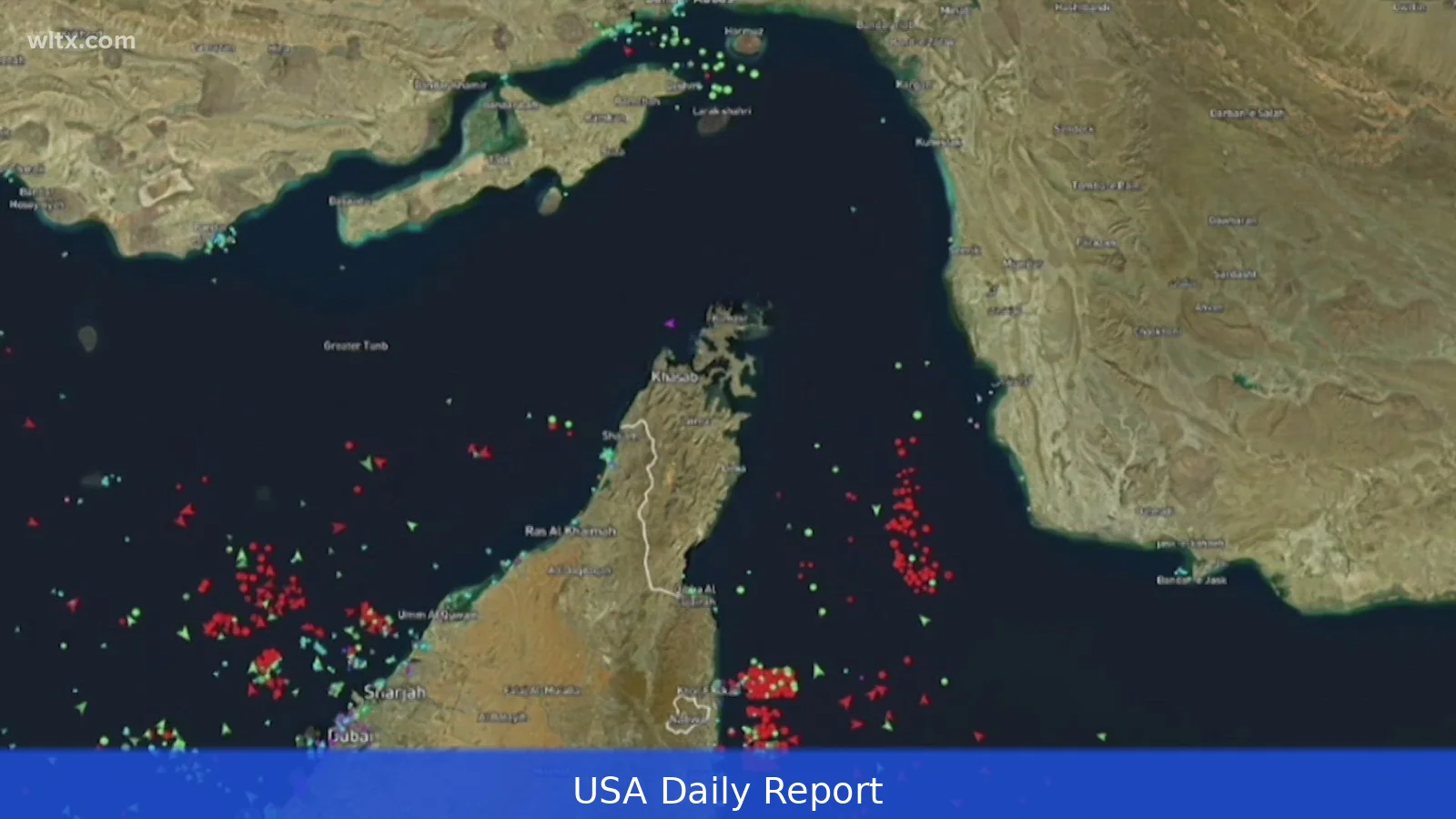
Gas spending jumped 16% for Bank of America cardholders in March. The surge comes as the war in Iran tightens fuel markets and pump prices climb. Consumers and businesses are already feeling the squeeze.
Immediate pain at the pump
Bank of America cardholders reportedly saw a notable jump in gasoline spending in March — about 16% higher than in February, according to card-spend reports. That kind of jump pinches wallets fast, especially for households already squeezed by high rents and mortgage payments. The national average price at the pump has shot past $4 a gallon this month, with state-by-state pockets, like California, seeing prices near $6 a gallon.
Crude benchmarks have been trading near $110 a barrel as markets react to disruptions tied to the Iran war. JPMorgan's commodity team warned that if the Strait of Hormuz is effectively shut for weeks, U.S. Retail prices could climb above $5 a gallon, with more acute shortages in Asia and parts of Africa and Europe. The bank's forecast also suggested higher pump prices could add roughly $150 billion in extra gas spending across the U.S. This year.
Small business and big carriers adjust
Some businesses are already shifting costs onto customers. United Airlines and JetBlue raised baggage fees this week as jet fuel surges raised operating bills. Amazon announced a 3.5% fuel surcharge for sellers who use its platform. Smaller operators, though, have fewer options.
"We are in a bit of a Catch-22," said Nick Friedman, co-founder of Tampa-based College Hunks Hauling Junk and Moving. "Our fear would be if we start raising prices it will hurt our customers." Friedman said fuel historically made up 3% to 5% of revenue for his company; since the Iran war began that line item has climbed to about 6% to 10%.
The margin squeeze is real for small operators — it's cutting into profits on every delivery and move. Trucking-dependent services and local delivery firms face a hard choice — absorb costs and cut into slim profit margins, or pass them on and risk losing price-sensitive customers. Many franchisees and small operators aren't in a position to add fees and still compete with national chains that can hide fuel costs across larger networks.
Consumers tighten their belts
MassMutual Wealth Chief Investment Officer Daken Vanderburg framed higher fuel costs as a de facto tax on households. "Discretionary spending is typically where the cycle starts. Consumers pull back from items which are discretionary first," Vanderburg said. "If the war and its disruption is short, consumers will dip into savings and weather the higher costs.
But a longer-duration conflict will cause consumers to cut back."
Thing is, many Americans already cut nonessential spending during recent months. Add this fuel shock and the pattern could accelerate: dining out, travel and big-ticket discretionary purchases often get trimmed first. That pullback would slow growth and put real pressure on businesses that rely on discretionary consumer spending.

Why the Strait of Hormuz matters
The Strait of Hormuz is a narrow chokepoint through which a substantial share of global oil shipments transit. Disruptions there ripple quickly through global markets. JPMorgan analysts said Asia tends to feel physical shortages first because of inventory and shipping patterns; the U.S. Tends to lag into the back of the queue for tight supplies but still sees higher prices at retail.
That geographic sequencing helps explain why some nations have already reported shortages and rationing while the U.S. Faces price pain but fewer outright supply outages. Still, higher crude benchmarks push refining and wholesale fuel costs up, and those costs get reflected at the pump.
Macro effects and political fallout
Higher gasoline bills have political consequences. JPMorgan economists noted that rising fuel costs could erode the benefits of recent tax cuts for households, effectively shrinking disposable income. Politicians on both sides of the aisle are likely to feel pressure: consumers want relief, and lawmakers may be pushed to seek policy responses ranging from strategic stock releases to calls for longer-term domestic energy measures.
Republican and Democratic policymakers have already begun debating options. Some argue for releasing oil from strategic reserves to blunt a short-term spike. Others say that won't solve the root problem — a war disrupting shipments — and that such moves only provide temporary relief. Still, every policy option carries trade-offs and timing questions.
Regional winners and losers
Energy producers and some parts of the oil-services sector benefit from higher prices. Drill-rig operators, pipeline services and refineries with spare capacity can see revenue gains. For the wider economy, drillers and some oil-service firms could gain, while most consumers lose purchasing power. Higher energy bills transfer purchasing power from consumers to energy producers and carriers.
Export-dependent economies and regions that import refined fuels may face sharper pain, with reported shortages already in parts of Asia and Africa. For the U.S., the immediate risk is more about price than availability — but price alone can dent spending, confidence and growth.
What households should expect next
Gas prices swing quickly — they've already topped $4 a gallon nationally this month. If the Iran conflict eases and shipping lanes reopen calmly, crude could retreat and so could pump prices. If tensions flare and the Strait of Hormuz stays restricted, JPMorgan's analysis suggests the U.S. Retail average could breach $5 a gallon and push broader consumer spending lower.
For now, consumers are dealing with higher monthly bills. That affects not just commuting and road travel but the cost of goods and services that rely on trucking and shipping. Companies that transport goods — from furniture movers to grocery distributors — will either face smaller margins or raise prices that land on consumers' tabs.
Some firms are already reacting: airlines have hiked baggage fees and Amazon has added a 3.5% fuel surcharge for sellers.rom major platforms; and small operators are re-evaluating route density and scheduling to reduce fuel burn. Those are immediate, pragmatic steps — but they don't erase the underlying market pressure caused by higher crude prices.
Longer-term questions
Are we seeing a temporary shock or a sustained shift in energy costs? The answer will affect investment, hiring and fiscal calculations. Energy volatility can prompt companies to hedge more aggressively, shift supply chains, or invest in fuel efficiency. It can also change consumer behavior for months or years — more telecommuting, different vehicle choices, or altered travel plans.
Bottom line: for now, higher pump prices are a real and present drag on household budgets. That matters politically, it matters for businesses that rely on fuel, and it matters for the pace of economic growth this year.
Related Articles
- Oil Falls as Stocks Near Record on Peace Hopes
- U.S. military turns back six ships after Iran blockade
- Iran national held in France returns home
JPMorgan warned gas prices could top $5 a gallon if the Strait of Hormuz remains effectively closed by mid-April.
This article was created with AI assistance.


