
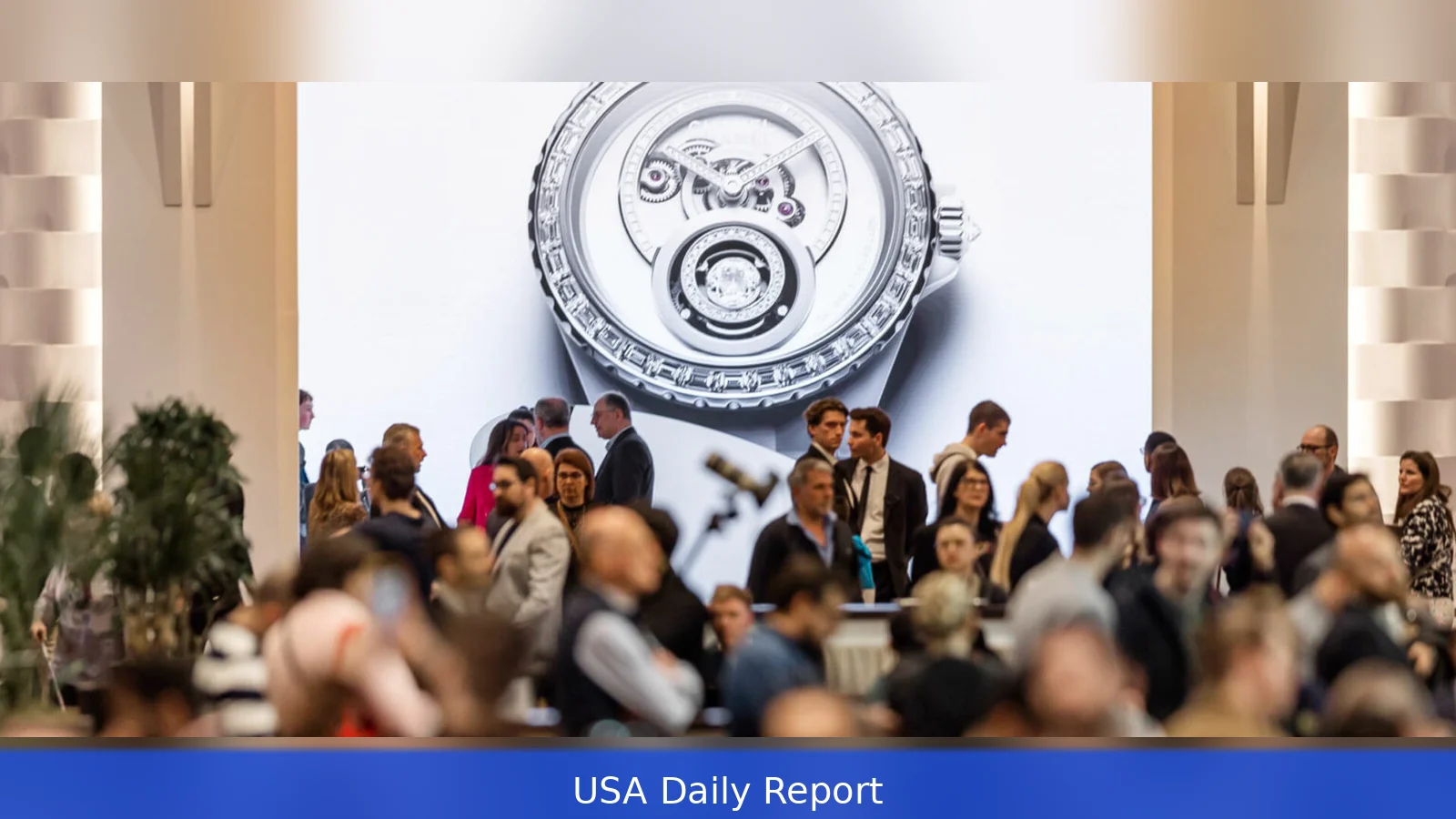
Geneva's Watches and Wonders opened under a cold shadow.
Fair opens as geopolitics bites
Three days into the Geneva show, the glint of gold and enamel hasn't gone away. The annual Watches and Wonders gathering still drew a crowd of collectors, buyers and brand teams. But the mood is more cautious than celebratory.
The fair remains the key event where the industry reveals its upcoming trends.
Organizers said around 65 brands are exhibiting at the event that normally pulls about 60,000 visitors, and celebrity appearances showd the pageantry — tennis star Jannik Sinner and actor Patrick Dempsey were on hand for the opening. Mathieu Humair, chief executive officer of Watches and Wonders, said the show has seen few outright cancellations and that travel plans have been adapted, adding they're expecting a strong turnout this edition. Even so, the flash and the photo ops are happening against a backdrop of economic worries tied to conflict in the Middle East.
While displays and launches continue, concerns about demand and supply persist.
How the Iran war is rippling through the market
The U.S. And Israeli military campaign against Iran, which began Feb. 28, has had broad knock-on effects, pushing energy prices higher, slowing shipments of key commodities and disrupting global air travel. Those shifts matter to a product that depends on wealthy tourists, smooth logistics and stable currencies.
Oliver Müller, founder of Swiss consultancy LuxeConsult, said the Middle East market represents roughly 10% of total Swiss watch exports — a sizeable share. “Some markets in the Middle East are totally halted,” he said, and he noted that in places such as the United Arab Emirates about 60% of sales are done with tourists, a cohort that has thinned with reduced travel and rising regional tensions.
Boutiques in Dubai, Abu Dhabi, and other Gulf hubs feel the impact directly as they rely on tourists to buy their most expensive watches. Those buyers are often in the market for watches priced well over 50,000 Swiss francs — more than $63,000 — a segment that has been one of the few bright spots in recent years.
Prices, tariffs and concentration at the top
Gold and silver prices rose last year, and although they've dropped from their highs, the cost of raw materials still pushes up production and retail prices. The industry was already adjusting to tariffs introduced a year ago by U.S. President Donald Trump, which dealers and analysts say pushed up costs on some models sold in the United States.
Morgan Stanley, together with LuxeConsult, reported that Swiss watch exports fell about 1.7% in value last year, marking a second straight year of contraction. Factors included a strong Swiss franc relative to the dollar and euro and weaker demand in some regions.

Industry analyst Ming Liu said the market entered 2026 still dealing with fallout from last year's tariff debate and other uncertainties. “When you look back at a year ago, the sort of theme was: The tariffs and the uncertainty,” Liu said. “Unfortunately, we aren’t anywhere closer to certainty, probably even less with what’s happening in the Middle East.”
At the retail end the market remains highly concentrated: four houses — Rolex, Cartier, Patek Philippe and Omega — account for more than half of Switzerland's retail watch market. That concentration means the biggest brands can often ride out shocks better than smaller, independent makers.
Supply chains and production risks
Luxury watchmaking combines craftsmanship with a global supply chain. Movements and cases are made in Switzerland, but cases, dials and marketing rely on parts, shipments and air travel to move people and product. Flight disruptions and rising fuel costs slow deliveries and increase freight expenses, squeezing margins on these already costly items.
Producers also worry about availability of metals and components. Rising precious-metal prices stoke input-cost worries; slow fertilizer shipments and broader commodity disruptions add to the sense that global trade flows are less predictable. For small ateliers that time production carefully, even brief interruptions can delay deliveries of bespoke pieces and repair work.
What it means for U.S. Consumers and sellers
American buyers make up a key slice of luxury demand. Tariffs introduced by the U.S. Government have already complicated price lists for some models sold in the United States, and further swings in energy prices and inflation could affect shoppers' appetite for discretionary purchases. Retailers in U.S. Gateway cities that cater to affluent travelers — New York, Miami, Los Angeles — could see traffic shift if international tourism patterns change.
U.S.-based collectors and dealers also face currency effects. A strong Swiss franc raises the local price for buyers paying in dollars, while market disruption can push collectors into or out of the market, depending on whether they see watches as safe stores of value or as luxury items to delay.
Still, the top of the market has shown resilience: hand-crafted, ultra-luxury pieces have been a growth area even as mid-range mechanical watch sales soften. That split means one retailer’s loss can be another's gain, as customers trade up or pause purchases.
Industry response and strategies
Brands and retailers are adjusting. Some are shifting marketing to domestic buyers rather than relying solely on tourist flows. Others are accelerating launches and collaborations to maintain momentum and support retail partners. Mathieu Humair said event organizers have adapted logistics and expect high visitor numbers this edition, signaling a desire to keep business moving despite uncertainty.
Manufacturers keep a close eye on their inventories and pricing strategies. Limited production and strong secondary-market values for certain models can keep demand alive even when primary-market sales dip. For independents, the challenge is harder: they lack the scale to absorb rising costs and may have to rethink production timing or raise prices.
Political stakes and economic ripple effects
Governments in Europe and the United States will be monitoring how sanctions, military actions and tariffs feed into trade flows and inflation. Higher energy costs can add to inflationary pressure, which central banks track closely when weighing interest-rate moves. For now, the immediate watch for policy makers is whether regional conflict pushes prices and consumer expectations in a way that complicates already fragile recoveries.
For Swiss exporters, the geographic mix of sales matters. A pause in Gulf sales means makers need other regions to pick up slack. The U.S. Market could do some of that work, but tariffs and currency moves make the substitution imperfect.
Market outlook
Watchmakers at the fair urged calm but acknowledged the strain. Executives say they plan product rollouts, boutique restocking and dealer support while watching travel and energy costs. Some smaller brands are bracing for tougher months; the biggest houses are preparing for patchy patterns of demand but expect to keep margins on sought-after models.
Basically, the industry is trying to keep growth engines firing while dealing with shocks it couldn't have planned for months ago.
Related Articles
“Some markets in the Middle East are totally halted,” said Oliver Müller, founder of LuxeConsult.
This article was created with AI assistance.


