
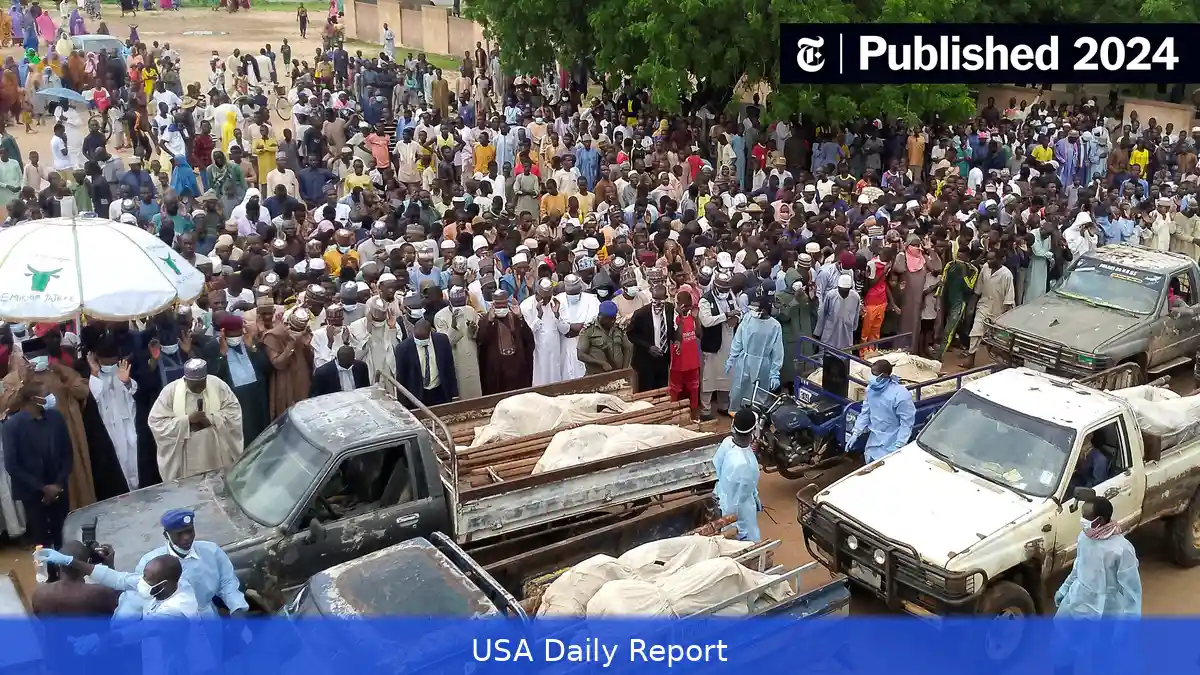
Nearly 400 people have been sentenced in Nigeria after a mass trial in the capital. The cases tie suspects to Boko Haram and the Islamic State West Africa Province.
Mass sentencing after large-scale trial
Nigerian federal courts handed down sentences to nearly 400 defendants following prosecutions that stem from the long-running insurgency in the country's north and northeast. The trials took place at the federal high court in Abuja, where more than 500 suspects faced charges related either to taking part directly in attacks or to supporting militants through funding, supplying arms, or providing logistical help.
This wasn’t just a few cases spread out over time. Instead, large groups of accused people were processed together in the same court, showing how Nigeria’s justice system is tackling years of violence.
The defendants were accused on various counts related to membership in and support for Boko Haram or the Islamic State West Africa Province, groups that have waged an insurgency across parts of Nigeria for years. Prosecutors in Abuja presented charges aimed at both fighters and those alleged to have helped militants behind the lines.
Sentences ranged across the docket. Some defendants were judged to have taken part in attacks, while others were convicted for supplying money, weaponry or logistical help. The court's decisions reflect an emphasis on punishing not only battlefield activity but also the networks that sustain it.
Legal process and questions about scale
The scale of the prosecutions raised immediate questions about evidence, due process and the capacity of courts to handle mass terrorism cases.
Trials of hundreds of accused people in a single venue put strain on legal resources — from judges and prosecutors to defense lawyers and interpreters.
Trying over 500 suspects in one court puts a lot of pressure on the system. Defense lawyers need time to go through files, judges have to review tons of evidence, and victims want clear results.
Some observers say mass trials speed up justice, but they can also mean less time to look closely at each person’s role. Prosecutors argued the scale was necessary because attacks, recruitment and the financing of violence have created urgent security needs across several states.
At the same time, human rights advocates often call for careful, individualized hearings in terrorism cases. Balancing swift justice and fair trials is a recurring tension in countries confronting armed groups.
Security implications for Nigeria and the region
The sentencing wave comes as Nigerian authorities continue to confront a fragmented insurgency. Boko Haram and the Islamic State West Africa Province have split into factions over the years, complicating both military responses and efforts to negotiate for peace.
Military operations have pushed some fighters out of strongholds, but militants have persisted through guerrilla tactics and by drawing on local networks for supplies and recruits. The convictions aim to disrupt those support chains.

Courts can’t end the insurgency by themselves. Fighting it also needs police work, development projects, social healing, and sharing intelligence. Putting supporters behind bars may reduce the logistical reach of these groups — but the underlying drivers of violence remain complex.
There's also a regional angle. Cross-border movement of fighters and weapons affects neighboring states.
Nigeria's legal actions send a message to partners in the Lake Chad basin and the Sahel about its approach to tackling militant networks.
What the decisions mean for international partners
International governments and organizations that work with Nigeria on counterterrorism will be watching how convictions are carried out and how due process is preserved. Cooperation often rests on mutual confidence in legal standards and the ability to share intelligence and operational support responsibly.
Nigeria is a key security partner in West Africa. Assistance from external governments has included training, intelligence-sharing and, at times, equipment. Those partnerships tend to be more robust when judicial outcomes are seen as legitimate and when courts are viewed as fair and transparent.
Some foreign partners support breaking up the funding and supply chains. But others worry if mass trials seem rushed or if defendants don’t get proper legal help. Those concerns can affect the tone and depth of future cooperation.
Economic and political consequences
Prolonged insecurity in northern Nigeria has economic costs that ripple beyond the immediate conflict zones. Farmers abandon fields. Local markets shrink. Investors avoid regions seen as unstable. Sentencing alleged supporters could help restore order locally — and that could ease some economic pressures.
But the effect won't be immediate. Courts can remove individuals from operational networks, yet replacing the incentives that draw people into illicit economies takes time and money. Rehabilitation programs, jobs and infrastructure investments are part of a longer-term solution.
Politically, these mass convictions probably help the government show it’s fighting violent groups. That can resonate with a public tired of attacks. At the same time, questions about fairness and the handling of detainees can become political issues themselves — domestically and with outside partners that press for human rights safeguards.
Implications for the United States
The U.S. Has interests in West African security that range from counterterrorism cooperation to protecting trade and humanitarian priorities. Nigerian court rulings can change the operational picture for U.S. Agencies engaged in the region.
U.S. Partners that provide training and technical support will monitor whether those engagements are paired with judicial standards that meet international expectations. Collaborative programs often require trust that evidence was collected legally and prosecutions upheld basic rights.
On economic ties, investors consider stability when evaluating opportunities in West Africa. If courts help stabilize parts of Nigeria, that could make some local markets more attractive over time. But investors also look for rule-of-law assurances — and concerns about mass trials can add uncertainty.
Finally, the rulings have implications for humanitarian operations. Displacement patterns and the security of aid corridors are affected by how effectively states dismantle militant networks. International relief agencies watch such developments closely because access to vulnerable populations depends on relative calm and predictable governance.
Point is, court rulings in Abuja matter beyond Nigeria's borders — to regional neighbors, to international partners, and to organizations that respond to the crisis on the ground.
What comes next
The immediate next steps will include the enforcement of sentences and possible appeals from convicted defendants. Legal teams may mount challenges, and scrutiny from rights groups and foreign governments could follow.
At the same time, authorities face the task of preventing new recruitment and rebuilding communities affected by years of conflict. Sentences can remove current operatives. But preventing a future generation from joining violent groups calls for policies that reach beyond the courtroom.
Related Articles
- Gardaí clear Whitegate blockade and escort fuel tankers back into Cork refinery
More than 500 suspects were put on trial in the federal high court in Abuja on charges ranging from participating in attacks to supplying arms, funding or providing logistical support.
This article was created with AI assistance.


