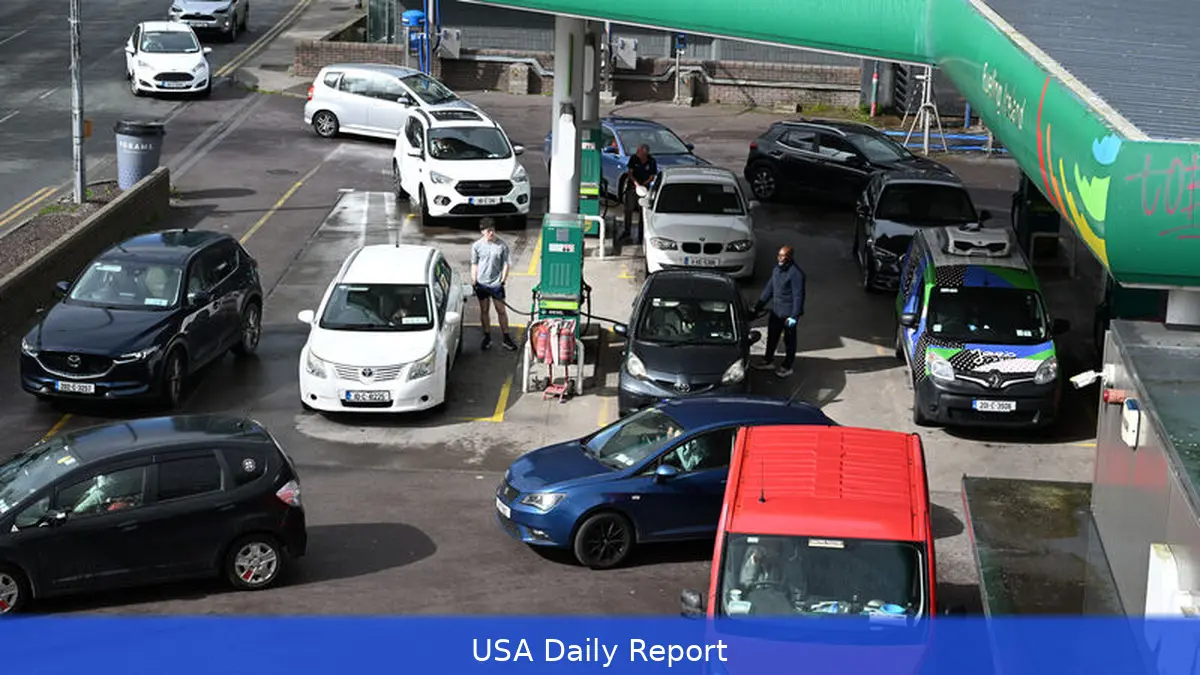
Police pushed back demonstrators at a Cork refinery on Friday. The move followed days of blockades that have snarled transport and left hundreds of stations running dry.
Police confront protesters at fuel depot
The confrontation in County Cork on Friday was the result of ongoing tensions. After four days of nationwide action by hauliers, farmers and other groups protesting rising fuel costs, officers moved to clear access to a major fuel depot. The BBC reported that police used pepper spray while pushing back demonstrators at the site.
That use of force followed warning notices from the national police force, An Garda Síochána, which said the blockades were threatening critical supplies and were illegal. "This isn't tolerable and is against the law," the force said, using that language publicly as it urged order on road and port blockades that had choked parts of Dublin and other regions.
Authorities also faced protesters at ports and on motorways. The Guardian reported that the blockade of ports and at least one refinery left Ireland close to turning away oil deliveries and jeopardized the country's supply chain. The taoiseach, Micheál Martin, called the disruption "unconscionable, it's illogical," as the government weighed options to reopen key routes and facilities.
One result was a growing shortage at retail pumps. About 100 filling stations had run out of fuel by Friday, and officials warned that number could rise to 500 as blockades continued, according to reporting by the Guardian.
Why the protest erupted
The immediate trigger is higher diesel and petrol prices. Diesel in the Republic of Ireland has climbed from roughly €1.70 a litre to about €2.17 in recent weeks, while petrol has risen similarly — by as much as 25 cents a litre at many stations, the BBC reported. Drivers and transport operators say the jump has made operations unsustainable.
That price pressure is tied to larger shifts in global oil markets. The Guardian pointed to higher crude prices after a series of strikes between the United States, Israel and Iran starting on Feb. 28, which helped push fuel costs up across Europe. Protesters have seized on that squeeze to demand immediate relief for haulage and farming sectors.
Christopher Duffy, a spokesperson for the Dublin protest, told reporters the action would continue until there was detail on "a serious reduction in our costs." The government has held talks with representative bodies from haulage and farming industries; a meeting on Friday continued into the weekend without protesters present.
Right now, the state has put the army on standby to help remove blockades if necessary, and talks with sector representatives are ongoing. Simon Harris, Ireland's deputy prime minister, warned bluntly that "the blockade has to end," while Justice Minister Jim O'Callaghan said outside actors such as British activist Tommy Robinson were trying to manipulate the demonstrations.
Economic ripple effects at home and abroad
Supply disruption has immediate domestic consequences. Blocked ports and logistics hubs interrupted deliveries of food, animal feed and fuel, the police and government officials warned. That created a cascading series of shortages at retail pumps and forced motorists to ration fuel purchases; officials asked people to buy only what they immediately needed.
The strikes have also hit Ireland's economy at a delicate time. The government is preparing what Simon Harris called a "substantial and significant" package of support for affected sectors, focusing on haulage and farming. Talks were continuing into the weekend and officials signaled more emergency measures could be announced.
The impact has spread beyond Ireland. The Guardian and BBC both noted protests in Norway where lorry drivers staged a "diesel roar" in solidarity, closing roads in and around Oslo. That shows how a local labor action can spread across borders when fuel prices spike, amplifying strain on continental supply chains and adding volatility to energy markets.
Global oil markets are already on edge. The recent rise in crude linked to conflict in the Middle East has convulsed markets and helped push pump prices higher in many countries. Those shifts feed into broader inflation trends and add pressure on governments to deliver relief to households and businesses.
Political fallout and public reaction
Protesters say they have no other option. In farming and haulage communities, diesel is a core operating cost. When fuel moves sharply higher, margins evaporate fast. That has helped the demonstrations attract wide participation across regions and industry groups.
Government leaders framed the actions differently. Micheál Martin and other ministers described the blockades as an attack on national infrastructure and warned that essential supplies were being endangered. Officials have been careful to document disruptions and justify harsher enforcement steps, including calling in the military as a contingency.
Point is, the standoff is as much political as it's economic. The justice minister explicitly accused outside agitators of trying to influence Ireland's unrest, a claim that could harden public opinion against the demonstrators. But many voters are sympathetic to drivers and farmers struggling with costs that have risen sharply over weeks.
So far, talks haven't produced a breakthrough. Government negotiators have met with industry representatives but protesters remain skeptical that pledged packages will deliver the immediate relief they seek. That gap risks prolonging disruption and forcing more decisive action from state authorities.
What it means for the United States
The U.S. is not directly involved in these blockades. Still, global fuel markets link distant events to American consumers and companies. When crude prices jump because of geopolitical conflict in the Middle East, U.S. Markets often feel the impact through higher wholesale petroleum costs and tighter refining margins.
U.S. Traders and policymakers watch European disruptions because they can push shipping patterns, insurance costs and tanker demand in new directions. If port closures or refinery bottlenecks persist in Ireland or spread across Europe, they can tighten supplies in regional markets and add upward pressure to global prices already elevated by conflict-related risks.
Beyond markets, the episode offers a political reminder for U.S. Leaders. Energy price shocks can quickly become national crises when supply chains kink and voters face higher costs at the pump and at the grocery store. That can prompt rapid policy responses — subsidies, tax relief, or regulatory moves — aimed at stabilizing prices and keeping goods moving.
Look, America has its own domestic debates about fuel costs and supply chain resilience. The Irish protests show how fast consumer pain can translate into disruptive action, and how governments scramble to respond when logistics break down. For U.S. Companies with ties to European supply chains, the protests are a cautionary sign: political and labor unrest tied to commodity prices can have real operational consequences.
Negotiations and next steps
Tense negotiations will determine how quickly normal service resumes. Government ministers say more talks are planned, and Simon Harris indicated the state is preparing targeted support measures while keeping enforcement options open. Protest leaders, represented in part by spokespeople like Christopher Duffy, say they'll keep pressure on until they see concrete cost relief.
That mix of negotiation and enforcement will probably define the coming days. If talks stall and blockades persist, expect authorities to use legal powers to clear routes and reopen key ports. But if the government can deliver fast, tangible help for operators hit by fuel costs, protesters might step down and allow traffic to resume.
Either way, the disruptions have already left a mark: dozens of stations without fuel, strained deliveries of essentials, and a political fight over how to respond to sudden, steep energy price increases.
Related Articles
- Trump administration unveils 250-foot 'Triumphal Arch' plan for Washington
- Drone strikes hit Odesa ahead of Orthodox Easter ceasefire; 175 prisoners returned in swap
- How Viktor Orbán Pushed a Leading University Out of Hungary — and Why JD Vance Thinks the U.S. Should Copy It
"The blockade has to end," Simon Harris, deputy prime minister of Ireland, said as talks continued.


