
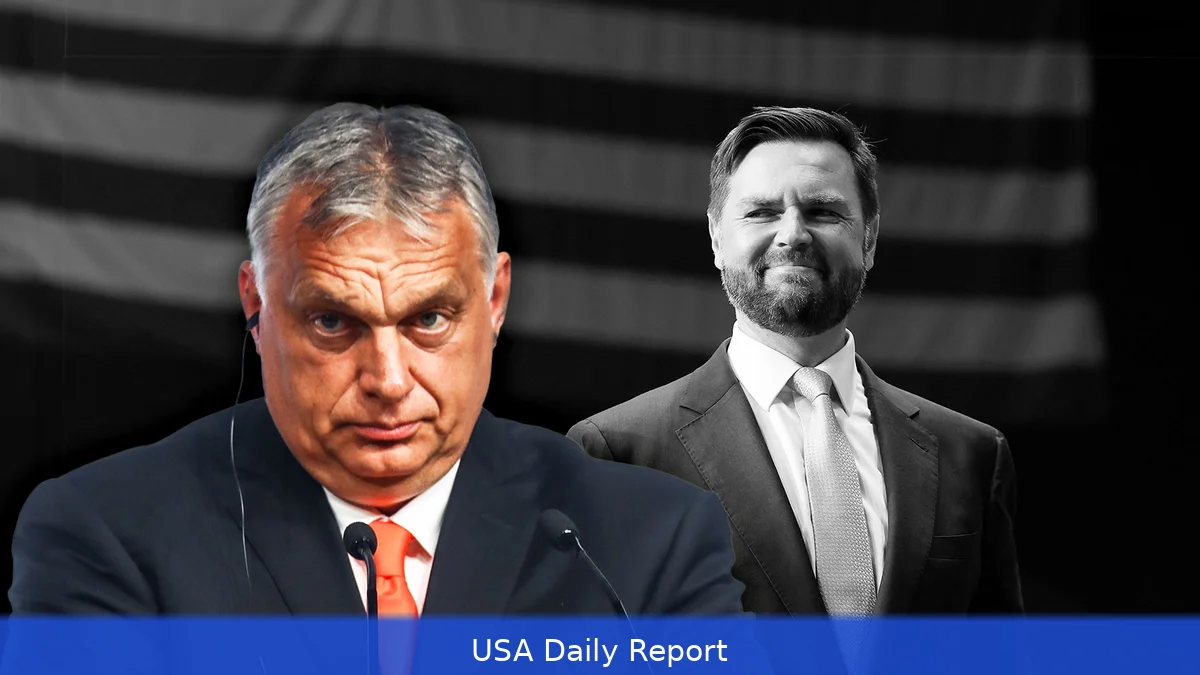
Central European University moved its academic life to Vienna. The move also hollowed out Budapest’s academic life, removing programs and faculty that had been part of the city’s university ecosystem. It also became an example — praised by U.S. Vice President JD Vance.
How a university ended up in exile
Central European University, once a fixture in Budapest, shifted its academic activities roughly 130 miles west to Vienna after a yearslong clash with Hungary’s government. The move followed legislation that, the university said, imposed a set of requirements it couldn't realistically meet. Michael Ignatieff, then rector of Central European University, called the relocation "a dark day for freedom in Hungary".
CEU operated internationally — granting both Hungarian and American degrees and drawing funding and students from abroad. It issued both Hungarian and American qualifications and received foreign funding, which Prime Minister Viktor Orbán accused of giving it an unfair edge over domestic institutions. Orbán has argued the university and organizations tied to outside money interfered in Hungarian life.
The dispute took on a personal edge after Orbán, who once accepted a Soros Foundation scholarship to study at Oxford in 1989, later targeted Soros and his institutions. Orbán accepted a scholarship from George Soros’s foundation in 1989 to study at the University of Oxford.
But Orbán later turned his fire on Soros, the billionaire philanthropist, casting him as the leader of what Orbán described as a "shadow army" of foreign-funded nongovernmental groups. At rallies and in speeches, Orbán has used demeaning language — calling some of those groups "insects" — as part of a broader attack on what he labels globalist influence.
Orbán’s rhetoric and legal actions forced CEU to relocate its academic programs out of Hungary. CEU says the laws passed by Orbán’s government effectively pushed it out, and the campus that remained in Budapest never again hosted the same range of graduate programs it did when it was fully operating there.
JD Vance’s visit and the pitch to American conservatives
Vance traveled to Hungary this week as part of a visit that included public appearances with Orbán ahead of a crucial election Sunday. The vice president has repeatedly praised Orbán’s methods for confronting what he calls liberal dominance in higher education. In 2024, when he was a senator, Vance said: "The closest conservatives have ever gotten to successfully dealing with the left-wing domination of universities is Viktor Orbán’s approach in Hungary. I think his way has to be the model for us — not to eliminate universities, but to give the choice between survival or taking a much less biased approach to teaching."
At a Budapest rally this week, JD Vance reiterated a simpler line: "children should be able to go to school and get educated and not indoctrinated," he told the crowd. That message is aimed at American voters who worry that campuses push political views rather than teach neutral facts.
Vance’s trip was political: he attended rallies and voiced public support for Orbán during a tense election period. He showed up on Orbán’s political terrain at a moment when the Hungarian leader is campaigning hard to hold a grip on power. Vance’s public support for Orbán is striking because the Hungarian prime minister is a polarizing figure inside Europe and beyond, and because a U.S. Vice president praising a foreign leader’s hard-line domestic policies sends signals back home.

What happened in Budapest, and why it caught Washington’s attention
Orbán’s government has framed its campaign against CEU and similar organizations as a defense of national sovereignty and cultural identity. It accuses foreign-funded institutions of trying to shape Hungarian politics and education. Orbán has also pushed back against allegations of antisemitism; he’s highlighted Hungarian efforts, including funding a research institute aimed at combating anti-Jewish hatred and a public alliance with Israeli Prime Minister Benjamin Netanyahu, as evidence that his government isn't hostile to Jews.
Still, critics point to the targeting of Soros, who's Jewish, and say the rhetoric has at times carried antisemitic undertones. Orbán has denied such charges, but the debate hasn't faded.
This matters in Washington because a senior U.S. official — JD Vance — has publicly held up Orbán’s methods as a model for confronting perceived left-leaning dominance on campuses. That matters for domestic politics: Vance’s embrace of a European leader who forced an internationally recognized university out of the country changes the frame of the debate over higher education reform in the United States.
Political ripple effects in the U.S.
Vance’s comments connect two debates that often run separately: how to reform higher education in the U.S., and how U.S. Politicians align with illiberal European leaders. Conservatives who want to push back on perceived campus bias may see Orbán’s actions as a template for hard tactics.
On the campaign trail, Vance and other conservative figures have used university reform as a wedge. Vance’s praise for Orbán suggests those advocating tougher measures in the U.S. Could point to concrete foreign examples when arguing for policy changes, whether that’s tougher accreditation rules, reduced federal research grants to certain institutions, or new oversight mechanisms.
The CEU episode was legally and diplomatically messy, and relocating a whole university across a border is not a straightforward template for U.S. higher-education policy. The European Union and international academic networks rallied around CEU in ways that complicated the outcome. What Vance praised was a pattern of pressure and legislative tactics that can be described without copying the full, messy process CEU experienced.
Where this leaves Hungary and transatlantic ties
Sunday’s election was framed by many observers as an inflection point for Hungary and for the brand of illiberal conservatism associated with Orbán. The result could reshape how much influence Orbánism has inside the European Union and on like-minded politicians abroad.
Washington faces a choice about its relationship with Orbán — whether to maintain close ties with a leader openly praised by the U.S. vice president or to distance itself because of his illiberal tactics.nservatives, or press harder on democratic norms and the independence of academic institutions. Those choices have diplomatic fallout, and they may affect how the U.S. Is perceived when it criticizes other countries for weakening democratic institutions.
Economically, the turbulence around major institutions like CEU signals risks for Budapest’s broader appeal to foreign researchers, donors and students. CEU’s presence had been a marker of international engagement. Its relocation leaves a gap Hungary will have to reckon with, politically and economically.
A final note on rhetoric and real-world effects
Orbán framed his actions against CEU and other NGOs as defending Hungary’s cultural and political space from outside influence. George Soros, the philanthropist at the center of many of Orbán’s attacks, remains a flashpoint in those debates, and Orbán’s language has kept the controversy alive. CEU’s move to Vienna remains a vivid example of how politics and policy can reshape an academic landscape practically overnight.
Whatever the legal technicalities were, the outcome was plain to see: Central European University shifted its core academic operations to Vienna, and one of its former leaders, Michael Ignatieff, called that change "a dark day for freedom in Hungary."
Related Articles
- Viktor Orbán Seeks Fifth Term After 16 Years — Backed by Trump, Aligned with Putin
- Ships Bypass Red Sea, Boosting Refueling Demand at Mauritius and Other African Ports
"Children should be able to go to school and get educated and not indoctrinated," JD Vance, vice president of the United States, told a rally in Budapest.
This article was created with AI assistance.


