
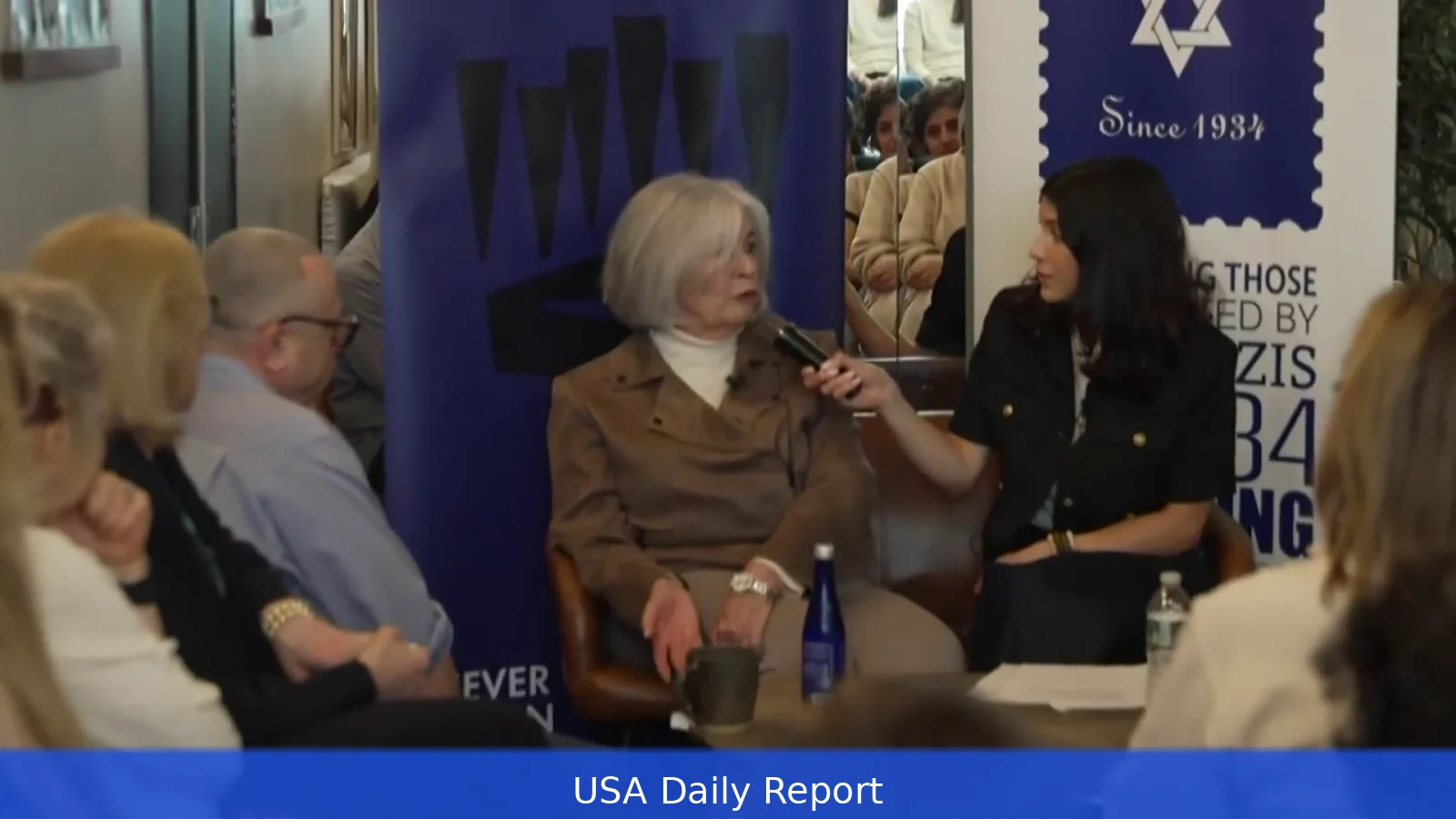
Coffee shops across New York are staging informal events where patrons hear survivors tell their stories.
What 'sip and listen' looks like
On weekday evenings and slow weekend afternoons, small groups gather at neighborhood cafés in New York for what organizers call "sip and listen" sessions. The format is simple: people buy a drink, sit down, and hear a Holocaust survivor speak about their life and experiences. People chat casually during these gatherings instead of sitting through formal lectures. Sam Brock, NBC News correspondent, spoke with a survivor about her involvement in one of the events on April 15, 2026.
The talks tend to last under an hour. Organizers invite survivors to tell a personal story and then open the floor for questions. The setting feels cozy, letting people connect personally while still welcoming a decent-sized crowd. The venues are ordinary urban cafés, not museums or lecture halls, and that shift in setting is part of the idea: make history accessible where people already meet.
Why organizers say these gatherings matter
Younger Americans often miss out on hearing Holocaust stories in school or at memorials. The aim of the "sip and listen" format is to bridge that gap by bringing survivors into civic life in casual settings. Organizers say the events create space for direct conversation—questions that students might not feel comfortable asking in a classroom, or details that formal curricula skip.
Survivors who take part describe the gatherings as a chance to pass on memory and context to people who were born decades later. They tell stories about family, loss, and survival in human terms rather than as distant history. That matters because, they say, firsthand accounts shape public understanding in ways that documents or statistics can't.
Audience and civic impact
Attendance tends to skew younger, according to reporting on the gatherings. Students and young professionals show up, often without much background in Holocaust history beyond what they read in school.
The events attract people who want to know the personal side of history—how ordinary lives were disrupted and rebuilt.
Informal spots also shift how people respond. In a small café people ask direct questions and sometimes bring up contemporary politics or identity. Those conversations can move beyond remembrance to discuss how lessons from the past relate to present-day concerns about prejudice, exclusion, and civic responsibility.
Economic effects for local businesses
For cafés and small venues, these nights bring in customers when business is usually slow. Owners report that events bring in patrons who stay for an hour or more, order drinks and food, and sometimes return for other community programming. That steady, modest boost helps small businesses cover rent and staffing in neighborhoods where margins are thin.

Some cafés partner with community organizations to promote events and manage seating. Others ask for a small suggested donation to help cover speaker travel or stipends. The economics are local and low-scale—these aren't ticketed fundraisers or big polished productions. They're community-driven, and for many business owners the primary motive is civic engagement rather than profit.
Political and educational implications
Sharing Holocaust stories in everyday places can influence politics in unexpected ways. Personal testimony can shape public attitudes in ways that formal statements and policy debates don't. Listeners who hear survivors directly may be less likely to accept simplistic narratives about history. They may demand more thorough Holocaust education from schools, universities, and public institutions.
At the same time, these events sit within a contested terrain of how history is taught and discussed publicly. Debates over curricula, book bans, and how to address hate in communities are active across the United States. Casual, grassroots forums like "sip and listen" can operate alongside formal education, filling gaps when institutional instruction is limited or uneven.
Challenges and ethical questions
There are practical and ethical challenges. Survivors are aging, and travel or loud environments can be taxing. Organizers must balance the value of reaching new audiences with the need to protect speakers' comfort and dignity. Some hosts limit session length, provide quiet corners, and ensure volunteers are on hand to assist.
Another question is scale and sustainability. Small cafés can host only so many events, and survivor testimony is finite. The format aims to maximize direct engagement while recognizing that it can't substitute for broad, sustained civic education. Still, organizers see the sessions as complementary—part of a patchwork approach to keeping memory alive.
Broader cultural context
Right now, more people want to connect with their communities in casual spots. Libraries, bars, and cafés have long hosted political and cultural talks, and "sip and listen" fits into that tradition. It repurposes social spaces for history and reflection in ways that feel immediate and local.
At a time when public discourse often happens online, there's value in bringing people into a physical room to listen. Hearing survivors in person breaks through the endless online scrolling and grabs your focus. For younger Americans who didn't grow up hearing survivors speak in person, the experience can be formative.
What organizers hope to leave behind
Organizers frame the gatherings as one of many tools for sustaining collective memory. They hope participants walk away with names, faces, and stories that anchor historical facts in human experience. The goal isn't to replace museums or classrooms but to supplement them—make memory portable, approachable, and part of everyday life.
For survivors, the events offer a chance to shape how they're remembered. In a relaxed setting they can choose what to emphasize and how to answer questions about both the past and the present. For listeners, the sessions are meant to prompt further learning, discussion, and civic engagement.
Looking ahead
As more cafés adopt the format, organizers are thinking about how to keep it respectful and effective. Some plan to record sessions for archival use with consent. Others hope to pair survivors with educators to connect testimony to curricula. The ambition is modest: preserve memory in a way that fits modern urban life.
Bottom line: these gatherings marry everyday commerce with civic remembrance. They don't solve gaps in formal education, but they make history personal—right next to the espresso machine.
Related Articles
- Gas Spending Rises 16% for BofA Customers Amid Iran War
- U.S. military turns back six ships after Iran blockade
- Luxury watches face fresh uncertainty in Geneva
Sam Brock, NBC News correspondent, reported on April 15, 2026 that New York cafés have begun hosting these 'sip and listen' gatherings with Holocaust survivors.
This article was created with AI assistance.


