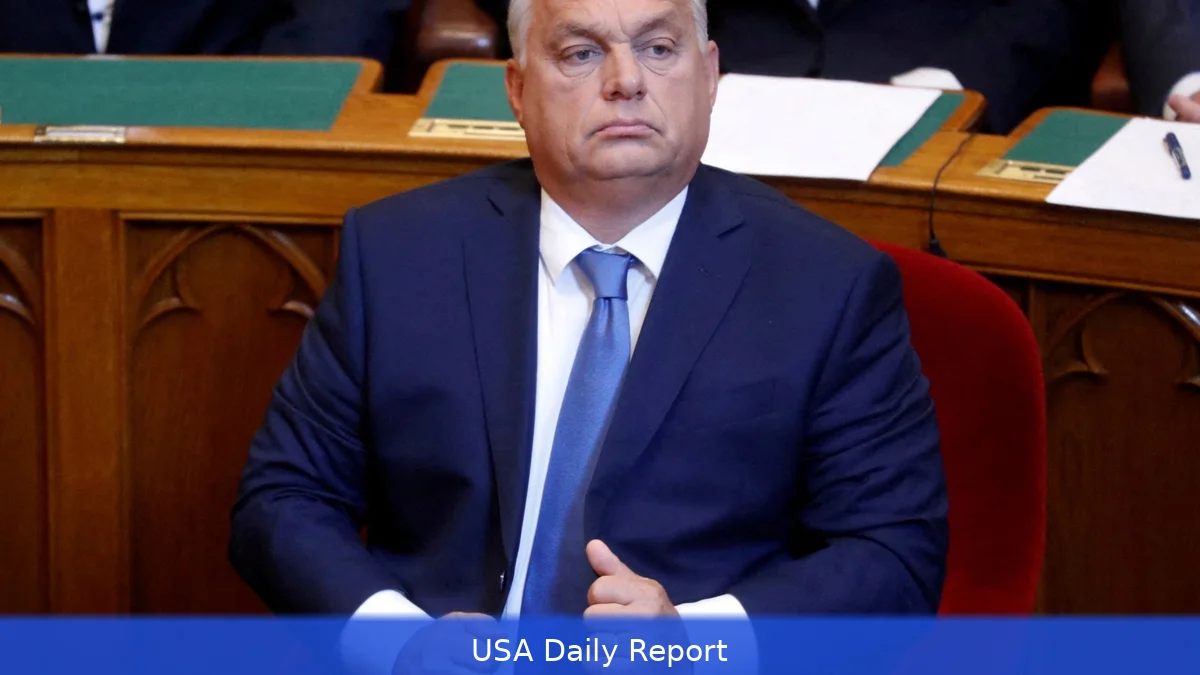
Ukraine is playing an oversized role in Hungary's election. Hungary's ruling party says Kyiv sabotaged pipelines, laundered money and risks dragging Hungarians into war. The accusations arrive as the country heads into a pivotal ballot.
Charges at the center of the campaign
The ruling party in Hungary has put Ukraine at the center of its election message, accusing Kyiv of actions that the party says threaten national security and economic stability. The campaign rhetoric includes allegations that Ukraine sabotaged energy infrastructure, engaged in financial schemes tied to Hungarian interests and is pulling Hungary toward the broader conflict next door. Those claims have become a defining feature of the run-up to voting, shaping both public debate and international reactions.
Look, the timing matters.
The ruling party — often described as Kremlin-aligned — is airing accusations against Kyiv; that brings foreign affairs into a campaign that might otherwise focus on Hungary's domestic issues. That alignment is part of how the ruling faction frames the narrative: Kyiv as an external threat, Moscow as a geopolitical counterpoint. By casting these issues as threats, the campaign pushes voters to see governance, corruption and foreign policy through a security lens.
The framing is blunt.
Why the allegations matter to voters
Many Hungarians feel these claims in their daily lives, not as distant geopolitics. Energy and money are immediate concerns — fuel prices, jobs and the health of businesses. Accusations that pipelines were sabotaged hit at the idea that energy supplies and the economy could be disrupted by foreign actions. Allegations about money laundering play to longstanding domestic worries about corruption and economic fairness. And the suggestion that Hungarian citizens might be dragged into a neighboring war raises fears that cross partisan lines.
But these themes hit home: energy bills, jobs and local businesses could be affected. A campaign focused on external threats can shift voter attention away from social programs, public services and economic performance at home. It can also sharpen national identity narratives, making it harder for opposition groups to build a platform based purely on domestic policy change.
When parties drum up an external threat, it often hardens divisions fast. Voters who already distrust Kyiv or who see Russia as a counterbalance may find the ruling party’s case persuasive. Others may view the accusations as exaggerated or instrumental. Either way, the discussion alters what counts as the most urgent issues in the campaign.
International and regional implications
The dispute has ripple effects beyond Hungary's borders. At minimum, it complicates diplomatic ties between Hungary and Ukraine, and it raises questions within the European Union and NATO about alliance cohesion. A member state foregrounding allegations against a neighbor complicates coordinated policy responses to security threats and energy planning.
At the same time, the mix of domestic politics and foreign accusations could shift voting patterns across the region. Parties elsewhere may take cues from Hungary's approach, or they may distance themselves to avoid similar controversy. The result may be a patchwork of national responses rather than a unified regional stance.
Washington watches those splits closely because they can change alliance coordination. The United States has strategic interests in a stable Europe — including clear lines of communication among allies and reliable energy routes. If member states of multinational organizations use electoral campaigns to air grievances that inflame bilateral tensions, it can slow down joint decision-making and complicate coordination on security assistance, sanctions policy and contingency planning.
Economic stakes for Hungary and partners
Energy infrastructure is central to the allegations. Pipelines carry not only fuel but also leverage. Claims of sabotage imply risk to supply chains, higher costs and investor uncertainty. Businesses that depend on steady energy flows may delay investment. Consumers may face higher prices. Banks and markets pay attention to political risk — and heightened geopolitical tension is a form of risk.
Financial allegations — even when unproven — can chill cross-border transactions, foreign direct investment and banking relationships. Companies and investors tend to steer clear of markets where regulatory risk seems politicized. That can slow growth, reduce capital available for local projects and make credit more expensive.
For economies in the EU, a single member state's political turmoil has economic ripple effects. Trade and investment links mean that an uptick in uncertainty in Budapest can tighten credit, raise risk premiums and prompt investors to reassess portfolios that include the region. And because energy markets are integrated, supply disruptions or fears of disruption can push prices higher across multiple countries.
How this touches the United States
The U.S. Watches such developments for several reasons. First, the credibility of NATO and the EU on security matters is tied to the ability of member states to cooperate even when they disagree. Second, the U.S. Has an interest in ensuring Europe stands firm against coercive activity by states that would destabilize the region. Third, economic shocks in Europe can feed back into global markets — affecting commodity prices, investor confidence and transatlantic trade.
U.S. Officials and lawmakers tend to prefer predictable partners. When election campaigns feature allegations that could spill into diplomatic rifts, American policymakers face harder choices about how to balance criticism, support and engagement. The result may be a more cautious U.S. Posture — slower to coordinate big policy moves and more focused on damage control where needed.
On the other hand, Washington can use quiet diplomacy to encourage de-escalation and to press for transparent investigations of the claims. That approach is often preferred to public grandstanding, particularly when allegations are politically charged and could be used to justify retaliatory measures.
What’s at stake for domestic politics
Domestically, elevating foreign accusations can consolidate support among core voters. It can also help the ruling party portray opponents as out of touch or soft on national security. Campaigns that trade in fear of external actors tend to narrow the space for debates on social spending, health care, education and the economy.
Opposition parties face a strategic choice: match the security-focused message or pivot to issues where they can mount clear alternatives. If the opposition avoids the security frame, it risks being painted as indifferent to threats; if it matches the frame, it may lose an opportunity to highlight governance and economic policy differences.
That dynamic shapes not only the immediate election but also the political terrain afterward. The winner will inherit both the domestic policy agenda and the bilateral tensions that the campaign helped inflame.
What comes next
Investigations, if any follow, will matter. Independent probes could affirm, refute or muddy the claims. Courts, regulatory bodies and international monitors — if involved — could affect how the dispute evolves. For voters, the presence or absence of transparent inquiry will shape perceptions of credibility.
And the international response will be telling. Allies will watch how Hungary’s partners react — whether they call for restraint, demand evidence or take measures that reflect concern about the allegations. That reaction, in turn, will influence both political and economic fallout.
One thing is clear: the election won't just decide who governs Hungary. It will also shape how the country positions itself with neighbors and with major powers in the months after ballots are counted.
Related Articles
- German transgender far‑right extremist arrested in Czech Republic amid new gender‑law debate
- Beijing Demands Answers After Chinese Researcher Found Dead at University of Michigan
- Finance Titans Bet Gulf Resilience Will Outweigh War Fallout
Hungary's ruling party accuses Kyiv of sabotaging pipelines, laundering money and dragging Hungarians into war.


