
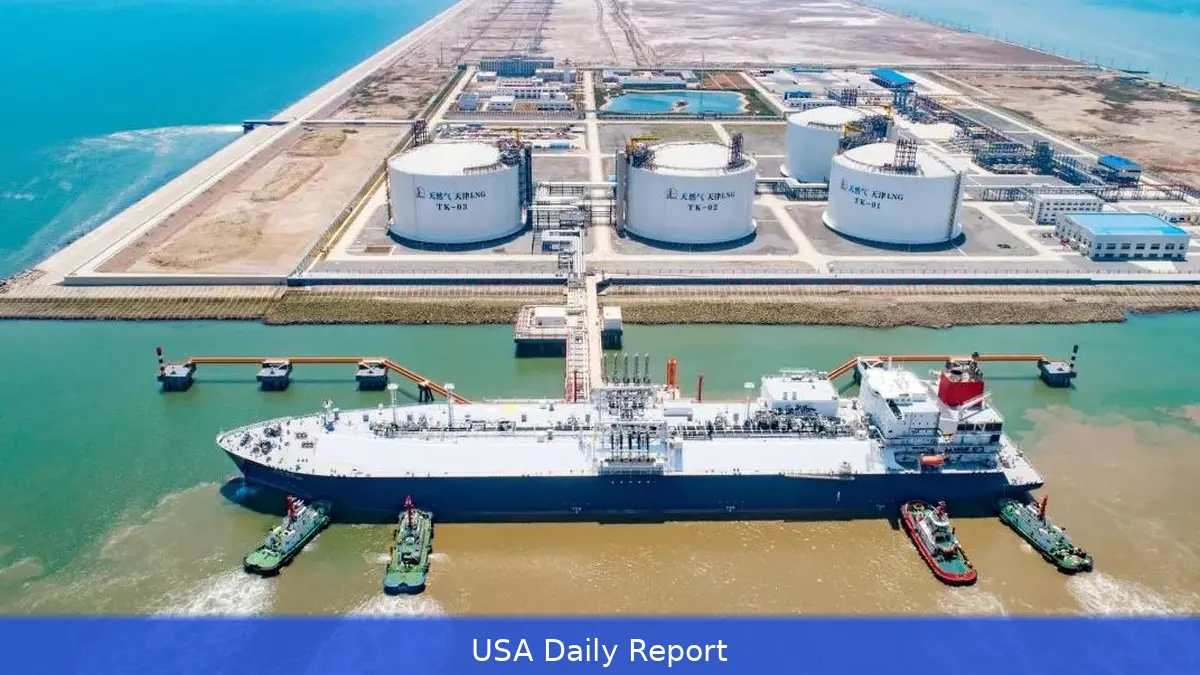
Asian LNG spot prices jumped above $20 per MMBtu.
Supply gap shutters key flows
The sudden closure of the Strait of Hormuz has knocked roughly 1.5 million tonnes of LNG a week out of global trade, Wood Mackenzie says. That's about 2.2 billion cubic meters of gas — equal to roughly 19% of global exports. The hit falls heaviest on Asia, because roughly 90% of Qatari and UAE exports usually head for buyers in the region.
Prices reacted fast.
Wood Mackenzie models a disruption running from mid-March to mid-May, with Qatari output only slowly returning to normal by late May. That scenario would lower Northeast Asian demand by an estimated 4 million to 5 million tonnes through the third quarter of 2026 as buyers cut consumption amid tight supplies. Forward curves already imply at least a month of disruption, and markets expect some relief only from June.
The issue goes beyond just a brief delay in deliveries. Long-haul shipping from alternative suppliers raises freight and timing hurdles, so cargoes that used to trade regionally can't be swapped in overnight. That makes finding replacement volumes costly and logistically tricky, especially for utilities juggling seasonal demand and storage constraints.
Who can replace Qatari volumes — and who can't
Regional buyers will respond differently. Japan, South Korea and Taiwan are seen by Wood Mackenzie as able to replace a large slice of their lost Qatari and Emirati cargoes — between 70% and 90% — because of their buying strategies, inventories and fuel options. Mainland China looks set to replace only about half of its exposure, because its gas demand is relatively weak at the moment and it can lean on larger inventories and fuel switching in industry.
Japan's position is stronger than many think.
"Japan is comparatively well positioned to manage the disruption due to its limited reliance on Qatari supply and recent nuclear restarts," Jingxiao Du, senior research analyst for Asia Pacific Gas & LNG at Wood Mackenzie, said in the firm's analysis. Du pointed to utilities' ability to redirect free-on-board cargoes back to domestic markets instead of trading them internationally, and to higher nuclear output easing pressure on LNG burn.
As of March 1, major Japanese power utilities held about 2.19 million tonnes of inventories — equal to roughly 22 days of supply. That buffer will help, but it's not infinite. Once those stocks run low, the market's search for cargoes will intensify, driving spot prices higher.
Price dynamics and market pull factors
Asian spot prices have already moved above $20 per MMBtu, flipping what had been a discount relative to Europe into a premium, Miaoru Huang, research director for Asia Pacific gas and LNG at Wood Mackenzie, said in the firm's note. Higher Asian prices are required to entice Atlantic Basin cargoes away from Europe and toward Asia, Huang added.
The key point is that a strong price incentive is necessary to reroute cargoes. Shipping time, charter availability and LNG portfolio commitments all push back against sudden reroutes. Even when cargoes can be found, they're likely to carry hefty freight and premium charter costs, which get reflected in the delivered price.

That dynamic will heighten competition between European and Asian buyers. If Asian premiums persist, some Atlantic cargoes could swing eastward.
If not, Europe will hold more supply, and Asian buyers will have to dig deeper into inventories, burn more coal in power generation, or cut industrial gas use.
Demand destruction and fuel switching
Wood Mackenzie says alternative supplies can't fully replace Qatari volumes, so demand destruction becomes likely. Big utilities and industrial customers will have to pick their spots — which plants can switch to coal, which factories can throttle back, and which commercial users can tolerate curtailed gas service.
That process doesn't happen evenly. South Korea, which has more than 20% of its gas consumption exposed to the spot market, faces sharper strain at high prices. Kai Dong, principal analyst for Asia-Pacific Gas & LNG at Wood Mackenzie, warned that even with temporary stocks, moderate supply gaps plus significant spot exposure will squeeze power utilities and push more switching toward coal.
Switching to coal would blunt immediate gas demand, but it also has policy and emissions consequences. Some governments are likely to prioritize power reliability over short-term emissions targets; others will try to ration gas flows to industry while protecting households and critical services.
Those policy choices will shape how deep the demand cut becomes, and for how long.
How long and what happens next
Markets are pricing at least a month of disruption, with potential easing from June if Qatari production ramps back as Wood Mackenzie assumes. But the timeline is uncertain and depends on how quickly shipping lanes reopen and how fast Qatar and the UAE can re-route production and logistics.
Supply restoration isn't just about turning wells back on. It's about shipping schedules, available LNG carriers, and buyers' willingness to accept delayed or higher-cost cargoes. This situation makes the short-term outlook uncertain and unstable.
Traders and portfolio managers should focus on keeping their options open, securing cargoes when possible, and preparing for backwardation in spot markets during the disruption. For utilities, the strategy will focus on balancing thermal options, tapping storage, and managing peak demand.
Smaller buyers and countries with little storage capacity will face the toughest challenges. They don't have the bargaining power or inventory cushion that big buyers do, and they're more likely to face rationing or sharper price spikes at the plant gate. That raises credit and macro risks for the most exposed economies.
Wider market implications
Higher Asian LNG prices ripple beyond gas. Power generators burning more coal will push regional coal imports, boost coal prices, and raise emissions. Industrial users cutting gas will slow production in gas-intensive sectors. Those are real economic hits that add up if the disruption lasts weeks rather than days.
That said, another consequence: the scramble for cargoes will test long-term contracting approaches. Buyers that leaned heavily on spot markets will pay the price; buyers with flexible long-term contracts, access to swap markets, or diversified supply portfolios will fare better. The shock could accelerate moves toward more portfolio diversification and the signing of new long-term deals — but those are slow to materialize when you need fuel now.
Still, the market has some built-in elasticity: inventories, fuel switching, and demand response. Together, they buy time. How much time varies by country and by buyer. And time is crucial when ships are sitting off routes or when terminals are reworking their schedules.
The market's response will be measured in cargo movements, days of inventory, and the premium Asia pays over Europe. Those will be the metrics traders watch day to day.
Related Articles
- China Hongqiao to Raise HK$11.68 Billion in Hong Kong Placement
- Fed signals patience, projects one cut in 2026
- UAE Leaves OPEC — Saudi Arabia Picks Up the Slack
"Asian LNG spot prices have surged above US$20/mmbtu, shifting from a discount to a premium relative to European prices," said Miaoru Huang, research director, Asia Pacific gas and LNG at Wood Mackenzie.
This article was created with AI assistance.


