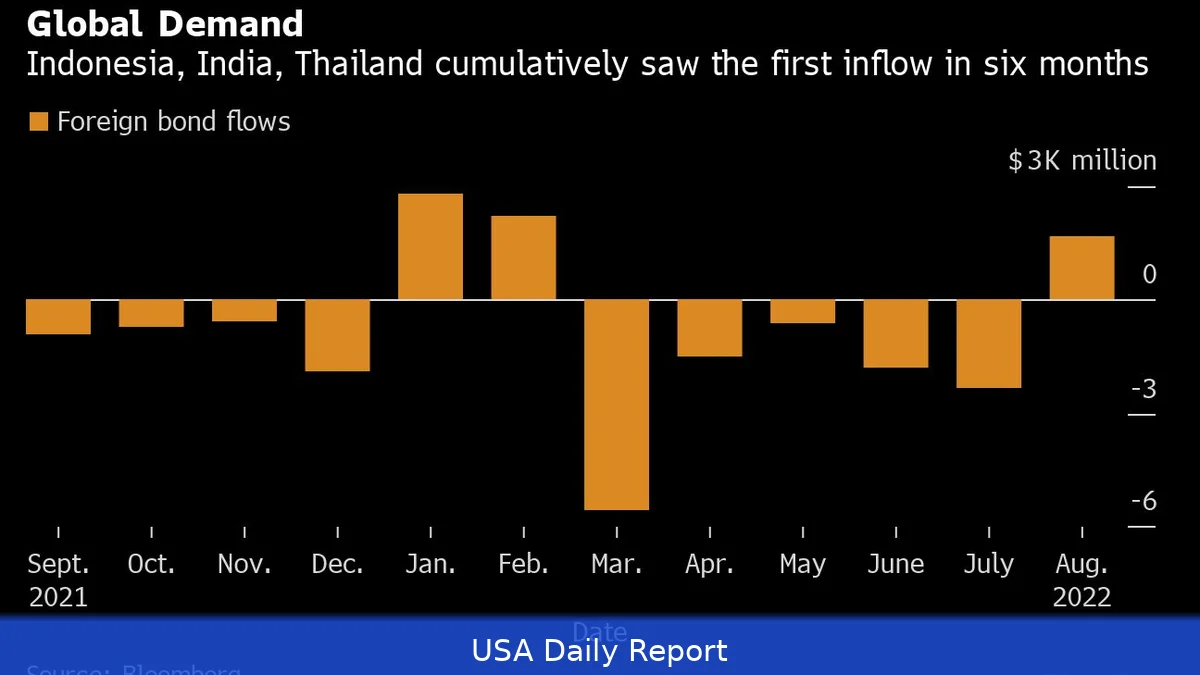
Investors are showing renewed confidence, and Asia’s bond issuances have jumped as global markets embrace risk. At the same time, US exchange-traded funds (ETFs) smashed records with over $1 trillion flowing in during 2025, signaling a major shift in how investors allocate capital.
Asia’s Bond Market Fires Up
Bond markets across Asia are witnessing a remarkable uptick in issuance, driven by a global appetite for riskier assets. After a period of cautious trading, investors are diving back into fixed income, especially in emerging markets, where yields remain attractive compared to developed economies.
Issuers from China to Southeast Asia have taken advantage of this momentum to tap the debt markets, raising capital at a brisk pace. The surge isn’t limited to sovereign bonds—corporate debt offerings have also spiked, showing confidence in economic recovery across the region.
That said, the backdrop is complex. Inflation pressures are still lingering, and central banks remain vigilant. But investors seem willing to look past the threats, betting on sustained growth and stable monetary policies. The result?
A bond market rally that’s hard to ignore.
The rise in Asia’s bond issuances isn’t just about local factors. It’s tied to a broader global risk-on environment, where investors chase yield and diversify their portfolios. The region’s improving fundamentals help, but the pull from international capital flows plays a big part.
US ETFs Smash Records Amid Shifting Investor Preferences
Meanwhile, across the Pacific, US ETFs have hit an eye-popping milestone—more than $1 trillion in inflows for 2025. That’s a record pace, showing that investors are moving away from traditional mutual funds and embracing ETFs for their transparency, liquidity, and cost efficiency.
State Street Investment Management forecasts that total ETF inflows could reach $1.4 trillion by year-end, further cementing ETFs as the dominant investment vehicle in the US market. Total assets under management in US ETFs stand at an impressive $12.7 trillion as of September, marking 41 consecutive months of net inflows—a streak few expected to last this long.
"Any market correction might slow the pace, but it wouldn't halt the trend," said Matt Bartolini, State Street’s global head of research. That’s partly because ETFs offer investors flexibility, allowing quick shifts in exposure amid volatile conditions.
Bond ETFs have been a standout segment, raking in $39 billion last month alone. Gold ETFs haven't lagged either, with the SPDR Gold Trust ETF seeing nearly $16 billion in new funds as gold prices surged past $4,100 an ounce—a fresh record. These flows suggest investors are balancing risk appetite with a hedge against inflation and uncertainty.
Why Investors Are Flocking to ETFs and Asian Markets
BlackRock’s iShares, the largest ETF issuer, alongside Tidal Financial Group, expect these inflows to continue rising. Mutual funds have seen outflows totaling $481 billion this year, highlighting a clear shift toward ETFs.
Many investors favor ETFs because they blend diversification with ease of trading. Unlike mutual funds, ETFs trade like stocks, making them attractive for both retail and institutional players. Plus, their transparency means investors know exactly what they own, which is a big deal in uncertain times.
Asia’s ETF markets are also catching up fast. Adoption rates in countries like Japan, South Korea, and China are accelerating, with local investors increasingly drawn to ETFs that offer exposure to both traditional and crypto-linked assets.
Crypto ETFs, in particular, are carving out a niche, riding the wave of digital asset interest while providing regulated, accessible options for less risk-tolerant investors. This trend could spark further growth in Asia’s ETF landscape, complementing the bond market’s surge.
Basically, the global shift to ETFs and Asia’s bond market growth are linked. Investors want to spread risk and chase returns in a way that’s flexible and transparent. Asia’s markets offer both opportunity and diversification, making them a hot spot right now.
Looking Ahead: Challenges and Opportunities
Still, risks remain. Inflation, geopolitical tensions, and central bank policies could shake confidence. Markets may face bouts of volatility that test investor resolve. But for now, the risk-on rally is powering bond issuances and ETF inflows, showing how investor sentiment can swing rapidly.
This momentum is changing the global investment scene in 2025. The rise of ETFs and Asia’s debt markets signals a new phase where capital flows are more dynamic and interconnected.
Investors will be watching closely to see if this trend sustains, especially as economic data rolls in and central banks adjust policies. If Asia’s bond market stays hot and ETF inflows keep growing, it could reshape global finance in surprising ways.
Related Articles
- Thailand’s Bond Market Slumps Deeper Amid Rising Inflation and Political Turmoil
- Fed Minutes Reveal Split on Inflation Risks Amid Middle East Conflict, Signal Uncertain Rate Path
- Economy Holds Strong Despite Global Tensions, Says Luzzetti
Right now, Asia’s bond market surge and record ETF inflows show investors are chasing risk and opportunity despite ongoing uncertainty.


