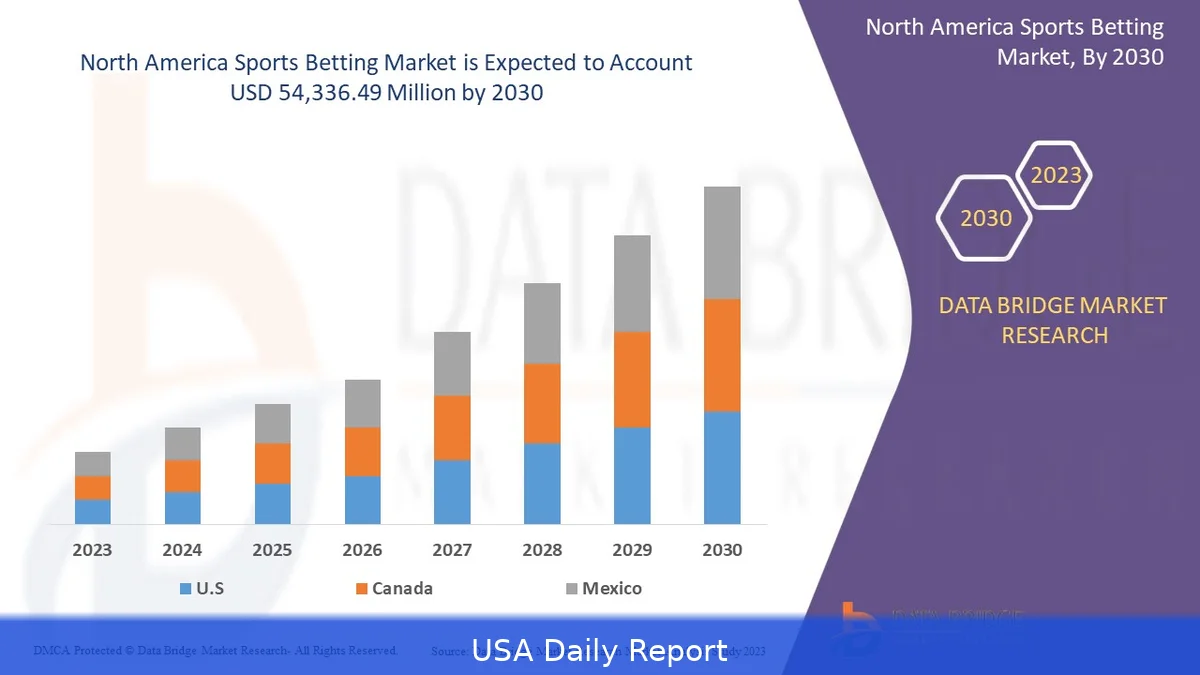
Bank of America suggests the US sports betting industry might grow to a trillion-dollar market soon. Their recent analysis shows legalized sports betting linked to big events could reach $1.1 trillion, changing the fast-growing sector.
Sports Betting Set for Explosive Growth
The US sports betting market is on track to hit $1.1 trillion, Bank of America (BofA) strategists say. This projection comes as more states legalize wagering and infrastructure for betting expands rapidly. Sports betting used to be underground but is now becoming mainstream in finance and retail nationwide.
Legal sports betting revenue has jumped sharply over the last few years, fueled by the Supreme Court’s 2018 decision to strike down the federal ban on sports gambling. Since then, states have rushed to authorize betting platforms, with both physical sportsbooks and online apps gaining traction. BofA’s estimate shows just how big the industry could become if current trends hold steady.
But growth isn’t only about volume. The quality of available bets and the frequency of major sports events are also key drivers. From the NFL to college basketball and the expanding eSports scene, bettors now have more opportunities than ever to place wagers, broadening the market’s appeal.
The Financial Impact and Investor Interest
Bank of America’s bullish take on sports betting comes amid a turbulent period in financial markets. Wall Street recently faced a $1.1 trillion wipeout in market value, driven by weak job growth and renewed tariffs on imports.
Even so, sports betting shines as a bright spot during market uncertainty.
Investors are increasingly eyeing sports betting as a long-term growth play. BofA suggests that as the industry matures, it may attract more attention from institutional investors, particularly those looking to diversify away from traditional tech and finance stocks. The shift toward “Main Street” sectors, favored by BofA analysts, aligns with sports betting’s rise as a consumer-driven business.
Michael Hartnett, BofA’s chief investment strategist, has signaled a tilt away from tech giants towards smaller, asset-heavy companies and emerging industries like legalized gambling. The bank’s research points to sports betting as a key beneficiary of this rotation, driven by regulatory changes and shifting consumer behavior.
Challenges and Regulatory Environment
Despite the optimistic forecast, the path ahead isn’t without hurdles. Regulatory landscapes remain patchy, with some states still reluctant to embrace sports wagering. Each state’s legislation varies, creating a complex web of rules for operators to navigate. This fragmentation could slow the pace of market expansion.
Plus, concerns about responsible gambling and consumer protection are rising. Lawmakers and advocacy groups are pushing for stricter oversight to curb addiction and fraud. Operators will need to invest in compliance and education to maintain public trust and avoid potential backlash.
Still, the federal government’s hands-off approach in recent years has allowed states to tailor their policies. The possibility of a unified national framework remains uncertain, but if it materializes, it could accelerate market growth even further.
Broader Economic Context
The sports betting boom comes at a time when other parts of the economy face headwinds. Inflation and central bank interest rate hikes have pressured credit markets and corporate bonds, with trillions wiped out globally in recent months. Investors have shown caution, pulling money from bond funds and reallocating to sectors seen as more resilient.
Against that backdrop, consumer-focused industries such as sports betting offer a compelling alternative. The sector’s direct link to entertainment and discretionary spending makes it somewhat insulated from broader economic shocks—at least for now.
That said, continued economic uncertainty could affect consumer betting habits if disposable incomes tighten. The industry’s long-term prospects hinge on balancing growth with responsible practices and adapting to changing economic conditions.
It’s worth noting that President Donald Trump’s policies have influenced market dynamics across sectors, including sports betting. BofA notes that the focus on affordability and consumer protection may reshape where investors place their bets—literally and figuratively—in the years ahead.
Related Articles
- Inside the Quest to Crack Bitcoin’s Biggest Puzzle
- CVC Capital Partners Eyes Partners for €10.9 Billion Recordati Buyout
- US Consumer Spending Slows as Inflation Keeps Pressure on Economy
Bank of America’s $1.1 trillion estimate highlights a key moment for US sports betting, showing a sector ready to expand quickly despite changing consumer and regulatory factors. How quickly it reaches that scale, and what challenges it will face along the way, we'll have to wait and see.


