
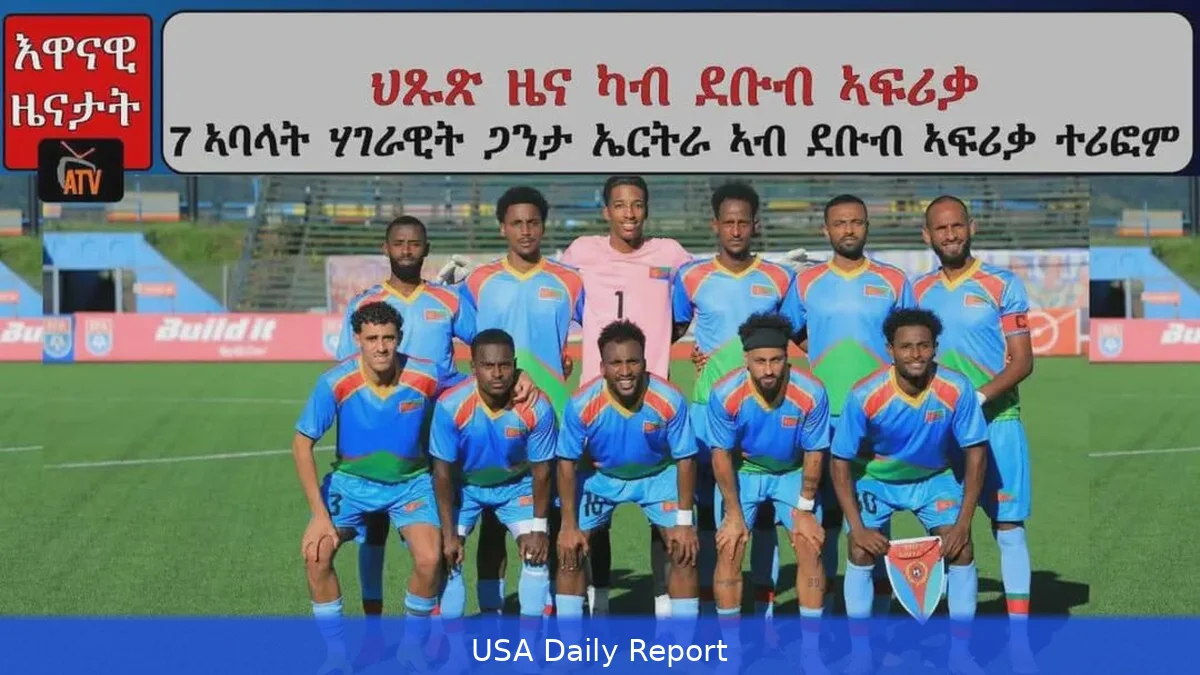
Seven players from Eritrea’s national football team disappeared after their recent victory in Eswatini, leaving their place in the Africa Cup of Nations qualifiers uncertain. The incident makes people wonder about the future of Eritrean football and highlights ongoing political and social issues within the country.
Vanishing Act in South Africa
Seven of Eritrea’s 10 locally based footballers disappeared after the team’s 4-1 aggregate win over Eswatini on March 31, a result that earned them a place in the group-stage qualifiers for the Africa Cup of Nations (AFCON). The players were last accounted for when the team landed in South Africa en route to Eritrea via Egypt. Only three of the local players returned home, according to an official from the Confederation of African Football (CAF), who described the situation as "a mystery."
Despite the team’s success on the pitch, the disappearance of these athletes casts a shadow over Eritrea’s participation in the upcoming AFCON qualifiers scheduled between September and November. The seven missing players include key positions such as goalkeepers Kibrom Solomon and Awet Maharena, defenders Wedeb Fessehaye, Yosief Tsegay, Nahom Awet, midfielder Medhane Redie, and striker Amanuel Benhur. Their absence could severely weaken Eritrea’s squad as they prepare to compete against some of Africa’s top football nations in the next phase.
Context of Eritrean Football and Athlete Defections
Eritrea has a long history of athletes disappearing while abroad, often attributed to the country’s restrictive political climate and ongoing human rights concerns. This latest incident adds to a pattern of defections by Eritrean sportspeople seeking asylum or better living conditions outside their homeland. The players’ disappearance isn't entirely unexpected, given Eritrea’s reputation for tight government control and limited freedoms.
After nearly six years without international competition, Eritrea was making a surprising comeback on the continental stage with its recent win over Eswatini. The team’s first leg against Eswatini was held in Morocco’s Meknes city, as Eritrea lacks an international-standard stadium. This victory was secured with goals from players including Ali Suleiman, an Eritrean playing in Egypt’s top league. This success could have marked a new chapter for Eritrean football, but the current crisis jeopardizes those aspirations.
Political and Social Implications
The disappearance of athletes goes beyond sports. It reflects deeper political and social tensions in Eritrea, a country often criticized for its authoritarian governance and compulsory military service. Many Eritreans flee to avoid indefinite conscription or political repression.
The players’ vanishing amid a football tour abroad suggests they may be seeking asylum, a move that could strain diplomatic relations between Eritrea and the countries involved.

South Africa, where the players reportedly disappeared, has been a destination for Eritrean asylum seekers in the past. If these athletes have sought refuge there, it could complicate South Africa’s diplomatic ties with Eritrea. Meanwhile, Eritrea’s government faces embarrassment and pressure to address the underlying causes prompting such defections.
On a broader scale, the incident puts a spotlight on how sports can intersect with politics and human rights. International tournaments like AFCON are supposed to unite nations through football, but here, they reveal fractures within countries themselves. Eritrea’s fragile position in African football now mirrors the fragility of its internal social fabric.
Impact on Eritrea’s AFCON Campaign and African Football
Eritrea’s chances of advancing in the 2027 AFCON qualifiers are now uncertain. Losing seven key players disrupts the team’s cohesion and competitive edge. The squad, which included 14 players based abroad, now has fewer locally available athletes to fill critical roles. The three players who returned—captain Ablelom Teklezghi, midfielder Nahom Tadese, and striker Romel Abdu—face an uphill battle to carry the team forward.
The AFCON organizers will need to decide if Eritrea can keep playing with fewer players or if they’ll be disqualified. This group-stage qualifiers will pit Eritrea against other African football powerhouses, making it essential for them to field a full and prepared team.
This incident raises concerns about the safety and well-being of athletes from politically unstable countries. CAF and other sports bodies might need to rethink travel arrangements and support for teams at risk of losing players to defection during international fixtures.
What It Means for U.S. Interests
Though this incident is centered in Africa, it has echoes in U.S. Policy and interests. Eritrea is a country of concern for human rights activists and policymakers due to its record on forced conscription, political repression, and refugee flows. Cases like these athletes’ disappearances highlight ongoing challenges for regional stability and migration.
Sure, the U.S. Has long provided humanitarian aid and supports asylum programs for Eritreans fleeing persecution. An increase in defections during international events could lead to more asylum claims in countries like South Africa, which might impact migration patterns toward the U.S. And Europe.
Eritrea’s absence or weaker presence in events like AFCON could reduce its influence and global connections. For the U.S. And its African partners, promoting stability and human rights in countries like Eritrea remains essential to curbing forced migration and supporting democratic development.
Related Articles
- EU-backed raids round up thousands of migrants in Mauritania
- 106 Migrants Rescued After Dinghy Breaks Down in English Channel
- Seoul appeals court hands ex-first lady Kim Keon Hee 4-year sentence
Eritrea’s football future is uncertain as seven players vanish amid international travel, spotlighting political struggles beyond the pitch. Whether they sought asylum or disappeared for other reasons, this episode could reshape Eritrea’s role in African football and raise tough questions about governance and human rights in the Horn of Africa.
This article was created with AI assistance.


