Ukraine's drone interceptors are suddenly in demand across the Gulf. Washington is watching a shift that helps Kyiv — and complicates its fight with Moscow.
From battlefields to business deals
Ukrainian companies that once begged for air-defense support are now selling their know-how to Gulf states scrambling to defend cities from Iranian drones and missiles. Look, the change was stark: firms on the front lines of Ukraine's four-year fight with Russia have turned practical combat experience into exportable products and services.
That pivot is practical. Shahed-style drones have become a cheap, persistent threat in the Middle East. It's expensive and inefficient to use multimillion-dollar surface-to-air missiles to stop a weapon that costs only tens of thousands of dollars. So countries that until recently relied on Western interceptors are exploring lower-cost, purpose-built systems developed in Kyiv and by Ukrainian manufacturers elsewhere.
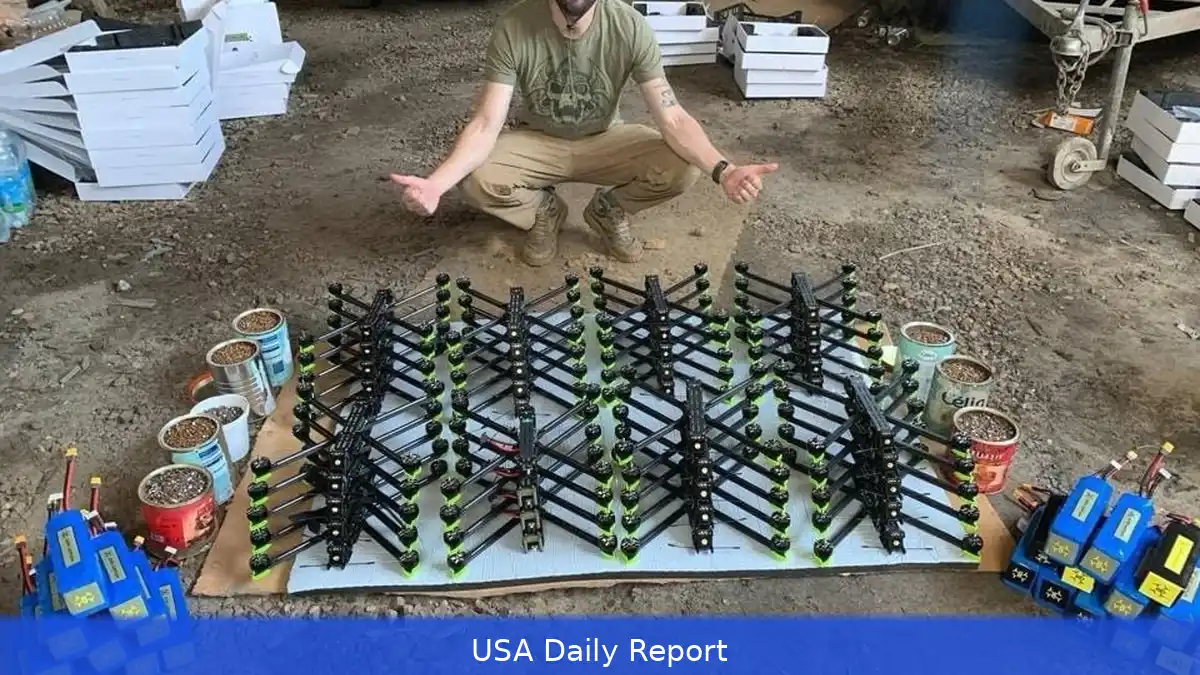
Ihor Fedirko, head of the Ukrainian Council of Defence Industries, told NPR that his group represents more than 400 manufacturers and that Ukrainian firms now produce a range of inexpensive drone interceptors. "Hornets is just one of 25, 30 producers who produced such type of interceptors," Fedirko said in Paris, where Ukrainian defense firms held closed-door business-to-business talks with French industry representatives.
Frankly, those meetings underline a basic shift: Ukraine is no longer only a recipient of hardware and training. It's a seller and a partner.
Deals, diplomacy and the red carpet
Kyiv has been quietly signing agreements across the Gulf. Fedirko said Ukraine has reached pacts with Qatar, Oman, Jordan and the United Arab Emirates to set up joint ventures and share technical know-how.
The aim is to build local capacity for drone defense and to offer cheaper, scalable alternatives to high-end Western systems.
Ukrainian President Volodymyr Zelenskyy has made the outreach visible. He toured several Middle East capitals recently; video released by NPR showed him receiving a high-profile welcome in Damascus. Zelenskyy also confirmed that Ukrainian specialists sent to the region helped shoot down several drones, a concrete example of Kyiv’s operational role beyond Europe.
Martin Quencez, an analyst at the German Marshall Fund's Paris office, said the conflict in the Middle East has made Kyiv's defensive experience attractive to partners who now see practical applications. "I think the war in the Middle East has made it quite clear that Ukrainian defense system has value for a number of partners and actors in the Middle East and more broadly in the world," Quencez said.
And that interest isn't purely military. Joint ventures can revive Ukrainian factories, preserve technical skills, and create new revenue streams for a defense sector that represents a big slice of the country's industrial base. Ukrainian firms hope to convert battlefield-tested prototypes into mass-produced exports, with Middle Eastern partnerships offering capital, logistics and regional access.
Economic gains — and real limits
There are real economic wins. Small interceptors and counter-drone systems can be developed and produced at lower unit costs than long-range missiles, and several buyers in the Gulf have strong budgets for defense modernization. For Kyiv, those contracts bring needed foreign currency and supply-chain ties that could outlast the current war.
But the export opportunity doesn't erase problems. That said, the new Iran-Israel-U.S. Conflict in the Middle East has diverted attention and hardware away from Ukraine. Missiles and interceptors firing over the Gulf burn through stocks that might otherwise have bolstered Kyiv's defenses. NPR reported that some urgently needed missile stocks are being used in the Middle East, a development Ukrainian officials acknowledge as a setback.
There's also the issue of scale. Ukrainian defense startups have battlefield-proven concepts, but scaling production to meet the ordering capacity of Gulf states will be a test. Companies represented by Fedirko include dozens of small and medium-sized enterprises that thrived on improvisation and rapid prototyping — not mass manufacturing for export markets. Partners in the Gulf will expect reliability, maintenance networks, and training packages; those are new demands for many Kyiv-based firms.
Diplomacy gains, too
Ukraine's outreach to the Middle East is as much political as commercial. Zelenskyy's visits and cooperation agreements give Kyiv new diplomatic footholds at a time when global attention is pulled toward Iran's conflict with Israel and the United States. For Kyiv, those ties can translate into votes, influence and alternative sources of support in international forums.
Still, the timing complicates Ukraine’s strategic calculations. A portion of Western attention — and military stockpiles — has been redirected to the Gulf. That makes every arms transfer and every new contract a strategic choice: which front gets the hardware, and which countries receive training and repair capacity first?
Kyiv's new role as a supplier also reflects changing perceptions of the Ukrainian military's expertise. After years of countering Shahed-style drones on its own territory, Ukraine has built a body of operational practice that other states now want to learn. That practical credibility helped open doors in Doha, Abu Dhabi, Amman and Muscat.
Implications for the United States
The U.S. Faces a mixed picture. On one hand, Ukrainian firms offering lower-cost, effective counter-drone options could ease pressure on American stockpiles and reduce demand for expensive interceptors. On the other hand, Washington must juggle two theaters: supporting Israel and Gulf partners while maintaining commitments to Ukraine's defense.
Look, U.S. Policymakers will have to manage supply chains and political expectations. Weapons and missiles are finite; when they're used in one theater, they're not available in another. That means choices for U.S. Planners: prioritize immediate threats in the Gulf and Israel, or preserve supplies for Ukraine's counteroffensive against Russia. Those choices carry political costs at home and abroad.
There are also industrial and alliance angles. American defense firms could partner with Ukrainian companies, or compete with them, in offering counter-drone packages to the region. The potential for cooperation could speed production and lower costs — if the political will exists. But competition might undercut Kyiv's economic gains, and complicate U.S. Efforts to coordinate allied supply chains.
Beyond hardware, the Biden administration and Congress will watch how these deals affect diplomatic dynamics. New ties between Kyiv and Gulf states could widen Ukraine's political base. That matters to U.S. Lawmakers who have made support for Ukraine a part of broader foreign policy goals — but it also opens space for European and Middle Eastern actors to shape defense relationships in ways that don't always align with U.S. Priorities.
What Kyiv needs next
Ukraine wants more than contracts. It wants sustainable production lines and long-term partnerships that can outlast a single procurement cycle. Firms need financing, access to materials, and export logistics — not just initial purchase orders. Fedirko's delegation sought exactly that in Paris: buyers, technical partners, and industrial-scale relationships.
Point is, battlefield credibility got Ukrainian firms in the door. Converting that credibility into lasting industry will be the harder work.
At the same time, Kyiv must guard against distraction. The world’s attention is finite. As Tehran, Jerusalem and Washington recalibrate, Kyiv needs partners who will keep delivering both diplomatic support and the hardware for its defense — and won't redirect those resources indefinitely.
Related Articles
- Energy and Shipping Risks Hit Markets as Wars in Iran, Ukraine Persist
- Talks Collapse Between Washington and Tehran After High-Level Meetings
- Who's Running U.S. Foreign Policy? Varsha Gandikota-Nellutla and Jeremy Scahill Weigh In
Zelenskyy confirmed that Ukrainian specialists sent to the Middle East helped shoot down several drones.


