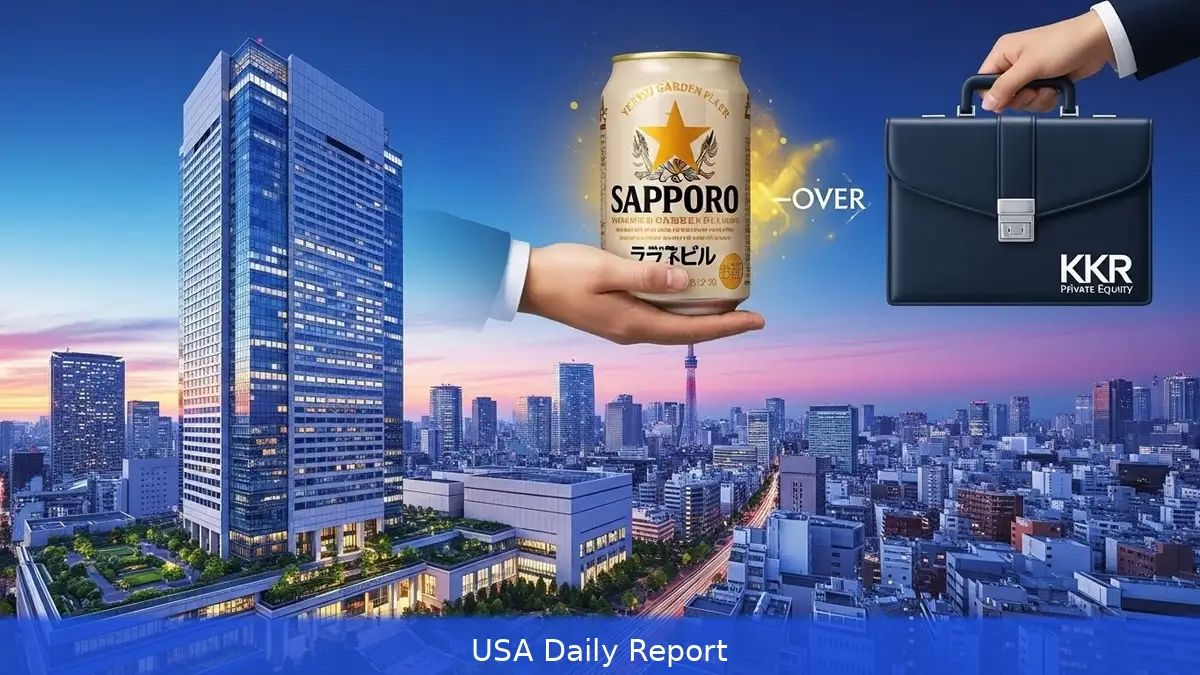
KKR's Japan real estate arm just scored a big win. The firm and partner PAG agreed to buy Sapporo Holdings’ property unit in a deal worth about $3 billion.
Deal specifics
KKR and PAG are leading a consortium that will acquire Sapporo Real Estate, the Tokyo-based brewer said in a company disclosure. The transaction values the business at an enterprise value of 477 billion yen — about $3.05 billion including debt.
The sale will happen in stages over three years.
The first tranche involves the sale of a 51% stake and will probably close in June next year, subject to regulatory and shareholder approvals. After closing, Sapporo Real Estate will operate as an independent company owned by the KKR- and PAG-led investor group.
Hiro Hirano, deputy executive chair of KKR Asia-Pacific and chief executive of KKR Japan, said Sapporo Real Estate has a long track record of landmark developments and community engagement. "Working closely with the community, government, and tenants, we aim to continue the evolution of the company’s properties as vibrant and sustainable urban destinations," Hirano said.
What's in the portfolio
Sapporo Real Estate owns a mix of commercial, office, hotel and residential properties, the brewer said. Its holdings include high-profile assets concentrated in the Ebisu district of Tokyo and across the city of Sapporo in northern Japan.
Among its flagship developments is Yebisu Garden Place, one of Japan's best-known mixed-use complexes — a center of offices, retail and hospitality that anchors the Ebisu neighborhood.
Jon-Paul Toppino, co-founder and president of PAG, said the firm sees room to build on the portfolio's strengths over the medium to long term. "We see opportunities to build on the portfolio’s strengths," Toppino said, noting a focus on sustainable, long-term value creation.
Why private equity is on the move
Look, the Sapporo deal isn't an outlier. It's part of a wave of transactions as Japanese companies trim non-core assets and welcome foreign capital to unlock value.
Sapporo Holdings framed the sale as a strategic move to sharpen its focus on beverages. The brewer said proceeds will be reinvested to bolster growth in beer and other alcoholic drinks amid tougher competition at home and overseas.
KKR is making its commitment through its Asia-focused real estate strategy, a move that signals the firm plans to increase its exposure to Japanese property assets. PAG, which has offices across Asia-Pacific and in London and New York, has been active in the region’s property and credit markets — and its involvement shows growing global interest in Japan's real estate.
Market reaction and road ahead
Sapporo Holdings’ shares jumped on the news, rising as much as 5% during the session before settling 3.65% higher at 8,092 yen. That market response reflects investor appetite for moves that free up capital for core business investment.
The transaction follows months of negotiation, the company said. Both regulatory sign-offs and shareholder approval remain hurdles for the initial closing next June.
Thing is, private ownership gives KKR and PAG a different operating playbook than a listed parent company. The new owners say they plan to pursue sustainable enhancements in both asset value and corporate value — a phrase they used in a joint statement announcing the deal. That indicates an intention to invest in property upgrades, tenant relationships and possibly repositioning assets for higher returns over time.
What this means for the sector
For foreign investors, the deal offers a template: buy established, well-located portfolios from Japanese corporates looking to focus on core operations. Sellers get cash to reinvest. Buyers get assets with stable cashflow and redevelopment upside.
And for Japan’s property market, the entry of large global funds can accelerate changes already under way — more active asset management, more flexible use of space, and a push for sustainability upgrades in older buildings.
That said, regulatory scrutiny and local stakeholder ties matter here. Hirano flagged community and government engagement as part of KKR’s plan. It's a reminder that foreign buyers can't just swap capital for control — they need buy-in from tenants, local governments and residents when they reposition urban sites.
Operational priorities for the new owners
The statement from the investor group stressed long-term value creation and sustainability. Expect plans to touch leasing, building refurbishment, and perhaps repositioning some hotel or retail components depending on demand.
KKR's Asia real estate strategy likely brings capital for both hold-and-manage plays and selective redevelopment. PAG's regional footprint gives the group on-the-ground reach across Asia-Pacific and beyond — useful if they pursue cross-border leasing or branding partnerships for hotel assets.
Still, any big moves will depend on regulatory approvals and the phased nature of the buyout. The first 51% sale sets the course; later tranches over the next two years will determine the group's ultimate control and the speed at which it can implement changes.
Broader corporate angle
Sapporo Holdings' decision to sell reflects a corporate strategy shift many Japanese firms have adopted: shed non-core businesses to concentrate resources on the parts of the company that management believes will drive future growth. In Sapporo's case, that means focusing on alcoholic beverages rather than property management.
The brewer plans to channel the cash into its core drinks operations, aiming to sharpen its competitive position in domestic and international markets. For investors, that reinvestment strategy can be seen as a bet on higher-margin, brand-driven growth instead of capital-intensive real estate ownership.
For the real estate arm itself, private ownership under a specialized investor group usually means more aggressive asset management than what many corporate owners pursue. That often results in faster upgrades, active leasing strategies, and sometimes redevelopments that change a property's use mix.
Related Articles
- Victory Giant Lines Up Big Backers as It Eyes Hong Kong IPO of About $2 Billion
- Inflation Climbs to 3.3% as Strait of Hormuz Chokehold Sends Prices Higher
- Sources Don’t Match the Deal: We Can’t Run the GFL–Secure Waste Story Yet
Sapporo Holdings valued the business at an enterprise value of 477 billion yen — about $3.05 billion including debt — and said the first 51% stake sale will probably close in June next year, subject to approvals.


