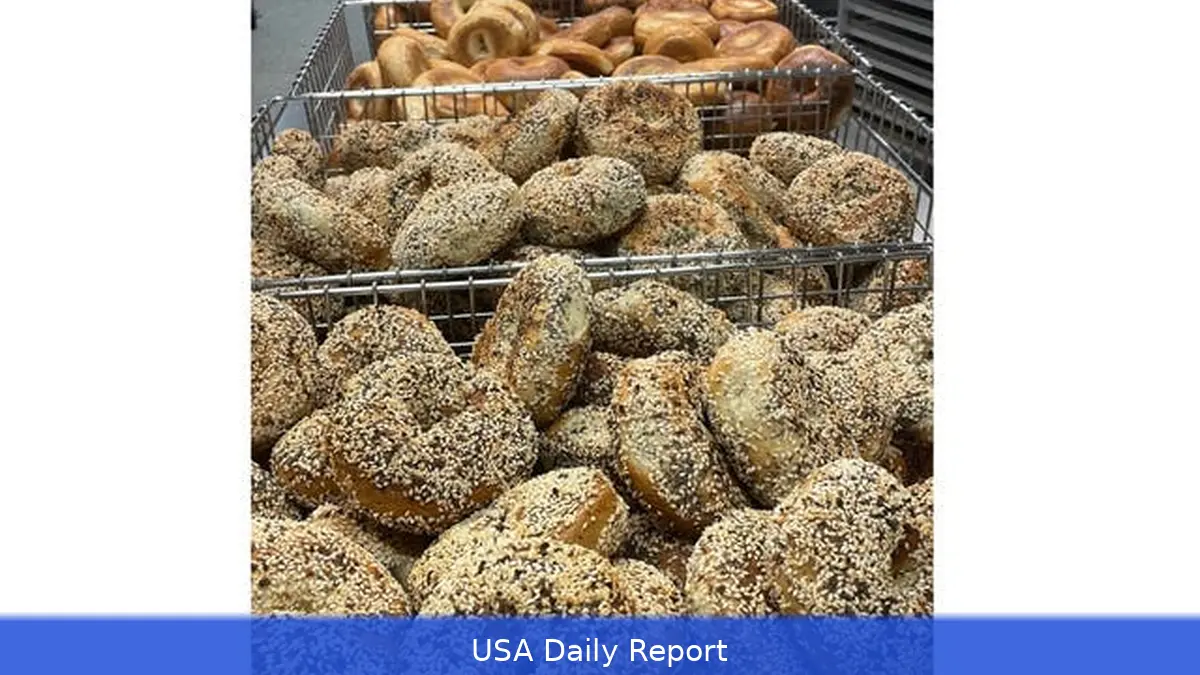
PopUp Bagels opens its first Philadelphia storefront today.
Hot bagels, a tight menu, fast expansion
PopUp Bagels is launching a shop at 10 Coulter Ave. In Ardmore, Pennsylvania, marking its first storefront in the Philadelphia area as the brand pushes deeper into the Mid‑Atlantic. The company says the move kicks off a regional plan that will bring 10 locations across Pennsylvania, South Jersey and Delaware, and another 20 across Washington D.C., Maryland and Virginia.
PopUp isn’t aiming to be a full breakfast counter. It's built around a single idea: bake whole bagels and serve them hot and unsliced. No sandwiches. No toasters. The brand encourages customers to "Grip, Rip and Dip®" — tear the hot bagel and dunk it into one of the rotating schmears the shops offer.
The model is simple and deliberate. By keeping the menu narrow and the product experience focused, PopUp has turned a single product into the customer draw.
Weekly schmear flavors and brand collaborations give people reasons to come back, the company says, and the ritualized approach has helped the brand turn local curiosity into foot traffic.
Branding plays an important role here. PopUp Bagels markets itself as "Not Famous but Known," a play on cultural cachet that grew from its New York roots into a regional following. Since its founding in Connecticut in 2021, the company has moved from a backyard window experiment to a multi‑state rollout.
Partnership with Seeded Capital opens local doors
PopUp isn't going it alone. The company is expanding through partnerships with local operators, led in the region by Seeded Capital. Brian Harrington, partner at Seeded Capital, said the firm sees an opportunity to introduce PopUp's hot, whole bagel experience to neighborhoods where bagels are already central to morning routines.
"We see a real opportunity to bring something different to these communities with PopUp’s fresh, hot, whole bagel experience," Brian Harrington, partner at Seeded Capital, said in a statement. "It’s simple, it’s energetic, and we believe it will connect here in a real way."
Seeded Capital acts as the regional operator, not just a silent investor. That arrangement suggests PopUp is leaning on local partners to handle site selection, operations and customer outreach while the brand supplies the concept, product systems and marketing playbook.
From backyard window to regional brand
Founder Adam Goldberg launched the business in 2021 out of a backyard window, according to the company. That origin story has become part of the brand narrative as PopUp scales: a scrappy startup that turned one idea into a replicable retail formula. Tory Bartlett, chief executive officer of PopUp Bagels, framed the Philadelphia and Washington, D.C. Openings as purposeful growth rather than a rapid, unfocused buildout.
"Our expansion into the Pennsylvania, Delaware, DMV, and South Jersey markets reflects the continued strength of the brand," Tory Bartlett, CEO of PopUp Bagels, said. "We’re growing with intention and partnering with operators who understand how to execute the PopUp experience at a high level."
The company emphasizes experience over menu breadth. That focus lets it standardize back‑of‑house operations — bake schedules, schmear rotation, in‑shop rituals — and potentially speed up new site openings. It also narrows the capital needs for each location; less equipment and fewer SKUs mean quicker builds and simpler training for staff, the company argues.
Retail rollouts come with expected costs. Lease negotiations, fit‑out work, staffing and local marketing all add up. PopUp's approach — partner with regional operators who bring local knowledge and muscle — is a common path for food concepts that want to grow without overreaching their corporate infrastructure.
Customer experience as competitive edge
PopUp focuses strongly on the sensory appeal of serving very hot bagels. The company's product play — whole, unsliced bagels served fresh from the oven — aims to create an in‑the‑moment eating ritual that's easy to replicate at street stands, small shops and kiosks. That format can work well in high‑foot‑traffic neighborhoods, commuter corridors and near office clusters.
Early adopters in New York helped seed interest beyond the city, the brand says, and fans from other states have traveled to try the product. Weekly rotating schmears and limited collaborations give the brand reasons to push frequent updates and social media content, keeping customers engaged without expanding the core product.
Investors and operators prefer focusing marketing on brand storytelling and local outreach instead of expanding the menu. If the ritual catches on in new neighborhoods the way it did in its initial markets, the model can scale with relatively predictable unit economics.
Questions for the rollout
As PopUp expands, some clear questions arise. Can the hot, whole bagel concept translate from the dense, transit‑oriented streets of New York into suburban and small urban neighborhoods where breakfast habits differ? Will customers embrace a shop that declines to offer sandwiches and toasting?
Operationally, supply chain and baking capacity will matter. A brand that markets hot bagels needs robust timing and inventory controls to reduce waste and keep the product consistent. Partner operators will carry much of that burden, and their ability to execute will shape customer perception in each new market.
Another factor is competition. The Mid‑Atlantic already has long‑standing local bagel shops and regional chains.
PopUp's pitch is experiential rather than purely price or convenience driven. Whether that creates enough differentiation to win customers away from established players will depend on location choices and how consistently the operators deliver the promised experience.
For now, PopUp is banking on high‑quality product and a tight brand idea. The Ardmore opening is the first visible sign of that bet playing out beyond the Northeast corridor. The company says 30 additional sites across the two regions will follow as part of this phase of growth.
Backed by a narrative of rapid but intentional expansion, PopUp aims to convert curiosity into habit by making the bagel itself the thing people come for. Execution will be everything.
Related Articles
- Software Stocks Are Getting Pulverized — Bitcoin’s Bounce Hints a Bottom Might Be Near
- Blackstone Plans Public Vehicle to Buy AI Data Centers, Eyes Billions
- UnitedHealth Jumps After CMS Boosts Medicare Advantage Rates; BofA Raises Price Target
“We’re growing with intention and partnering with operators who understand how to execute the PopUp experience at a high level,” Tory Bartlett, CEO of PopUp Bagels, said.


