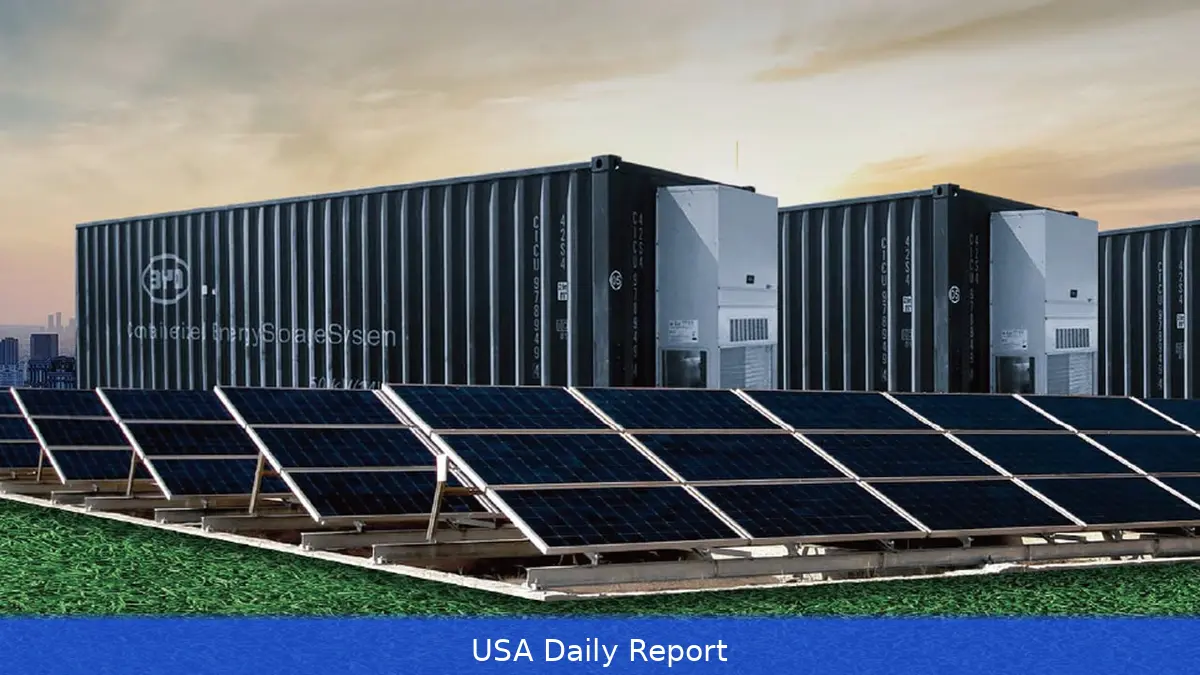
China’s battery storage sector, led by automaker and energy storage giant BYD, is experiencing a notable profit boost thanks to rising lithium costs and geopolitical tensions in the Middle East. The upheaval in Iran has pushed oil and gasoline prices higher, reigniting interest in electric vehicles and renewable energy storage worldwide.
BYD’s Earnings Amid Market Challenges
BYD, the Shenzhen-based company best known as the world’s top electric vehicle (EV) maker, reported a complex financial picture in 2025. While its annual revenue hit a record $116 billion—surpassing U.S. Rival Tesla—its profit took a 19% hit, dropping to $4.7 billion. That profit decline marked the first since 2021, underscoring the intense competition within China’s EV market and the toll it takes on margins.
Sales growth remained strong globally, with BYD delivering 2.26 million electric vehicles in 2025, a 28% jump from the previous year. Tesla’s deliveries, by contrast, fell 9% to 1.64 million vehicles. But domestic sales in China showed signs of weakness, with six straight months of decline and a 36% slump in January and February combined. Fierce price wars domestically and shrinking government subsidies are squeezing profits, leaving BYD to lean more heavily on overseas markets where margins tend to be healthier.
Chris Liu, a Shanghai-based auto analyst, pointed out that BYD can’t rely on the mass market to sustain its sales volume anymore. Rivals like Geely Auto have been gaining ground, intensifying the pressure on BYD’s domestic foothold.
Chairman Wang Chuan-fu described the industry as being in a brutal “knockout stage,” where survival hinges on strategic moves and technology upgrades.
Rising Lithium Prices Offer a Silver Lining
While BYD wrestles with domestic challenges, the company’s battery storage business is benefiting from a surge in lithium prices. Lithium, a key ingredient in EV batteries and energy storage systems, has seen its price rebound roughly 70% from this year’s low point, fueled by booming demand for electric vehicles and artificial intelligence applications worldwide.
Look, battery maker Deegares recently announced a 15% price hike, signaling a potential end to the relentless price war that has hammered margins for Chinese battery and energy storage firms over the past three years. Other manufacturers are following suit, betting that the lithium price rally justifies higher product prices.
Beijing’s government has also stepped in. Its “anti-involution” campaign aims to clamp down on irrational competition and price undercutting within the battery industry.
Officials met with industry leaders—including BYD’s Wang Chuanfu—to push for measures that stabilize the market and improve profitability.
Still, analysts caution that supply remains high domestically, making a quick turnaround unlikely. Pierre Lau Hin-tat, a China equity strategist at Citigroup, said gross profit margins for some major players like Sungrow hover between 15% and 20% on domestic sales—far below the 40%-50% margins seen in U.S. Markets. Export sales drive real profits for Chinese firms, especially as aging power grids in the U.S. And Europe ramp up demand for energy storage systems that help balance electricity loads.
Global Demand and Export Growth
China’s lithium battery exports surged in 2025, reaching 4.25 billion units valued at over $69 billion during the first 11 months. That represented a nearly 20% increase in units and a 25.6% rise in value compared to the previous year. Major recipients include Germany and the United States, accounting for more than 18% and 16% of shipments respectively.
The global investment boom in AI data centers is adding fuel to the fire. These centers require massive energy storage solutions to maintain efficiency and reliability. Meanwhile, geopolitical instability in oil-producing regions like Iran has pushed fuel prices higher, making renewable energy options and battery storage even more attractive worldwide.
That said, bYD and its peers are positioning themselves to capitalize on this momentum. The company recently launched a new generation of its “blade” EV batteries, boasting improved fast-charging capabilities and higher power density. These technological advances could help BYD regain market share and improve profitability, especially abroad.
Industry Outlook and Challenges Ahead
The price war in China’s EV and battery sectors hasn’t fully abated. Envision Group, a leader in energy storage, lamented that a third of system integrators continue to sell below cost, dragging prices down by 80% over three years. The government’s anti-involution campaign looks set to continue, but the impact will take time.
For BYD, the challenge is balancing domestic market pressures with growing opportunities abroad. The Iran conflict and subsequent energy shock have created a tailwind for EV sales and energy storage demand globally. But the company’s recent profit dip and slowing domestic sales show that the battle isn’t over.
Still, BYD’s rising exports and new battery tech show it’s not standing still. The company’s ability to innovate and tap into international markets could be key for sustained growth. With lithium prices rising and energy storage needs expanding, BYD’s position as a battery giant is looking stronger, even if the path is bumpy.
Related Articles
- Bank of England Warns UK Economy Faces Stagnation as Budget Fallout Hits Growth and Living Standards
- The New York Times Points to British Cryptographer as Bitcoin’s Mysterious Creator
- Dow Climbs, Oil Prices Edge Up Amid Fragile Ceasefire and Cybersecurity Concerns
China’s BYD rides a wave of global energy shifts and lithium price hikes amid domestic struggles. Whether it can turn profit pressure into lasting gains will depend on how it navigates a brutal domestic market while pushing exports and innovation abroad.


