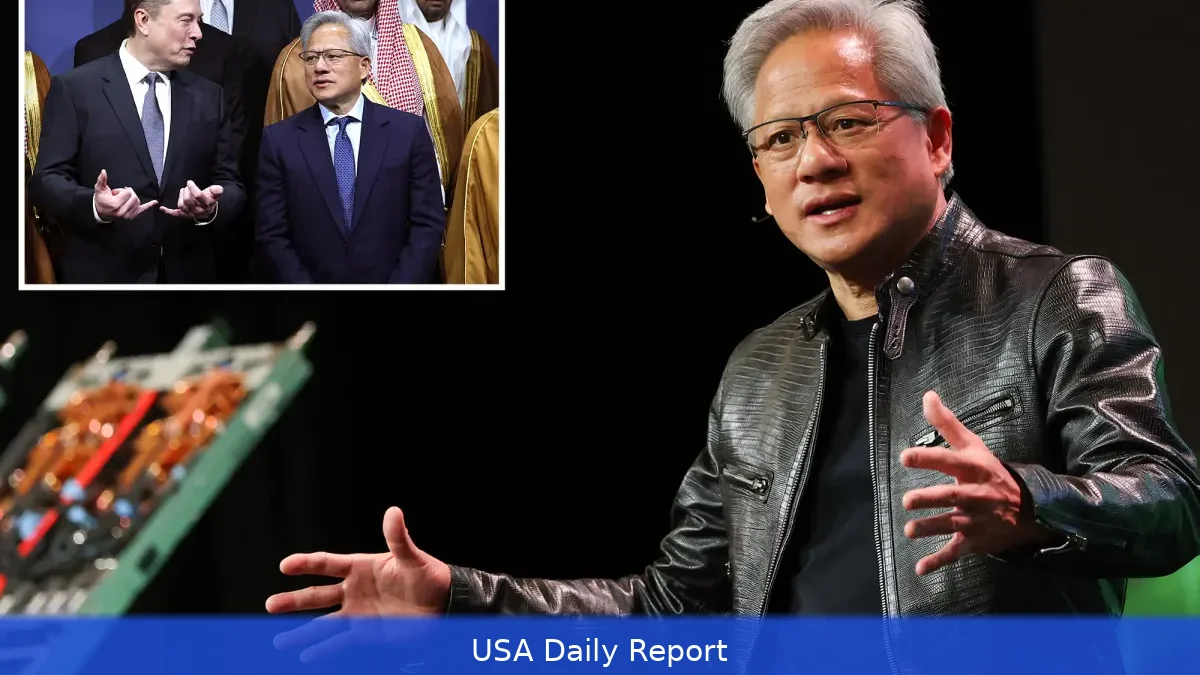
Move to California, Nvidia’s Jensen Huang told a Stanford audience. He urged residents not to flee despite high taxes. His comments come as a proposed billionaire tax has sparked debate and some wealthy departures.
Huang’s pitch at Stanford
Jensen Huang, chief executive officer of Nvidia, stood at Stanford on Thursday and made a blunt appeal: "I say to everybody, 'Move to California. Don't leave. It's the highest taxes in the world, but it's OK,'" he said. The remark came during a conversation with Rep. Ro Khanna, D-Calif., who shared the stage. Huang also joked about the state's climate, saying the weather helped make the math worthwhile.
He didn't sound defensive; he focused on practical reasons to stay. He framed the choice as practical — talent and environment matter.
Huang's remarks echo comments he gave to Bloomberg Television in January, when he said he was "perfectly fine" with the idea of a billionaire tax. At the Stanford event, he reiterated that he hadn't seriously considered leaving the state, noting in earlier remarks that he "hadn't thought about [moving] even once." Those lines sit against a wider debate among the ultrawealthy about whether to stay in California.
Huang's stance contrasts with several high-profile tech figures who've recently moved themselves or their companies out of California. His comments point to the central argument defenders of Silicon Valley always make: being close to talent and peers still counts for a lot.
The contrast is clear: some billionaires have shifted residences or corporate registrations away from California.
Who’s moved — and who hasn’t
Several billionaires and tech founders have altered their ties to California recently, a trend that has fed the tax debate. Google co-founders Sergey Brin and Larry Page reportedly moved multiple limited liability companies out of California last year, turning some into Nevada entities, according to The New York Times. Forbes estimates Brin's net worth at $240.5 billion and Page's at $260.7 billion.
Larry Ellison, Oracle co-founder, is another high-profile example. The San Francisco Standard reported Ellison sold an 11,000-square-foot San Francisco mansion late last year for $45 million — the city's biggest residential deal of 2025 — and his official residence is now in Florida at a property reportedly bought for about $173 million. Forbes lists Ellison's net worth at $179.8 billion.
But not every wealthy person is leaving; many continue to live and do business in California. Huang, whose net worth Forbes estimates at $163.2 billion, has repeatedly said he plans to keep doing business in Silicon Valley.
He told Bloomberg that the region's talent pool is a key reason. His view has gotten attention because Huang ranks among the richest people on the planet and runs a firm at the center of the AI boom.
Other wealthy voices have taken a sterner line. David Sacks, who has been described as an AI czar to former President Donald Trump, warned in December that Silicon Valley was under threat, saying, "Silicon Valley is finally realizing what time it is. Dinner time. And they're on the menu." Venture capitalist Chamath Palihapitiya has also criticized the proposed tax.
What the California Billionaire Tax Act would do
The measure on the table — the California Billionaire Tax Act — would impose a 5% tax on individuals in the state who earn more than $1 billion. Backers say the revenue is earmarked to shore up the state's health care program, which officials say is facing budget pressure that could reduce coverage for Californians. Opponents argue the levy could encourage wealthy residents and businesses to leave and that it would be hard to administer.
Proponents see the tax as a way to raise funds from a tiny slice of the population to support public services. Critics worry about unintended consequences: businesses shifting addresses, executives changing their tax residency, and complex litigation over who and what income the tax would catch.
Huang pushed back on those exit narratives by urging people to stay. He pointed to the practical side: proximity to engineers, partners and an ecosystem that supports rapid innovation. That's the core of his pitch.
Business implications and the talent argument
For companies that rely on AI and specialized engineering, the location of talent often trumps headline tax rates. Huang has argued that Nvidia stays in Silicon Valley because of the workforce, not because of tax breaks. He has also outlined in public comments how AI is reshaping computing — shifting software and infrastructure needs across processors, storage and networking. That technical shift raises separate decisions for firms weighing where to locate research centers and data centers.
Huang's comments suggest deep‑tech leaders often put access to engineers and partners ahead of potential tax savings. Nvidia’s rapid growth during the AI boom gave it both clout and visibility, and its CEO's public backing of California sends a message to startups and big companies alike.
Still, taxes aren't the only reason people leave. Quality of life, political preferences and estate planning often factor into billionaires' decisions. Ellison's move to Florida and the reported corporate shifts by Brin and Page show there are multiple routes to reducing a California tax burden — changing personal residence, moving entities, or selling local assets.
Huang has faced attention for political giving — Forbes reports he donated to the White House ballroom project. Forbes notes he gave an undisclosed amount to the construction of President Donald Trump's $400 million White House ballroom last year, a detail that complicates easy labels about his political leanings.
Politics, ballot fights and fundraising
The billionaire tax is heading toward the ballot in November if it clears signature and legal hurdles. That sets up a likely clash between affluent backers on both sides and broad coalitions of interest groups. Labor and health advocates are likely to push for the revenue plan, while business groups and some tech leaders will campaign against it. Expect litigation and long, expensive ad campaigns — though the measure's supporters argue the case is straightforward: tax the ultra-wealthy to fund health care.
Huang's public comments add an unusual twist: a top-tier billionaire, deeply vested in Silicon Valley's future, endorsing staying put despite the threat of a new tax. His voice could matter if other tech leaders follow his lead or if he uses his influence to shape the debate.
One-sentence paragraph again, to break the rhythm.
What happens next may hinge on voters, court challenges and how vigorously both sides mount their campaigns. The policy choices and public arguments will be closely watched by technology executives, investors and state officials.
Related Articles
- White House Report Challenges Bank Lobby on Stablecoin Yield Impact
- India’s Biggest Currency Clampdown in a Decade Could Backfire
- PopUp Bagels Opens in Philadelphia as It Rolls Out 30 Mid‑Atlantic Shops with Seeded Capital Help
"I say to everybody, 'Move to California. Don't leave. It's the highest taxes in the world, but it's OK,'" said Jensen Huang, chief executive officer of Nvidia.


