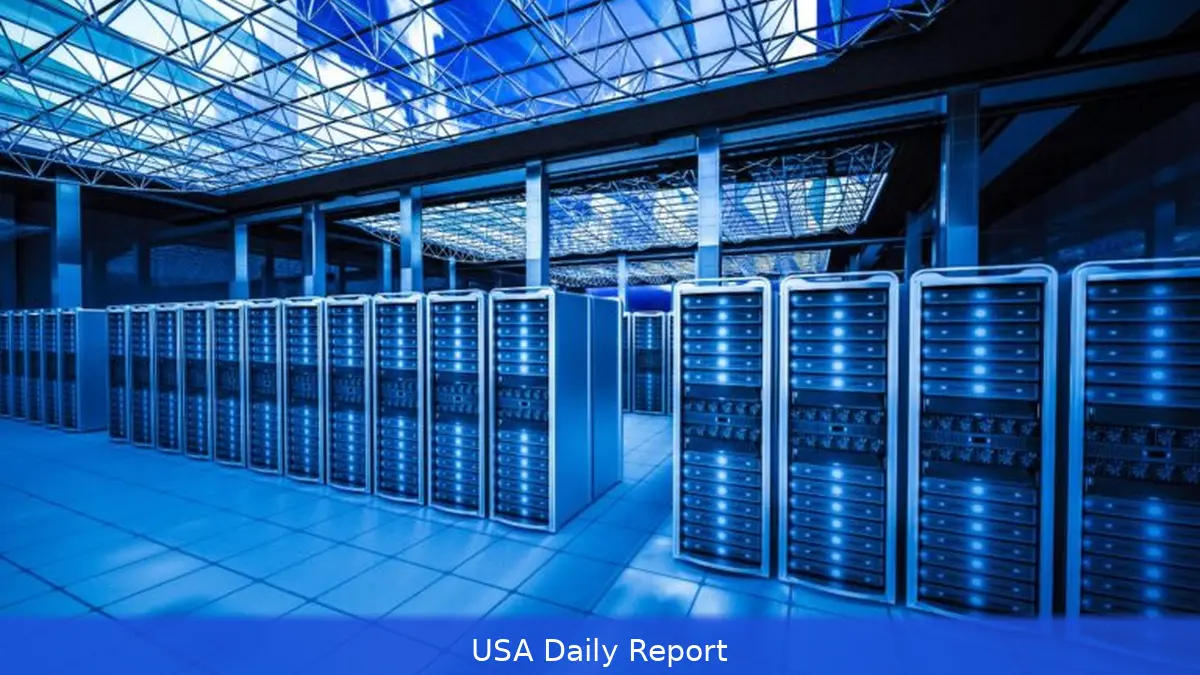
Nearly 50% of the data centers planned to launch in the US by 2026 are hitting serious roadblocks. Supply chain disruptions and manufacturing shortfalls are causing serious delays, putting America’s AI ambitions at risk.
Supply Chain Woes Stall Data Center Construction
Developers across the US are struggling to keep their AI data center projects on track. Bloomberg recently revealed that almost half of the planned data centers for this year are either delayed or canceled. The main bottleneck? Key power infrastructure components like transformers, switchgear, and batteries are in short supply — and they’re slow to arrive.
China has been the main manufacturer of these parts for US companies for many years. Before 2020, delivery times for such equipment ranged from 24 to 30 months. Now, wait times have stretched to five years or more. That delay comes as the US tries to outpace China in the AI race — a race China reportedly trails by about five years.
Tariffs and Manufacturing Gaps Hit Hard
Former President Donald Trump’s tariffs on Chinese imports are making the situation worse. His administration’s push for rapid data center buildouts to secure a US lead in AI is running headfirst into these trade barriers. Trump prefers US-made equipment but the nation’s manufacturing can’t keep pace with demand. This leaves developers caught between long waits and costly tariffs.
Market analysts from Sightline Climate told Bloomberg that only about a third of the largest AI data centers slated for 2026 have actually broken ground. Many firms are so desperate they’re willing to pay tariffs or accept national security risks to speed up shipments from China.
Power Infrastructure: The Hidden Bottleneck
Last month, Trump issued orders pushing tech companies to build or source their own power for data centers. But power availability is only half the battle. Without the transformers and switchgear to distribute electricity, data centers can’t operate.
Builders can’t just plug in power lines; they need complex equipment that’s currently scarce.
And there’s no quick fix. US factories can’t ramp up output fast enough, and the supply chain for these critical components remains tangled. As a result, projects planned for 2026 are stalling, which could delay AI development.
Broader Implications for the US Tech Sector
Data centers play a crucial role in AI and cloud computing. Delays in their construction could slow innovation and economic growth. Investors and companies betting on AI might face setbacks if infrastructure can’t keep up.
Some experts warn that the US’s push for supply chain independence may backfire in the short term. Building domestic capacity takes years and billions of dollars—time the AI sector doesn’t have. Meanwhile, reliance on Chinese suppliers continues, despite political tensions.
The US now faces a tough choice: deal with delays and higher costs or risk security issues by depending on Chinese equipment. Neither option is ideal, but the pressure to act is mounting as AI becomes a bigger economic driver.
Trade policies and technological goals are clearly at odds. Without swift solutions to the supply chain crisis, many AI data centers won’t see the light of day in 2026 — leaving a critical gap in the US’s AI infrastructure buildup.


