
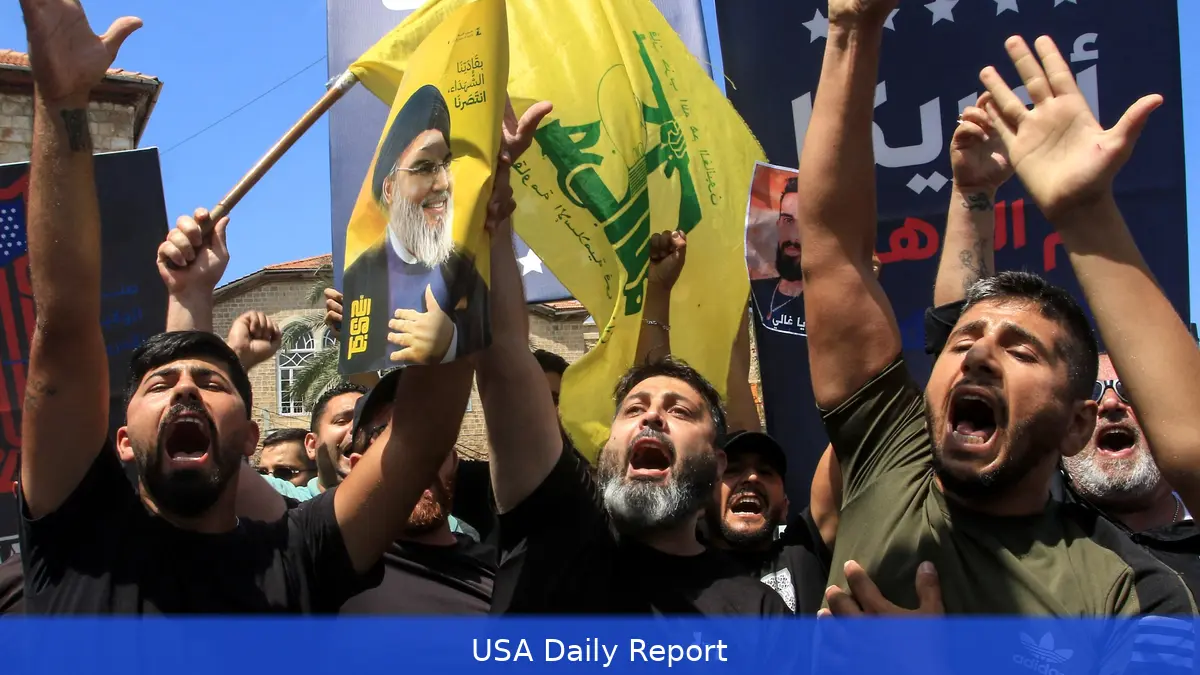
Hundreds gathered outside Lebanon’s prime minister’s office on April 10, 2026. They protested planned negotiations with Israel. The demonstration came amid a fresh wave of Israeli strikes that have killed hundreds across Lebanon.
What happened
Hundreds of supporters of the Iran-backed group Hezbollah assembled outside the offices of Lebanon’s prime minister on April 10. They were demonstrating against proposed talks between Lebanon and Israel, according to video and reporting from NBC News. The crowd pressed near the government complex in Beirut, signaling a public pushback against any engagement with Israel while hostilities have flared across the border.
This wasn't a token demonstration — hundreds converged outside the prime minister's office. Hundreds turned up outside the government complex; the demonstration came as air strikes had intensified across Lebanon. Israeli airstrikes over recent days have, by the NBC tally, killed hundreds across Lebanon, and that escalation appears to have driven both the anger and the urgency behind the rally.
Why the talks matter
The planned negotiations are billed as an attempt to resolve outstanding issues between Lebanon and Israel, including maritime boundaries and security arrangements. The idea of talks comes after years of frozen diplomacy and recurring clashes along the frontier. For many Lebanese, however, negotiating with Israel remains politically fraught given decades of conflict and mutual distrust.
Any direct talks with Israel would immediately stir fierce political disputes inside Lebanon. Hezbollah, which the source describes as Iran-backed, is both a powerful militia and a political force in Parliament. Its supporters view negotiations as premature or illegitimate while military strikes continue; opponents of Hezbollah argue that leaving all diplomacy to armed actors undermines state institutions. The protest made that division public and visible.
How this affects Lebanese politics
The rally outside the prime minister’s office showd the fragile balance Beirut’s leaders must hold. Lebanon’s cabinet and parliamentary factions already juggle sectarian power-sharing, economic collapse and public anger over corruption.
Now they must also weigh whether to pursue diplomacy that risks inflaming armed groups or to defer talks and risk international isolation.
The prime minister faces a choice: press ahead with talks and risk a local backlash, or delay them and draw criticism from international mediators. Either path could weaken the government’s already thin political capital.
Regional dynamics and Iran’s role
Hezbollah’s designation as Iran-backed in the NBC account signals the wider regional stakes. Tehran’s support for Hezbollah has long been a point of leverage in Lebanon, and any negotiations with Israel are viewed through that prism. Rival regional powers, including Iran and Israel, are engaged indirectly in a struggle that plays out on Lebanese soil.

The demonstration also reflects regional tensions that influence Lebanese politics. It’s a reflection of regional currents. Those currents push and pull at Lebanese institutions and force local politicians to account for external patrons even as they try to manage internal crises.
Implications for the United States
The U.S. Has longstanding interests in stability along Israel’s northern border and in limiting Iran’s influence in the region, though the NBC source doesn't identify any specific U.S. Statements about the April 10 protest. Still, unrest in Lebanon that centers on Hezbollah complicates U.S. Diplomacy by adding uncertainty to any mediation effort and by making security guarantees harder to calibrate.
American officials often work with partners in Europe, the Gulf and in the United Nations to back negotiation tracks and humanitarian responses. If Lebanese authorities appear unable to control political violence or to secure a consensus for talks, Washington could face harder choices about whether to deepen engagement, increase support for institutions, or step back and let regional players take the lead.
Economic fallout and broader risks
Violence and political instability have real economic consequences. Lebanon’s economy has been under severe strain for years, with currency collapse, widespread unemployment and a banking sector in distress. Renewed fighting along the border and large street protests around Beirut can scare off the scarce foreign investment and constrain humanitarian aid delivery.
Renewed fighting and political unrest hurt investor confidence and could deter foreign capital. Even though the NBC report focuses on the demonstration and the recent airstrikes, the optics matter for Lebanon’s creditworthiness and for remittances from the Lebanese diaspora. Ports, trade routes and energy exploration in contested offshore waters could all face delays if diplomatic channels stall or if security deteriorates further.
Humanitarian and diplomatic consequences
With hundreds reported killed in recent Israeli strikes across Lebanon, according to NBC’s reporting, humanitarian needs are mounting. Hospitals and aid groups already stretched by years of crisis may struggle to respond if violence continues. Internally displaced people and families in border regions often bear the brunt of such escalations.
Diplomats hoping to relaunch talks will find fewer political openings while violence is rising. Time and public sentiment matter. When large segments of the population view talks as a concession to an adversary, negotiators have less maneuvering room to make compromises that would otherwise lead to a deal.
What to watch next
Watch for whether the Lebanese government proceeds with the proposed talks and whether it can secure buy-in from major domestic actors. Also watch for any further mobilizations by Hezbollah supporters or counter-demonstrations from other political groups.
And watch the military situation along the Israel-Lebanon border. If the reported days of Israeli strikes continue or intensify, the political cost of negotiating rises—especially for Lebanese leaders who need to manage both constituent anger and regional alliances.
Context from the footage
NBC News provided video of the protest and reporting that tied the demonstration’s timing to the recent strikes.
The footage shows large crowds near the prime minister’s complex and shows how quickly public sentiment in Beirut can harden when violence flares along the border. That dynamic — sudden public pressure met by fragile state structures — helps explain why leaders hesitate before taking high-stakes diplomatic steps.
To be clear, the demonstration was a visible sign that any Lebanon-Israel negotiation won't happen in a political vacuum. It will unfold under the weight of public protest, regional influence and the human toll of recent fighting.
Related Articles
- Israel Rejects Hezbollah Ceasefire Demand Ahead of Washington Talks with Lebanon
- Trump Says He’s ‘Optimistic’ on Iran Truce as Questions Grow Over Hormuz and Next Steps
The demonstration took place April 10, 2026, outside the office of Lebanon’s prime minister, amid Israeli strikes that have killed hundreds across Lebanon.
This article was created with AI assistance.


