
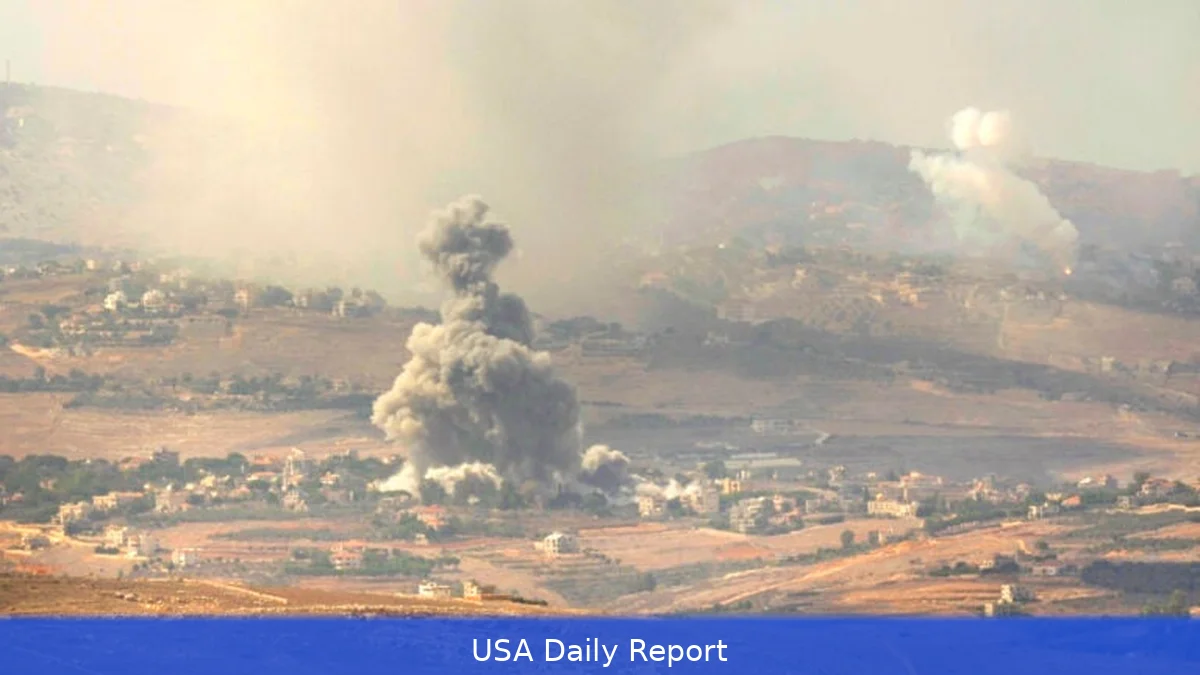
Lebanon recorded its deadliest day this week. Casualties topped 300 after waves of strikes struck across the country. Hospitals and rescuers scrambled to cope with the scale of destruction.
Death toll and civilian impact
Lebanon's Health Ministry reported more than 300 people killed and roughly 1,150 wounded after a series of strikes hit populated neighborhoods and commercial hubs on Wednesday, officials said. Rescue teams pulled more victims from rubble and hospitals worked to identify bodies amid chaos. The strikes, which Lebanon and witnesses say came without warning, hit busy parts of Beirut and other towns during rush hour and left neighborhoods strewn with damaged buildings and shattered lives.
Israel’s military said it targeted Hezbollah installations. Lebanese President Joseph Aoun called the attacks "barbaric," and the scale of civilian harm deepened public anger and fear.
The high number of casualties is changing the political landscape and pushing leaders to make tough decisions quickly.
Emergency response officials said hospital intensive-care units were overwhelmed and that the injured were being triaged across multiple facilities.
Hospitals and aid groups say they're short on supplies and space. Local officials warned of growing displacement as residents fled neighborhoods under threat. The human toll is now shaping Lebanon's domestic debate and its foreign policy options.
Diplomacy shifts to Washington
And in a surprise move, Israel announced it would begin direct talks with Lebanon — a break from past practice since the two countries lack formal relations — and Washington agreed to host the initial meetings next week, the U.S. State Department confirmed.
Israeli Prime Minister Benjamin Netanyahu said the talks would aim to disarm Hezbollah and to negotiate a lasting peace with Lebanon, according to his public comments. The Biden administration — represented in the planning by U.S. Ambassador to Lebanon Michel Issa, and with Israel represented by Ambassador to the United States Yechiel Leiter — is set to take on a convening role, a person familiar with planning told AP.
These talks are diplomatically important and tie into efforts to secure a ceasefire in the broader conflict involving Israel and Iran. The U.S. Push to get parties to the table follows international pressure to blunt broader escalation and to protect commercial shipping and energy flows in the Middle East.
Beirut government moves against Hezbollah
At home, Prime Minister Nawaf Salam's cabinet announced a ban on Hezbollah's military and security activities, saying the group's armed actions outside state control would be restricted and that Lebanon's security institutions should be in charge. Salam told reporters the government intended to limit Hezbollah to political activity and to prevent attacks launched from Lebanese soil beyond the state's authority.

Analysts disagree on whether Lebanon can actually enforce this decision. Imad Salamey, a political scientist at the Lebanese American University, said the government's move reflects unusually broad backing, including some Shia political figures, that could make disarmament more plausible now than before. By contrast, Michael Young, a Lebanon expert at the Carnegie Middle East Center, warned the Lebanese army is unlikely to willingly take on a fight with Hezbollah.
Hezbollah, which is backed by Iran and wields both political power and a sizable armed wing inside Lebanon, has for years argued its arms are necessary to deter Israel. The group's cross-border strikes into northern Israel this month and a recent attack on Israel’s Ramat Airbase signaled it remains a central military actor in the conflict. Those operations prompted domestic backlash and debate over whether the Lebanese state can reassert a monopoly on force.
Regional reactions and the Iranian angle
Iran and its allies pushed back. Iran's parliament speaker, Mohammad Bagher Qalibaf, warned that continued Israeli strikes on Lebanon would bring strong responses and that attacks had consequences for Tehran's regional posture. Tehran's messaging has been firm even as mediators — including Pakistan, which has been mentioned in reporting on Iran-U.S. Contacts — have tried to thread together ceasefire talks covering parts of the broader conflict.
At the same time, Gulf oil producers and European nations that rely on the region's energy have called for a halt to attacks on Lebanon, emphasizing the need to keep sea lanes and energy supplies stable. International concern has grown over any spillover that could disrupt shipping, raise insurance costs or push up crude prices — effects that would quickly be felt in global markets and in the U.S. Economy.
What Washington is doing — and why it matters to the U.S.
The United States moved to play a central role. The State Department confirmed it will host the Israel-Lebanon talks next week, and U.S. Diplomats are expected to coordinate closely with both capitals. U.S. Vice President JD Vance publicly urged Israel to scale back attacks on Lebanon to help preserve the chance for wider negotiations with Iran, according to reports.
Washington is involved to help stop the conflict from spreading, safeguard global energy markets, and maintain diplomatic talks aimed at a ceasefire. U.S. Officials say stabilizing Lebanon is also about preventing large-scale displacement and humanitarian crises that would demand American and allied assistance.
Economically, a wider regional flare-up could push oil prices higher and disrupt shipping through the Strait of Hormuz, where Iran and its partners have periodically threatened to impose restrictions. Higher energy costs would feed into inflation pressures and energy bills for American consumers and businesses — an effect that would compound domestic economic worries.
Balance of power inside Lebanon
Domestically, Lebanon's decision to ban Hezbollah’s external military activities is a political gamble. Some Lebanese politicians from various sectarian blocs supported the move, arguing it restores state authority and could ease foreign pressure. Others fear a clash between the army and Hezbollah would open a new front in an already fragile state, increasing the risk of internal violence.
Michael Young noted that the army's reluctance to confront Hezbollah complicates implementation, and Imad Salamey suggested that shifts in political alliances — including a rare nod from Amal, another Shia political movement — could make enforcement more doable. Still, few observers expect a quick or painless process. The army lacks the appetite for large-scale operations against a deeply embedded militia, and international actors have warned against steps that would trigger further fighting.
Security, aid and the humanitarian angle
Humanitarian agencies and Lebanese officials warned of mounting needs. Hospitals needed supplies and power; displaced families required shelter; and damage to infrastructure threatened services. International relief organizations have been calling for safe corridors for aid and for restraint from all sides to avoid further civilian harm.
At the same time, the political debate in Beirut about reining in Hezbollah complicates aid flows. Donors and neighboring countries often condition assistance on stability and guarantees that aid won't get diverted into armed groups. So the domestic security moves have immediate humanitarian as well as political consequences.
Still, many Lebanese voiced exhaustion. After years of economic collapse, currency loss and political paralysis, the renewed fighting has deepened public frustration and renewed calls for leaders to prioritize daily survival over geopolitical fights.
What to watch next
Watch whether Lebanon names a delegation to attend the Washington talks and whether Hezbollah alters its operational tempo. Also watch oil futures and shipping insurance costs, which respond fast to perceived risks. And pay attention to U.S. Diplomatic activity — how hands-on the State Department is and which envoys show up — because that will signal Washington's appetite for deeper mediation.
One concrete step already scheduled: the State Department will host the first Israel-Lebanon discussions next week, according to U.S. Officials and reporting.
Related Articles
- Iran urges supporters back to streets as Islamabad talks stall and Washington warns of blockade
- Palestinians Condemn Ben-Gvir’s Third Incursion at Al-Aqsa Mosque Compound
The U.S. State Department said it will host the talks next week.
This article was created with AI assistance.


