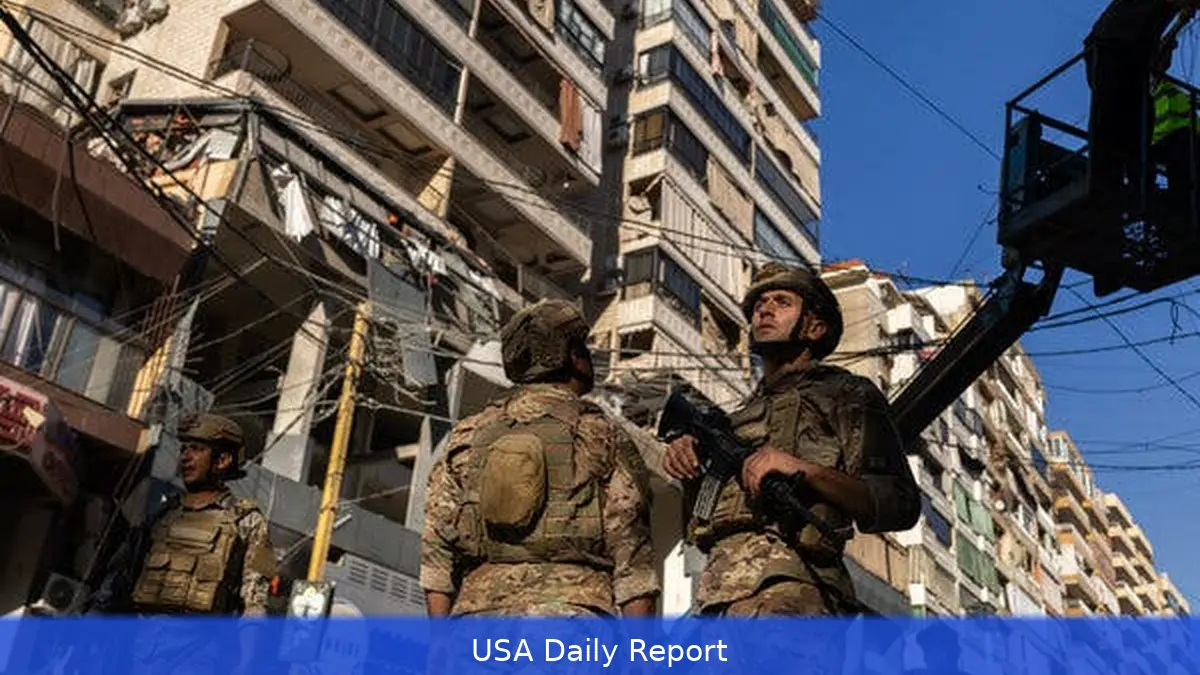
A Hezbollah field commander says he was injured in Beirut. He spoke by phone after Israel's bombardment that Lebanese authorities say killed more than 350 people.
Frontline account from a commander
He gave only a nom de guerre: Jihad. In a roughly 40-minute phone call, he described being hit by flying glass and debris when an Israeli missile exploded on a street in Beirut's southern suburbs, where he had been sheltering. Two people died near him, he said. The next day he was back on his feet.
"I have an enemy occupying my land," Jihad told NPR. "Where am I supposed to be?"
Jihad said he's 62, has been with Hezbollah's military wing since 2001 and holds what he described as the equivalent of a two-star rank. He declined to give an exact title that might identify him.
He said he splits his time between Beirut's southern suburbs, a Hezbollah stronghold, and southern Lebanon, where he commands fighters engaged against Israeli forces.
"Let's just say my expertise is those things that fly," he added, laughing — a reference to rockets his group has been firing into northern Israel by the thousands.
How the violence moved from Iran to Lebanon
The recent spike in exchanges traces to a wider regional flashpoint. The United States and Israel carried out strikes on Iran on Feb. 28, and Hezbollah responded on March 2 by firing rockets from Lebanon, according to Jihad's account. He said his group briefly paused attacks when a U.S.-Iran ceasefire was announced, because Hezbollah believed the agreement might cover Lebanon as well. But after Israel said the truce didn't apply to Lebanon and then launched a major assault on Beirut, Hezbollah resumed rocket fire.
That assault on Beirut was part of what Jihad described as Israel's "biggest" bombardment of Lebanon since the latest round of fighting began. Lebanese authorities have said the strikes on Beirut killed more than 350 people. The United States, Israel and many other countries list Hezbollah as a terrorist organization, though the group also has a political wing with 14 lawmakers in Lebanon's parliament.
Tactics, losses and lessons
Jihad said Hezbollah has changed how it operates since last year, including its command structure and tactics to avoid Israeli surveillance. He acknowledged "mistakes" in 2024 that, he said, led to Israel killing Hezbollah's then-leader, Hassan Nasrallah. He didn't give details that could be used to identify people or locations.
"We're fighting an enemy that has the latest weapons, all the technology, but we're holding our ground," he said. "If you're skilled, you let him get closer.
What kind of nerves do you have, and what kind of steadfastness? That's where the battle happens."
His account provides a rare window into Hezbollah's internal operations and battlefield thinking. Hezbollah is secretive about its military operations. Interviews with fighters or commanders are uncommon, and the group tightly controls what information reaches the public. Still, Jihad's descriptions show a force trying to adjust after heavy losses and intense surveillance.
Diplomatic ripple effects and Washington's role
The fighting in Lebanon isn't isolated; it's part of a broader regional escalation tied to strikes on Iran. Jihad's timeline ties violence there to strikes against Iran and to a brief U.S.-Iran ceasefire — a sequence that folded Lebanese battlefield choices into regional diplomacy. The group has said it opposes talks planned in Washington between Israeli and Lebanese officials that were scheduled for Tuesday; Hezbollah sees such diplomatic moves as undermined by ongoing attacks on Lebanese soil, according to the interview.
U.S. actions are implicated directly in two ways. First, U.S. Action against Iran helped trigger the retaliatory cycle that reached Lebanon. Second, Washington is hosting talks between Israeli and Lebanese parties even as exchanges on the ground continue. That creates a diplomatic challenge for U.S. Officials trying to shepherd talks while the parties remain under fire.
U.S. policymakers now face practical questions about funding, force posture and how to limit wider escalation. Military strikes that ripple across borders complicate America’s efforts to contain wider conflict. They also shape congressional debates about funding and strategy in the region. Washington has to weigh backing Israel against fears of civilian casualties, regional escalation and the political cost of hosting talks while fighting continues.
Local politics and broader stakes
Hezbollah's dual role — a political actor with parliamentary seats and an armed militia — is central to the crisis. The group told NPR that it opposes U.S.-hosted meetings between Israel and Lebanon. That stance matters inside Lebanon: Hezbollah's political allies sit in parliament, and the organization remains a major power-broker nationally.
Still, the fighting is reshaping Lebanese life. Beirut's southern suburbs have long been a Hezbollah heartland. Repeated bombardment, mass displacement and infrastructure damage undercut local services and the fragile economy. Lebanese authorities' casualty figures underline the toll on civilians and the pressure that places on Lebanon's government and institutions.
Military balance and what fighters say
Jihad emphasized the technological gap between Israel and Hezbollah — Israel's edge in drones, surveillance and precision munitions — but argued that training, patience and local knowledge evened the odds. He described steps his group has taken to limit detection and to rearm after losses. He also said Hezbollah is ready to keep fighting if it sees occupation of Lebanese land.
That position makes securing a negotiated pause far more difficult. Ceasefires tied to talks between larger powers might not satisfy a group that sees fighting as defense of territory. Because Hezbollah seized the battlefield initiative after the strikes on Iran, its actions are both military operations and political messaging aimed at its domestic base. and regional allies.
Frankly, the interview shows how battlefield dynamics and diplomacy are tangled. Fighters describe battlefield choices in personal terms. Diplomats try to negotiate at tables far from the front lines. That gap makes any deal fragile unless it addresses local concerns as well as regional strategy.
Where this leaves Washington
The U.S. Role in strikes, in ceasefire negotiations with Iran, and as host of talks between Israel and Lebanon places it at the center of competing expectations. American officials have to manage Israel's security concerns while trying to limit wider escalation. At the same time, Washington has to persuade Lebanese and regional actors that talks can work even as fighting continues — a hard sell, given Hezbollah's clear objections.
Economically, the violence raises risk for Lebanon's already weak economy. Repeated attacks and instability undercut reconstruction, foreign aid flows and investor confidence. While the interview didn't give financial detail, the pattern on the ground — heavy strikes, displacement and longer-running conflict — typically pressures public finances and humanitarian needs.
To be clear, Jihad's account is one perspective. It comes from inside Hezbollah's military ranks. But it offers a ground-level view of how regional strikes and diplomatic moves intersect with decisions taken by fighters in Lebanon's south and in Beirut's suburbs.
Related Articles
- Islamabad talks fail after 21 hours — ceasefire on shaky ground as US, Iran trade blame
- Orbán’s 16-year rule on the line as Hungary votes in a tense, unpredictable election
- Iraqi Parliament Picks Kurdish Politician Nizar Amidi as President, Ending Months-Long Deadlock
"I have an enemy occupying my land," Jihad said.


