
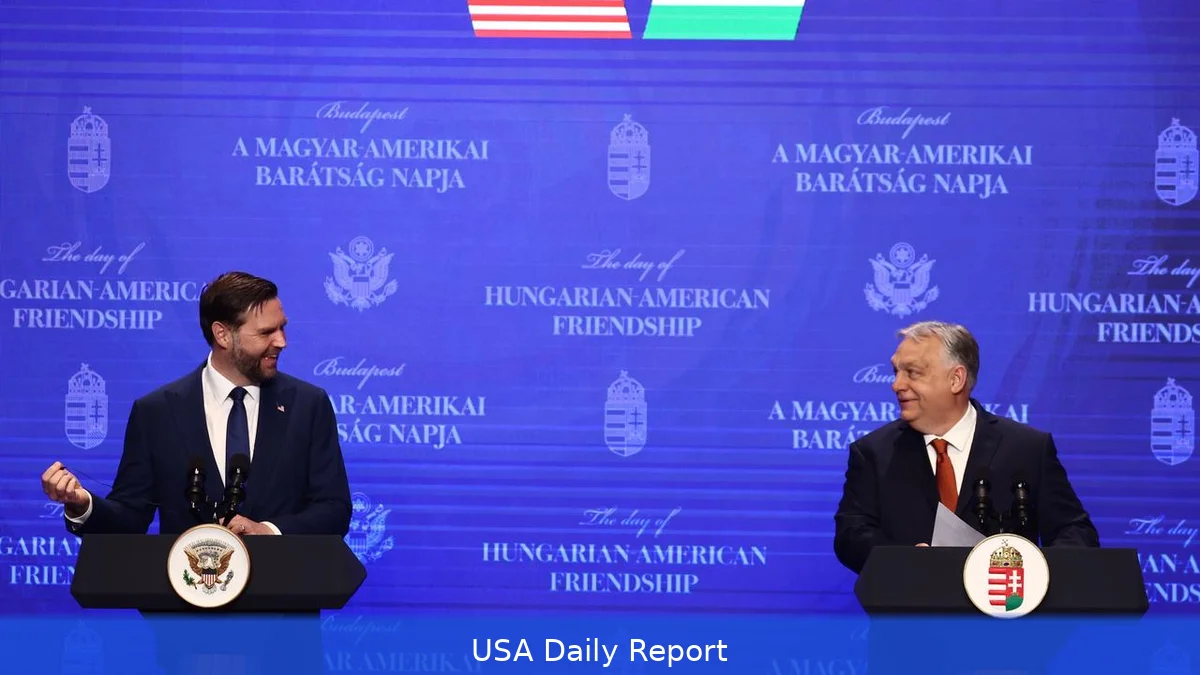
Hungarians are voting in a pivotal parliamentary election today. Polls suggest opposition leader Peter Magyar could unseat Prime Minister Viktor Orban. Orban has led Hungary for 16 years.
What voters are deciding
This is a national parliamentary election, not a routine local ballot — it will decide who controls the government in Budapest. It's a parliamentary election that could change who runs the government. Polling covered by international outlets shows Peter Magyar, the opposition leader, has a shot at toppling Viktor Orban, who has been prime minister for 16 years.
A change of government would shift Budapest's policy agenda, starting with who sits in the cabinet and which bills get pushed first. At a minimum, a change at the top could alter domestic policy and how Hungary interacts with partners abroad. Whoever wins must build a majority to govern, so coalition math will determine real policy changes; every vote can matter for that arithmetic.
Peter Magyar's name has been front and center in campaign coverage. He's been presented by opponents as an alternative to Orban's long rule.
Viktor Orban, meanwhile, is the incumbent prime minister and the most recognizable political figure in Hungary for well over a decade. The vote is being framed both inside Hungary and abroad as a choice between continuity and change.
This race has international consequences too; Hungary sits at the center of several European debates and allies will notice the outcome. It's being watched internationally because of Hungary's role in Europe and the questions about how its next government will engage with allies and markets.
How this matters to the United States
The U.S. follows elections in NATO and EU states closely; a leadership change in Hungary could affect cooperation on security and trade.
A shift in Budapest could influence diplomatic cooperation on regional security, migration policy and European coordination on global issues.
On the economic side, markets often react to political surprises. If Magyar were to replace Orban, investors might reassess Hungary's policy direction. That could mean short-term market moves, depending on how clear and credible the new government's economic plans look. Conversely, a continuation of Orban's government would signal policy continuity.

Both scenarios have implications for American companies with exposure in Central Europe and for U.S. Policymakers monitoring the transatlantic alliance. Trade ties and defense cooperation aren't decided on election night, but leadership changes can ripple into negotiations and priorities over time.
Election day dynamics
Voters have turned out across the country to cast ballots. The pace of reporting will vary as precincts finish counting and official tallies are released. International observers and media are already tracking developments, and coverage will likely focus on regional differences inside Hungary and on which parties or blocs accumulate enough seats to govern.
Expect uncertainty early on: partial returns and differing regional counts often obscure the final picture until official tallies come in. Exit polls can give an early picture, but final results often depend on the official count. That's why commentators caution against drawing conclusions from early data. Wait for the official numbers before sizing up the mandate any side claims to have won.
Political and economic implications at home and abroad
Magyar's potential win has been framed in headlines as a possible end to Orban's 16-year span in power. If that happens, it could lead to shifts in domestic governance — changes in ministers, in legislative priorities, and in how Hungary positions itself in regional institutions. Those are facts implied by the nature of parliamentary turnover.
At the same time, a continued Orban administration would mean steadier policy lines for now. That steadiness may comfort some investors and unsettle others, depending on which sectors are most sensitive to government direction. Either way, markets and diplomats tend to watch closely for early signals: policy statements, appointments, and whether the incoming or returning government looks ready to govern effectively.
Foreign capitals usually respond to actions, not slogans; they'll watch policy moves and appointments to judge the new government's direction. Allies and partners will assess the new leadership on its actions, not on campaign slogans. That means statements and moves after the election will matter more than rhetoric during the campaign.
What foreign governments and markets might look for next
Investors and foreign governments will scan the first policy statements and key appointments for signs the government will change course or stay the same. They'll watch appointments to key ministries and early legislative signals. Economic policy hints matter for bond and currency markets; diplomatic signals matter for bilateral and multilateral cooperation.
For Washington, the emphasis is likely to be on predictability and cooperation. A government that demonstrates it can deliver on commitments — fiscal, legal, or diplomatic — will generally find it easier to work with partners abroad. A messy or contested result could introduce uncertainty.
Longer-term questions
Expect the real work to take weeks: coalition talks, ministry assignments and legislative calendars decide how quickly any new agenda moves forward. Who forms a governing majority? How stable will that coalition be? What priorities will it set? Those answers will take weeks or months to become clear. The immediate contest is only the first step in a longer process of political realignment if the opposition takes power.
Thing is, legislatures and governments take time to translate a mandate into policy. Even if Magyar were to claim victory, the steps that follow — coalition talks, cabinet choices, legislative calendars — will determine how quickly change happens.
Watch points for the coming days
Watch the official count, immediate reactions from party leaders and any coalition announcements — those will show who can actually govern. That's where you’ll see whether campaign promises turn into actionable plans. Pay attention to financial indicators, too — currencies and bond spreads often react to clarity or confusion about fiscal and economic direction.
Finally, the tone of post-election messaging matters. Clear, responsible signals from whoever takes charge tend to calm markets and reassure allies. Vague or confrontational messages can do the opposite.
For now, the only confirmed facts are simple: Hungarians are voting, polls suggest Peter Magyar could replace Viktor Orban, and Orban has led Hungary for 16 years. The rest will follow as votes are counted and officials speak.
Related Articles
Viktor Orban has ruled Hungary for 16 years.
This article was created with AI assistance.


