
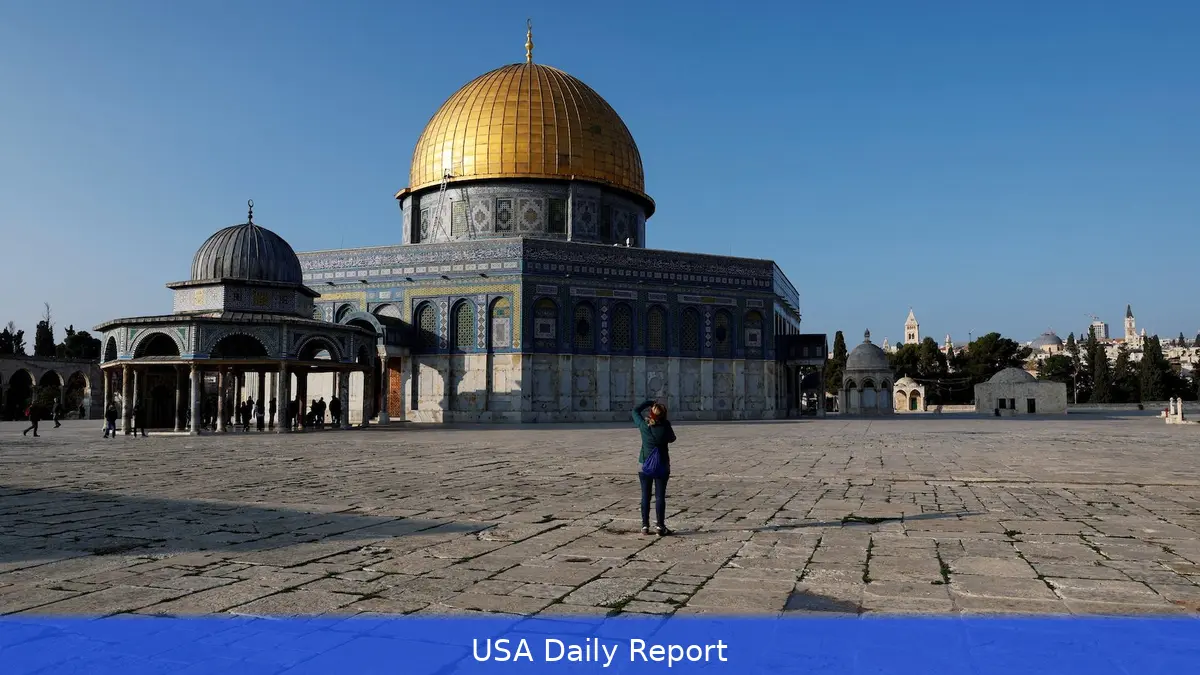
Itamar Ben-Gvir entered the Al-Aqsa compound on Sunday. The visit drew swift Palestinian and regional condemnation. Tensions around the holy site rose again.
What happened
Israel’s national security minister, Itamar Ben-Gvir, walked into the Al-Aqsa Mosque compound in occupied East Jerusalem on Sunday, accompanied by a group of Israeli settlers and heavy protection from Israeli forces. Ben-Gvir offered Jewish prayers inside the compound — an act that runs up against the long-standing practice that allows non-Muslims to visit the site but bars them from praying there, a rule tied to the status quo arrangement put in place after 1967. A video released by Ben-Gvir’s office captured him saying, "Today, I feel like the owner here," and insisting he would press Prime Minister Benjamin Netanyahu to take further steps.
The timing was sensitive. Israeli authorities had only reopened Al-Aqsa to Palestinian worshippers on April 9 after a 40-day closure tied to Israel's military offensive launched on February 28, and just days earlier some Palestinian worship was limited during Eid al-Fitr — a restriction that Palestinian leaders said was rare since 1967.
Official reactions
Jordan’s Foreign Ministry slammed Ben-Gvir’s visit, calling it a "violation of the status quo," a "desecration of its sanctity," and "an unacceptable provocation." The Palestinian Authority’s presidency also condemned the move, saying it blatantly violated the historical and legal arrangements governing the holy site, Palestinian news agency Wafa reported. Benjamin Netanyahu’s office had not commented publicly on the visit at the time of those reports.
The criticisms came quickly from actors with direct diplomatic stakes. Jordan is the custodian of Muslim holy places in Jerusalem under past agreements and tracks any change at Al-Aqsa closely. The Palestinian Authority frames such incursions as endangering the delicate order that has governed access to the compound for decades.
Pattern and context
Ben-Gvir is no newcomer to Al-Aqsa. Records show he has entered the compound multiple times since taking office in 2022 — at least 16 documented visits — and his political outlook aligns with settler groups that advocate a greater Jewish presence at the site, and some who call for replacing the mosque with a synagogue. Those calls are fiercely resisted by Palestinians and much of the wider Arab world.
Israeli settlers have also increased visits. Wafa reported that after the mosque reopened on April 9, settlers performed Talmudic rites there while under police protection. Israeli authorities have reportedly lengthened daily visiting windows for settlers by 30 minutes, a procedural shift that Palestinians view as normalizing visits that skirt the prayer ban.

West Bank raids and arrests
The Al-Aqsa incursion occurred as Israeli forces continued raids across the occupied West Bank. Wafa said at least 18 Palestinians were arrested on Sunday, including six taken during a raid on the Dheisheh refugee camp south of Bethlehem. The agency also reported that during a separate raid in Nablus a child and a young man were injured by Israeli forces. Those developments follow a pattern of arrests and operations in the West Bank linked to the broader surge in violence since Israel's recent military actions.
The visit happened amid a broader rise in security operations that has left communities on edge across the West Bank and Gaza. The mix of high-profile political visits and routine security raids has hardened public reaction on both sides.
Why it matters — regional and diplomatic stakes
Al-Aqsa isn’t just a site of worship. It's also a flashpoint that can quickly inflame local and regional tensions. Jordan’s strong wording underlines that neighboring capitals are watching closely. Palestinian leaders see frequent incursions and expanded settler access as attempts to change facts on the ground in Jerusalem — moves that feed Palestinian anger and political mobilization.
These incidents complicate diplomacy. They put pressure on regional mediators and on international partners who try to stabilize the situation. They also limit space for quieter, behind-the-scenes talks that might ease tensions if public outrage keeps rising.
Economic and U.S. Considerations
There are economic angles even in religious and security flashpoints. Markets dislike uncertainty, and the Middle East remains a sensitive corridor for global energy supplies. Renewed instability can push up risk premia, affect investor confidence, and influence the cost of military and humanitarian operations that nations, including the United States, may choose to support.
That said, the immediate economic effects of a single ministerial visit are usually limited. The bigger risk is cumulative: repeated incidents that broaden unrest across Jerusalem, the West Bank and Gaza could put upward pressure on regional insurance and transport costs, and force shifts in diplomatic and defense postures among U.S. Allies in the region.
Policymakers in Washington juggle priorities like security cooperation with Israel, ties with Jordan and Arab partners, and domestic concerns about civilian harm and religious access. Events at Al-Aqsa test how those priorities are balanced, often under intense public and congressional scrutiny.
Possible short-term fallout
For now, the immediate fallout is political rhetoric and fears of escalation. Jordan’s public condemnation and the Palestinian Authority’s denunciation increase pressure on regional channels. On the ground, heightened patrols, arrests, and settler activity are likely to keep tensions high. If demonstrations or clashes spread, the scene could shift quickly from a political dispute to broader security concerns.
And that’s the core risk: an episode that begins as a symbolic assertion of presence can spiral into wider unrest that commands international attention and makes the agendas of regional and global actors alike.
Related Articles
- Bennett-Lapid bloc trails Likud by 1 seat
- Sinai live-fire drills revive Oct. 7 fears
- Ukraine Accuses Israel of Accepting Grain From Occupied Crimea
Itamar Ben-Gvir has entered the Al-Aqsa compound at least 16 times since taking office in 2022, according to reports.
This article was created with AI assistance.


