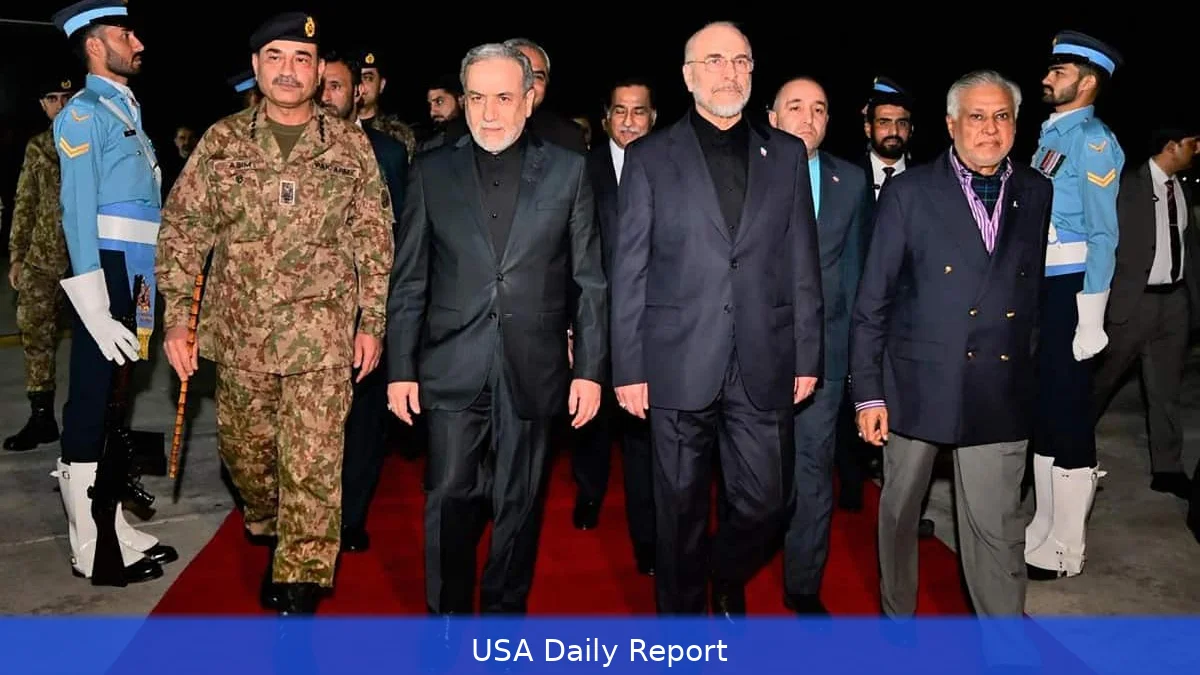
Two-week talks ended without a deal on April 11, 2026.
Highest-level meeting in decades
The United States and Iran wrapped up marathon negotiations in Islamabad on April 11 after more than a day of talks that produced no agreement. The meetings were the most senior-level contacts between the two governments since the Islamic Republic was founded in 1979. This U.S. Side was led by Vice President JD Vance; Iran's delegation spoke repeatedly through state channels and its foreign ministry.
These weren't casual chats — they were high-stakes negotiations with everything on the line. Both delegations exchanged detailed technical papers and spent hours working through the fine print. The teams repeatedly hit sharp disagreements over core issues.
Washington pushed for a fast resolution, while Tehran signaled it would bargain on a much slower timetable. Vice President JD Vance framed Washington's offer as its "best and final" package after pressing for a relatively quick resolution tied to implementation of a two-week ceasefire. Iran, by contrast, signaled a preference for drawn-out bargaining and refused to abandon uranium enrichment — a central U.S. Demand.
By evening the gulf between the delegations was so large that negotiators spent the night trying — and failing — to find common ground.
Participants said the talks were complicated not just by the issues themselves but by clashing negotiating styles. Vance sought rapid, verifiable commitments; Tehran insisted on safeguards for what it calls a peaceful nuclear program. The two sides simply moved on different timetables.
Where the disagreement centers
Nuclear enrichment was the clearest breaking point. Iran has long insisted it doesn't want a nuclear weapon and insists its program is for civilian energy. Still, Tehran's decision to increase enrichment levels in recent years alarmed U.S. And regional officials and helped trigger last year’s 12-day conflict with Israel.
In short: Washington sought a legally binding pledge barring a weapons program and limits on enrichment, and Iran refused those terms. The White House wanted what U.S. Officials described as a cast-iron commitment. Iranian officials, including its foreign ministry, argued the U.S. Demands were "excessive," and they declined to accept the conditions offered by Vance's team.
The Iranian foreign ministry also used public statements during the talks that appeared aimed at domestic audiences. It framed entering diplomacy as part of wider national defense, saying in an official comment that diplomacy was "the continuation of the sacred jihad of the defenders of the Iranian land." That rhetoric suggests Tehran wants to show its population that talks don't amount to capitulation.
Military threats and the Strait of Hormuz
Tensions outside the negotiating room heightened the stakes. President Donald Trump issued stark warnings during the ceasefire period, threatening to target Iranian infrastructure; U.S. Officials say that posture was meant to deter further escalation. Tehran has responded to those threats with its own signals of resolve and with rhetoric aimed at rallying domestic support.
Meanwhile, Iran's ability to disrupt traffic through the Strait of Hormuz remains a key lever. The narrow waterway handles a sizable share of the world’s seaborne oil shipments. Gulf News and other analysts have pointed to Tehran's control of the strait as a source of bargaining power: even talk of interference can jolt energy markets and raise shipping costs.
The U.S. has publicly said it will act to protect shipping lanes if Iran threatens them. That adds a military dimension to a dispute that many had hoped could be settled at the negotiating table. The more the talks stall, the more likely commercial risk premiums will push up energy prices — a direct economic link to consumers worldwide, including Americans facing higher gasoline prices.
Economic ripple effects
Global markets reacted to signals from Islamabad even before the talks concluded. Crude oil futures tend to climb on any hint that supply could be threatened through the Strait of Hormuz. Shipping insurers and charter rates can respond quickly, and those costs often get passed along to refiners and, eventually, to retail consumers.
That loop matters for the U.S. Economy. American households already face strained budgets from recent inflation and higher interest rates. Another spike in oil and gas prices could squeeze consumers and test policymakers. U.S. Officials have reason to worry about both the short-term market moves and the long-term risk to trade routes that underpin global commerce.
Financial markets also watch political risk closely. Investors dislike uncertainty. If markets price in a higher chance of military confrontation, stocks can wobble and safe-haven assets like the dollar and U.S. Treasuries often get a lift. So there's a financial channel from stalled diplomacy straight to Wall Street.
Political calculations on both sides
Iran's leadership faces internal constraints. Hard-line factions and public audiences expect Tehran to defend national interests robustly. Officials used state media during the talks to shape a narrative that diplomacy doesn't mean weakness. At public gatherings, pro-government demonstrators showed support for officials' negotiation posture.
On the U.S. Side, policymakers have to reconcile deterrence with diplomacy. The White House framed the offer as final and sought a quick signature, while also keeping military options visible as a backdrop. That approach aimed to extract firm concessions without getting bogged down in protracted bargaining — but it also limited flexibility at a moment when Tehran signaled it would move slowly.
Hang on though — domestic politics in both countries complicate diplomacy. Iranian leaders must balance negotiating room with keeping hard-liners satisfied; U.S. Officials must answer to voters and allies who demand security guarantees. Those constraints make creative compromise harder to achieve than many had hoped.
What's next for diplomacy and risk
With Washington saying its offer was final, the ball sits in Tehran's court. If Iran wants to reopen talks, its delegation will have to adjust lines it presented in Islamabad. Whether Tehran changes course remains unclear. Some analysts say only a shift on enrichment limits could bring the sides closer; others think a longer diplomatic track might produce trade-offs on sanctions and inspections.
Meanwhile, the economic effects of stalled negotiations could persist. Shipping uncertainty, higher insurance costs and a risk premium on oil can all keep prices elevated. U.S. Officials will watch moves at the Strait of Hormuz and any shifts in Iranian behavior. They may also step up naval escorts or coordinate with allies to protect commercial traffic.
Frankly, the breakdown in Islamabad ends one chapter. It doesn't erase the underlying issues: trust, verification, and strategic rivalry. And because the region sits astride vital energy routes, the consequences won't stay confined to diplomats' notes.
Related Articles
- Who's Running U.S. Foreign Policy? Varsha Gandikota-Nellutla and Jeremy Scahill Weigh In
- Overnight West Bank Raids Detain More Than 22 Palestinians Days After Settlement Approvals
- Islamabad talks fail after 21 hours — ceasefire on shaky ground as US, Iran trade blame
Vice President JD Vance told reporters he had presented Washington's "best and final" offer; Tehran has yet to accept it.


