
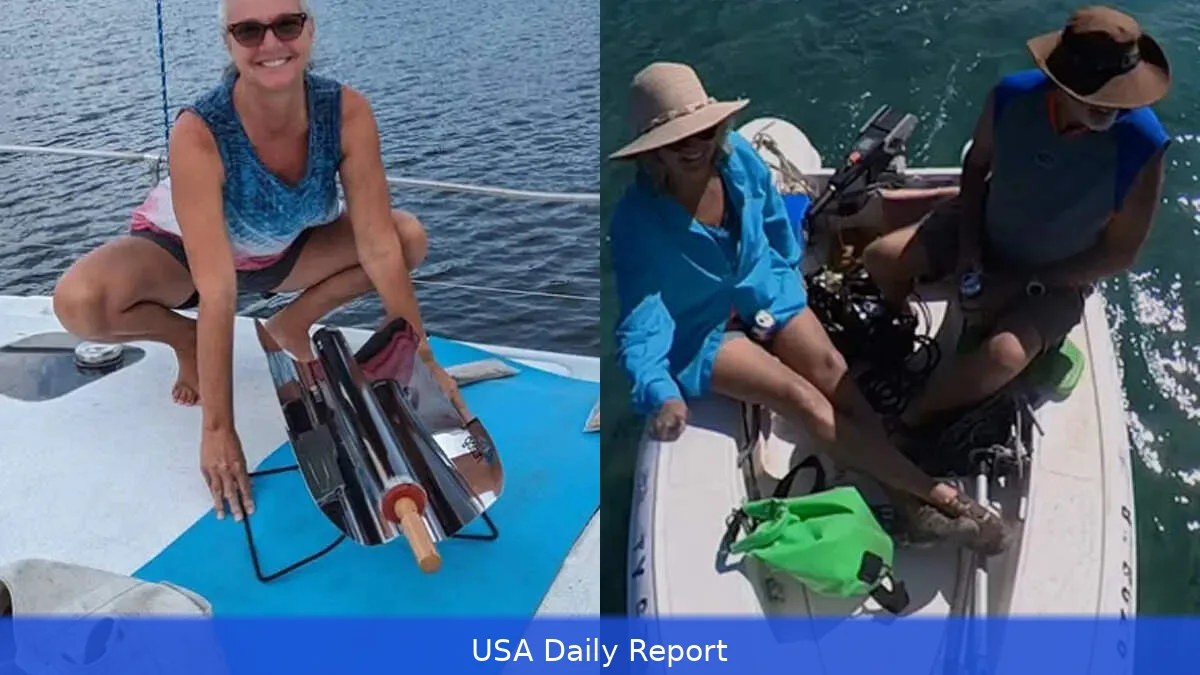
The disappearance of Lynette Hooker, a 55-year-old American woman, off the coast of the Bahamas has taken a new turn. Her husband, Brian Hooker, has been arrested amid criminal investigations, raising questions about the circumstances that led to her vanishing.
Disappearance Sparks Criminal Investigation
Brian Hooker, 59, was taken into custody late Wednesday in Marsh Harbour, a town on the Abaco Islands in the Bahamas. The arrest came five days after Lynette Hooker was reported missing during a dinghy ride between Hope Town and Elbow Cay. Authorities haven't released specific charges, but the Royal Bahamas Police Force confirmed the detention and ongoing questioning.
According to a statement from Brian Hooker’s Bahamas-based attorney, Terrel A. Butler, Hooker denies any wrongdoing and rejects allegations suggesting foul play. The attorney emphasized that Hooker has been cooperating fully with the authorities but declined to provide further details due to the ongoing nature of the investigation.
The mystery began on Saturday night when Brian claimed that Lynette fell overboard amid rough seas while they were dealing with an 8-foot, hard-bottom dinghy. He reported that Lynette had the keys to their boat, which caused the engine to shut off when she went into the water. Brian then paddled alone for hours before reaching the Marsh Harbour Boat Yard early Sunday morning, where he alerted authorities.
Family Doubts and Search Efforts
Sure, lynette’s daughter, Karli Aylesworth, expressed skepticism over the explanation that her mother simply fell off the boat. She suggested it was unlikely such an experienced sailor would accidentally fall overboard. The couple, from Michigan, has been sailing for over a decade, having progressed from a small two-person sailboat to a larger vessel purchased in Texas.
Their familiarity with the water makes the circumstances of Lynette’s disappearance all the more puzzling.
The U.S. Coast Guard has joined the investigation, elevating the case to a criminal inquiry. A Coast Guard official, while declining to comment in detail, confirmed the agency’s involvement in the search and investigation. Local Bahamian authorities initially described the operation as a “recovery mission,” signaling concern that Lynette might not have survived the incident.

Locals and fellow sailors in the area have noted the inherent risks of the Bahamian waters, especially when rough weather hits. Tim Frendenberg, a sailor with a boat anchored near the Hookers, described the situation as a stark reminder of how quickly the serene Caribbean waters can turn dangerous.
Implications for U.S.-Bahamas Relations and Maritime Safety
At first glance, this case might seem like a tragic maritime accident, but it also carries broader implications. The Bahamas is a popular destination for American tourists and sailing enthusiasts, contributing significantly to the local economy. Incidents like this one can affect perceptions of safety in the region, potentially influencing future tourism and recreational boating activity.
Right now, the U.S. Government’s involvement through the Coast Guard also highlights the importance of international cooperation in maritime safety and criminal investigations. Ensuring that American citizens are protected abroad remains a diplomatic priority, especially in regions where boating and water activities are common.
From a legal perspective, the arrest of Brian Hooker could lead to a complicated cross-border investigation. The Bahamas has jurisdiction over the waters where the incident occurred, but the involvement of American authorities and the nationality of the missing woman bring a transnational dimension to the case.
How both countries navigate this cooperation could shape future protocols for similar incidents.
The Human and Economic Toll
Beyond the legal and political aspects, the disappearance has a deeply personal impact on the Hooker family and friends. The couple’s long history of sailing together adds a layer of tragedy, as their passion for the sea now intertwines with uncertainty and loss.
Economically, the tourism sector in the Bahamas relies heavily on the perception of safety and hospitality. Any high-profile incident involving foreign visitors can ripple through the industry, affecting not just boaters but also resorts, tour operators, and associated services. The Bahamas government has expressed commitment to maintaining a safe environment for tourists, but such cases inevitably raise concerns.
Meanwhile, the U.S. State Department typically issues travel advisories for regions where safety is in question. While the Bahamas remains a favored destination, the outcome of this investigation could influence future guidance for American travelers, especially those planning maritime excursions.
Looking Ahead
The ongoing investigation will need to untangle the facts amid conflicting accounts and limited evidence. Brian Hooker’s arrest marks a big development, but the full story behind Lynette Hooker’s disappearance remains unclear. The case shows the dangers that can arise even for seasoned sailors and the challenges of conducting search and rescue operations in unpredictable waters.
As authorities continue their work, the incident is a somber reminder of the risks associated with maritime travel. It also highlights the crucial role of international cooperation in resolving complex cases involving foreign nationals. The Hooker family—and many others who sail these waters—await answers that could bring closure or spark further inquiry.
Related Articles
Brian Hooker remains in custody as Bahamian authorities and the U.S. Coast Guard press on with their investigation. The search for Lynette Hooker has shifted from rescue to recovery, leaving a community and family grappling with uncertainty.
This article was created with AI assistance.


