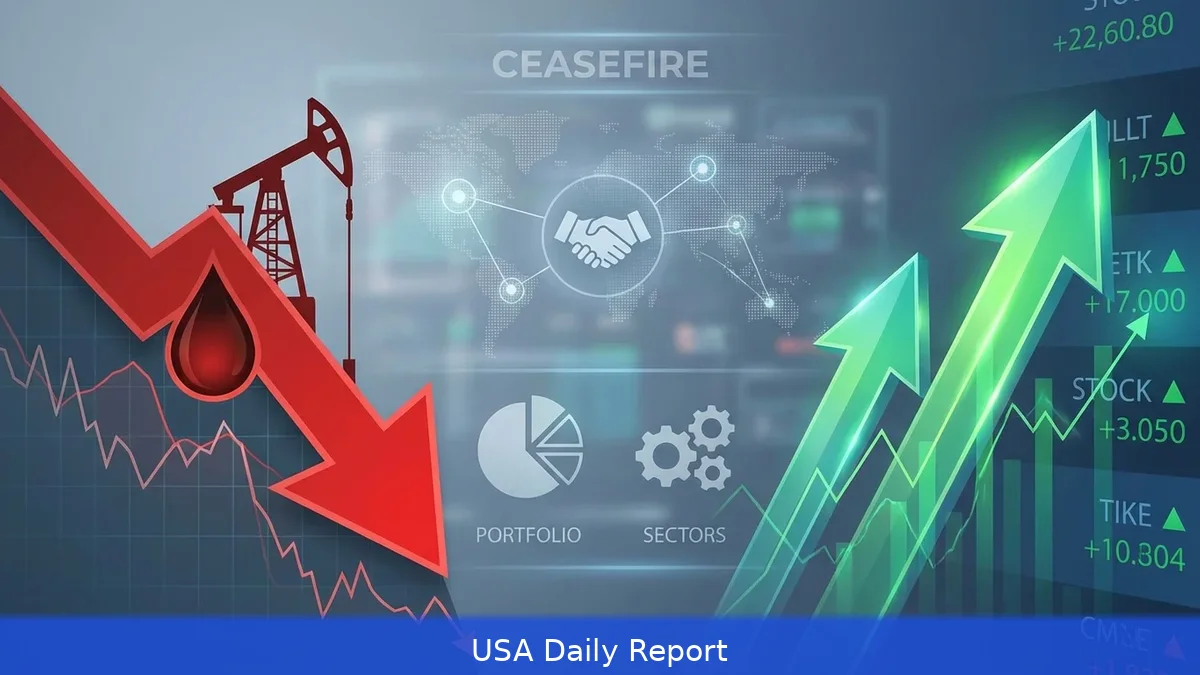
The US stock market lost steam Thursday after a brief surge fueled by hopes of a ceasefire between the US and Iran. Investors are growing wary again as tensions simmer and geopolitical risks persist.
Stocks Retreat Amid Renewed Geopolitical Tensions
The S&P 500 edged down 0.1% by mid-morning in New York, wiping out gains from the previous day’s rally. The Nasdaq 100 barely moved, reflecting a cautious mood among investors. Meanwhile, the Cboe Volatility Index hovered near 21, signaling steady market unease.
The optimism that pushed stocks higher on Wednesday came mostly from short sellers covering their positions rather than new buying. Hedge funds, according to Goldman Sachs’ trading desk, ended the trading session in a “better-for-sale” mode, suggesting lingering skepticism about the durability of the rally.
Retail investors, too, chose to sit this one out. Data from JPMorgan Securities showed individual traders reducing their exposure to ETFs to the lowest level in over 10 months. That’s a shift from last year, when retail buyers would jump on dips. Now, many are skipping those opportunities altogether.
Ceasefire Hopes Tempered by Fresh Doubts
The rally on Wednesday had been sparked by news of a tentative two-week ceasefire deal between the US and Iran. But the fragile truce has hit turbulence quickly. Tehran accused opposing factions of breaching the agreement, while disagreements over whether the ceasefire covers Lebanon have emerged as a critical sticking point.
President Donald Trump weighed in by pledging to keep US troops stationed in the Persian Gulf ahead of further talks. The region remains a tinderbox, and investors are watching closely to see if the Strait of Hormuz — a key oil shipping lane — will reopen or stay effectively closed.
This matters because the Strait’s closure has pushed oil prices back up to around $98 a barrel after a short drop. Higher oil prices usually mean trouble for stocks, especially if they stick around for a while.
Oil Prices Could Pressure the Market
Kevin Brocks, director at 22V Research, laid out the stakes plainly. If the Strait of Hormuz stays shut and oil prices keep climbing, stocks will face “more durable headwinds.” He said that if the channel reopens, stocks might only see about a 5% upside from current levels.
“If oil prices rise again, US$80-US$120 is an inflation problem and series of potential supply chain shocks, but no real recession risk,” Brocks explained. “With oil above US$120, recession risk starts to climb.”
Past events support this. When oil prices rise sharply, companies face higher costs that often trickle down to consumers. Inflation picks up, squeezing spending power and corporate profits alike. So far, the market is grappling with where oil prices will settle in this volatile period.
Economic Data tells a complicated story
On the economic front, US consumer spending barely increased in February, showing signs of strain amid stubborn inflation pressures. That’s a problem because consumer spending accounts for about 70% of US economic activity. If people hold back on purchases, growth could slow.
Right now, still, the labor market shows some resilience. Weekly jobless claims fell to their lowest level in nearly two years, indicating that layoffs remain limited and hiring is steady. That’s a silver lining, but rising inflation and geopolitical uncertainties could weigh on consumer confidence going forward.
Market watchers are trying to gauge how these factors will play out. Some see the economy holding steady, while others warn the combination of higher energy costs and geopolitical risks could tip the US toward recession.
Tech Stocks Lead the Charge — But With Caution
Goldman Sachs highlighted activity in tech stocks as a key driver on Wednesday. Long-only investors piled into mega-cap tech companies, pushing up demand. Goldman’s TMT Momentum Pair trade basket, which includes memory, semiconductor, and optical stocks on the long side and software stocks on the short side, posted its best one-day move ever.
However, the bank’s long software versus short semiconductor basket recorded its worst one-day performance on record, underscoring the uneven sentiment within the tech sector itself.
This shows the mixed sentiment. Investors seem eager to chase gains in some tech segments while betting against others, reflecting uncertainty about which areas will thrive amid inflation and geopolitical risks.
Retail investors, meanwhile, remain cautious and mostly on the sidelines. That reluctance could limit the upside for stocks unless more concrete signs of easing tensions or economic stability emerge.
What’s Next for Markets?
The future hinges on several key developments. Will the US and Iran manage to hold the ceasefire? Can the Strait of Hormuz reopen to oil shipments? How will inflation and consumer spending evolve over the next few months?
Investors are watching closely for answers. For now, the rally that looked promising just days ago has hit a wall amid rising doubts and risks. Volatility is likely to persist as the market digests these conflicting signals.
Related Articles
- Treasury Yields Hold Steady Amid Mixed U.S. Economic Data and Rising Oil Prices
- Fed Minutes Reveal Split Views on Inflation and Rate Moves Amid Iran Conflict
- US Consumer Spending Slows as Inflation Keeps Pressure on Economy
As last week’s rally fades, the market still faces big questions about geopolitical stability and inflation. The road ahead could get rocky.


