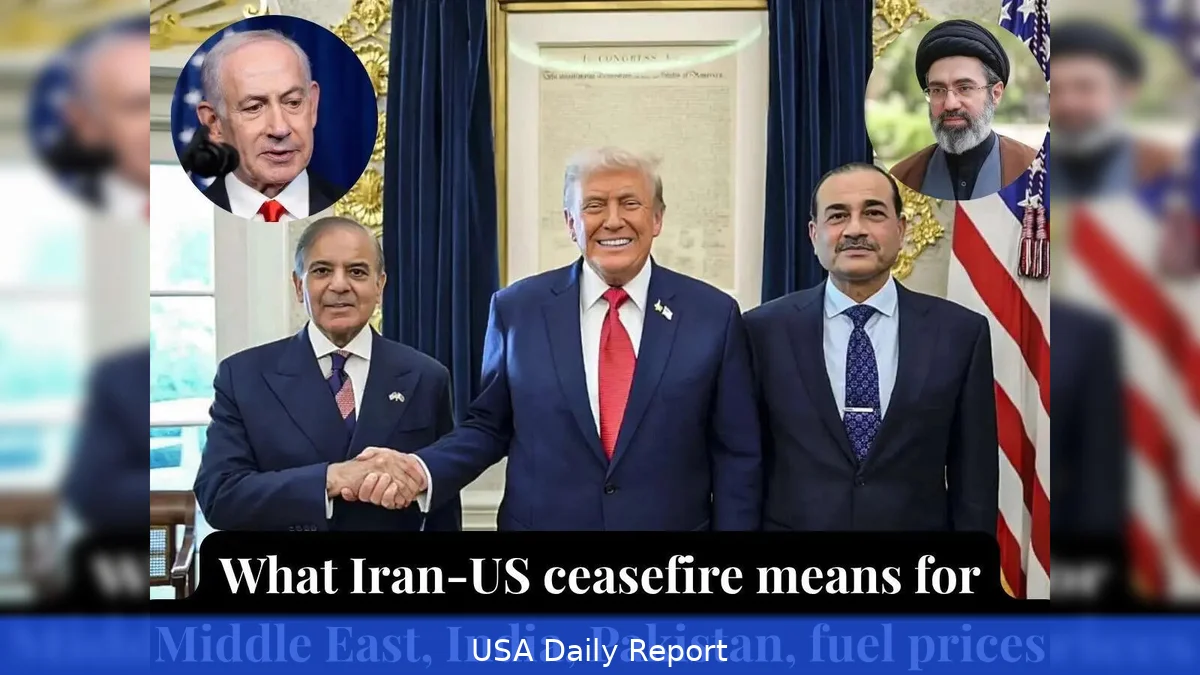
A fragile ceasefire between Iran and the United States took effect last week, pausing weeks of intense conflict. Both sides are claiming victory, yet the deal makes people wonder about what each has actually given up—and what’s still to come.
Ceasefire Comes Just Before Trump’s Deadline
Just hours before President Donald Trump’s ominous deadline to "obliterate" Iranian civilization, the US and Iran announced a two-week ceasefire. The move suspended US air strikes on Iran, which had been intensifying since late February, and marked a rare moment of pause in a conflict that has already claimed more than 2,000 lives and disrupted global energy markets. Trump hailed the ceasefire as a strategic win on his Truth Social account, saying the US had met its military objectives and was close to securing a lasting peace deal. “Almost all of the various points of past contention have been agreed to,” he posted.
Iran reciprocated with its own commitment to halt "defensive operations" if attacks stopped, and promised to allow safe passage through the Strait of Hormuz—a critical chokepoint for global oil shipments. But inside Iran, the ceasefire deal sparked outrage among many citizens and hardliners who view any concession to US pressure as a betrayal.
What Each Side Gave Up—and What They Hold On To
Look, neither side walked away from the table without some form of compromise, but the concessions are far from straightforward. The US suspended bombing for two weeks, signaling a willingness to dial back its military campaign. Yet Trump’s statement suggested this pause was a tactical step towards finalizing a "definitive Agreement" aimed at long-term peace not only with Iran but across the Middle East.
For Iran, agreeing to let ships navigate the Strait of Hormuz again is a big step. The strait handles about 20% of global oil trade, and its closure or disruption had sent energy prices soaring worldwide.
Allowing passage eases pressure on the global economy, but domestically it’s a hot-button issue. Many Iranians see it as caving to foreign threats, especially after enduring repeated US strikes amid ongoing negotiations.
Basically, political analysts warn that these concessions could become major sticking points in upcoming talks scheduled to resume in Islamabad under Pakistani mediation. The deal’s vague language leaves room for interpretation, and both sides have already shifted from rigid red lines they once insisted on. That puts future discussions on uncertain footing.
Economic Shockwaves Ripple Worldwide
One of the clearest impacts of this conflict has been on oil markets. The US-led strikes on Iranian targets and Iran’s threat to block the Strait of Hormuz sent crude prices to levels not seen in years. Energy companies scrambled as tankers were stranded, and countries dependent on oil imports braced for rising costs.
The ceasefire has calmed some of these fears—at least temporarily—by reopening a key transit route and halting active bombing campaigns.
The US economy itself bears the cost of prolonged conflict. Military expenditures have surged, and uncertainty in the Middle East often translates into volatility in global markets, affecting everything from gas prices at the pump to stock market confidence. Trump’s move to pause bombing could be seen as an effort to stabilize these economic variables ahead of his reelection campaign, though it we'll have to wait and see if peace will hold.
Political Calculations and Domestic Reactions
Trump’s announcement serves a dual purpose: it presents a narrative of strength to his domestic audience while positioning the US as a willing negotiator on the international stage. Yet the president stopped short of confirming whether US diplomats would participate in the Islamabad talks, leaving some uncertainty about the depth of engagement to come.
In Iran, the ceasefire has deepened internal divisions. While the government embraced the deal, many citizens and political factions remain skeptical. The repeated US air strikes during prior negotiation rounds have fueled distrust, and the perception of bowing to external pressure risks undermining Iran’s negotiating stance. Foad Izadi, a professor at the University of Tehran, pointed to this pessimism as a major hurdle, given that Iran felt attacked even as talks proceeded.
Frankly, pakistan’s role as mediator highlights regional stakes. Islamabad must balance its own diplomatic relationships with both Washington and Tehran, while managing security concerns on its borders. The success or failure of these talks could reshape alliances and power dynamics across South Asia and the Middle East.
Looking Ahead: What’s Next in Islamabad?
With formal talks set to resume in Pakistan’s capital, the ceasefire is just the opening act. Analysts expect hard bargaining over the points both sides left vague or softened. Will Iran be pushed to make deeper concessions on its nuclear and military programs? Can the US maintain a firm negotiating position without reigniting hostilities? And how will regional players like Israel and Gulf states react if the deal moves forward?
These questions linger as the region waits. The ceasefire bought time—but it didn’t resolve the core issues. Both Tehran and Washington have reasons to claim victory, but neither side has truly surrendered ground that matters. The next two weeks—and the talks to come—may reveal which side has the upper hand.
Related Articles
- Conflict with Iran Threatens Global Food Supply Chain Amid Rising Costs
- US-Iran Ceasefire Sends Oil Prices Tumbling, But Fuel Costs for Americans May Not Drop Soon
- Pro-Regime Crowds Rally in Tehran Amid New US-Iran Ceasefire Deal
As Islamabad prepares to host critical negotiations, the fragile ceasefire stands as a test of whether diplomacy can replace conflict in a volatile region. The world watches closely, aware that the stakes extend far beyond the battlefield.


