
Supporters thronged Tehran's squares again Sunday. Officials framed the stalled talks as a victory.
Talks in Islamabad end without agreement
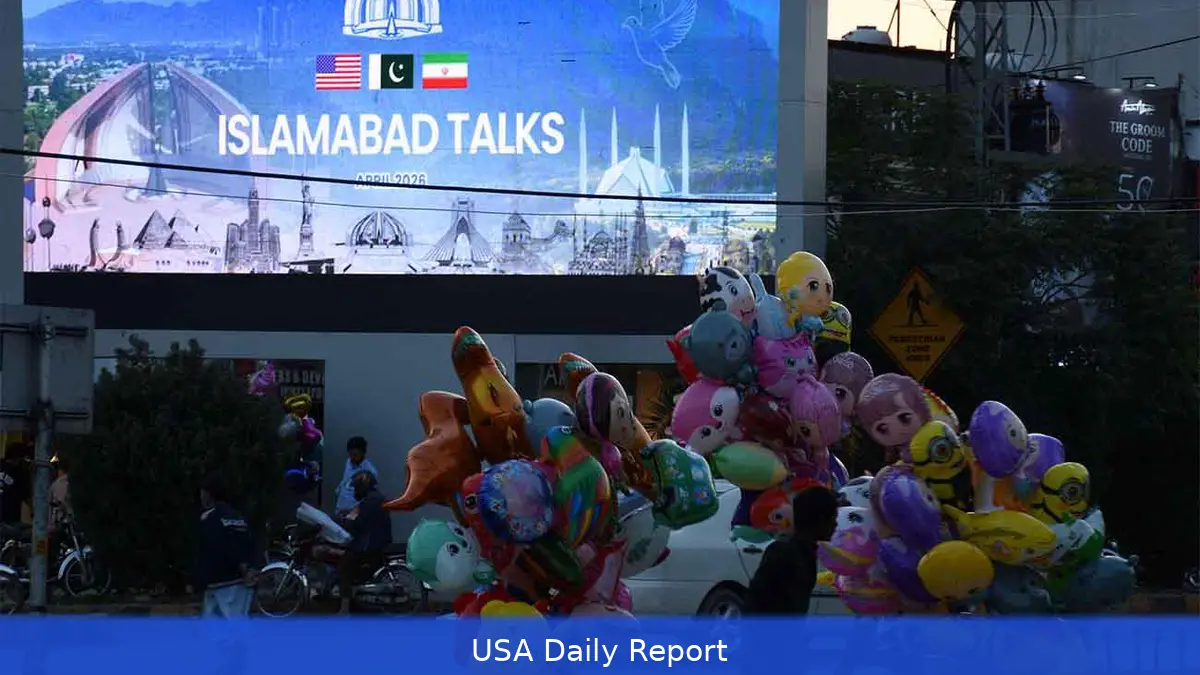
Iranian and U.S. Negotiators spent a day and night in Islamabad this weekend but left without a deal.
"The U.S. Delegation ultimately failed to gain the trust of the Iranian delegation in this round of negotiations," said Mohammad Bagher Ghalibaf, parliament speaker and head of the Iranian team. He framed the outcome as proof that Tehran wouldn't yield on core points.
The talks were supposed to show if diplomacy could slow or stop the fighting, but they clearly didn’t.
Iran's foreign ministry signaled low expectations even before the delegations left Pakistan, saying it didn't expect a breakthrough after a single day of meetings.
Officials urge street presence and show of force
Back home, Iran's leadership doubled down on a public campaign of defiance. Judiciary chief Gholam-Hossein Mohseni-Ejei thanked the negotiating team for "guarding the rights" of government supporters and pointed to nightly gatherings across Tehran and other cities.
State television broadcast footage of paramilitary figures addressing crowds. An IRGC aerospace division member, shown in military garb and a mask, told cheering supporters that if "the enemy doesn't understand, we will make them understand," according to state media.
Those street protests aren’t just for show. They send a clear message to Washington that Tehran still has loyal supporters ready to back the regime openly.
Hardline lawmakers echoed the line. Hamidreza Haji-Babaei, deputy to the parliament speaker, said the only acceptable outcome would be a United Nations Security Council resolution that he described as effectively forcing the U.S. To "surrender" and lifting sanctions on Iran and its leaders. Amir Hossein Sabeti, a Tehran lawmaker aligned with the Paydari hardline faction, thanked the negotiation team "for not backing away from red lines," and said "there is no way left but to show resistance in the field against these evildoers," according to state accounts.

President Trump issues stark warning
Across the globe, Washington answered with a tougher line. U.S. President Donald Trump said the U.S. Navy would immediately start the process of "blockading any and all ships trying to enter, or leave, the Strait of Hormuz." He added the military remained "locked and loaded" and would "finish up" Iran "at the appropriate moment," comments that underline how quickly rhetoric can escalate.
The Strait of Hormuz is a narrow but vital route for global energy trade. When the U.S. President threatens to block it, shipping companies and traders take notice.
Economic and strategic fallout
Now, analysts and market players are trying to figure out if these tough public statements will actually lead to real moves. A blockade or harassment of vessels would complicate tanker routing and raise insurance and chartering costs for ships that carry crude and refined products through the Hormuz chokepoint.
That, in turn, could ripple into global energy markets. Not just barrels; it's also the psychological effect on traders who price in risk. Banks and energy firms may reassess exposure to the region, and logistics firms could alter routes to avoid contested waters. Those shifts add cost and delay, and they change trade flows.
Still, both sides know they can’t push too far without risking bigger fallout. A formal maritime blockade would be a major escalation that could draw other powers into the dispute. And Iran's decision to keep supporters visible on the streets signals a domestic calculation: public demonstrations help the regime show resolve without crossing into a different category of military escalation.
Political implications for Washington
Domestically, the U.S. Administration's hardline posture will land differently across Washington. Some lawmakers and voters will welcome a firm stance aimed at curbing Iran's military capabilities and regional influence. Others will worry that threats of a blockade and aggressive rhetoric could snap back as higher energy costs and market shocks for the U.S. Economy.
Right now, the White House faces a choice between leaning on diplomacy for incremental de-escalation or pursuing riskier coercive measures. If the U.S. Follows through on maritime pressure, it will have to marshal legal and military resources and explain the move to international partners — not an easy sell if allies fear wider conflict.
Regional dynamics and allies
Regional capitals are watching closely. Gulf states, European partners and others with trade ties through Hormuz have to weigh the costs of aligning with an American blockade or urging restraint. That's partly why careful diplomatic outreach matters: countries that rely on Gulf energy exports could be pressed into taking positions they don't want.
Iran’s parliament and judiciary praised the delegation’s tough stance, but they’re also weighing the risks involved. Sustained nighttime rallies, paramilitary mobilization and repeated state television messaging are designed for domestic audiences as much as for international ones. They signal unity at home even as the country faces sanctions and economic pressure.
What comes next
Neither side offered a road map out of the impasse after the Islamabad talks. Iran's leadership said Washington's demands — including calls to stop nuclear enrichment on Iranian soil and to cede control over the Strait of Hormuz — were unacceptable, and hardliners said failure to yield was reason to celebrate.
For its part, the U.S. Public warnings suggest Washington is prepared to move beyond talk if it deems that necessary. That stance could lead to further bargaining in international forums or raise the odds of more direct pressure at sea.
Bottom line: both capitals are signaling that they won't blink easily. Streets in Tehran will stay crowded. Naval routes around the Gulf will stay tense. And markets and diplomats will be watching for the next move.
Related Articles
Mohammad Bagher Ghalibaf, parliament speaker and head of Iran’s negotiating team, said the U.S. Delegation "ultimately failed to gain the trust of the Iranian delegation".
This article was created with AI assistance.


