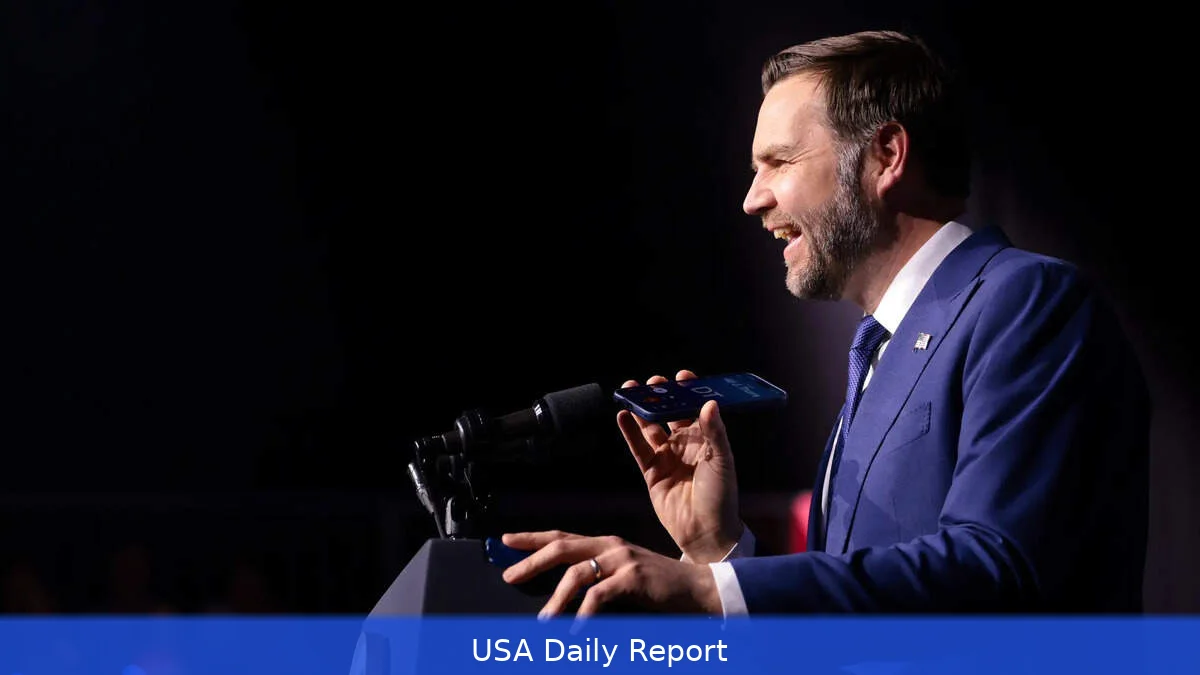
Vice President JD Vance left for Islamabad to open U.S.-led talks with Iran.
Diplomacy in motion
Vice President JD Vance boarded Air Force Two Friday for Pakistan, where he will head into talks meant to address the recent spike in hostilities between Tehran and a U.S.-Israeli coalition. He briefed reporters before departure and said the talks were expected to be constructive. Vance also warned the United States wouldn't tolerate stall tactics or bad-faith negotiating moves.
The trip comes after a sharp burst of strikes and public threats, which pushed tensions higher on both sides.
What brought everyone to the table
The immediate backdrop is a series of exchanges that escalated this winter. President Donald Trump on Feb. 28 announced "major combat operations" against Iran, saying U.S. Forces joined with Israel in strikes aimed at Iranian military and government targets. He also set a deadline demanding Iran fully reopen the Strait of Hormuz or face broader strikes on its critical infrastructure.
Hours before that deadline ran out, Trump said he would pause planned bombing for two weeks if Iran reopened the strait — a move that opened a narrow diplomatic window. Iranian Foreign Minister Abbas Araghchi responded by saying "safe passage through the Strait of Hormuz will be possible via coordination with Iran's Armed Forces and with due consideration of technical limitations," signaling Tehran's willingness to discuss navigation but also asserting its own operational role.
Ceasefire claims and competing messages
At the same time, Israeli Prime Minister Benjamin Netanyahu publicly backed a ceasefire with Iran while clarifying that Lebanon was not included in any such agreement. Israeli strikes continued across parts of Lebanon in recent days, and Hezbollah's leader pushed back hard against any return to the pre-conflict status quo.
Hezbollah Secretary General Naim Qassem said in a statement that the "resistance" wouldn't accept a return to the previous situation and urged Lebanese officials not to make what he called "free concessions." His comments framed the group's posture as uncompromising and suggested negotiations over a ceasefire could face immediate resistance on the ground.
What's at stake for the United States
The U.S. Delegation, led by Vance, arrives with clear instructions from the White House, the vice president said, and an American negotiating team ready to extend an open hand if Iran negotiates seriously. He told reporters before leaving that "we're looking forward to the negotiation. I think it's going to be positive," while also emphasizing the U.S. Won't be "receptive" if Tehran tries to "play us."
That tough rhetoric matters because the White House already tied a pause in planned bombing to Iran's actions. A successful negotiation could ease a direct military flashpoint for U.S. Forces in the region. At the same time, a failed diplomacy would leave the White House having publicly offered a pause in the use of force and then seeing the pause evaporate, complicating both domestic political messaging and regional military posture.
Iran's offer and its limits
Tehran has put forward what it described as a 10-point plan to form the basis for negotiations. At the same time, Iranian officials have rejected any ceasefire terms that would allow their forces to rearm during a pause in fighting. That stance suggests Iran wants talks to include firm guarantees on security and operational leeway.
Thing is — Tehran framing its own conditions means any agreement will need to bridge competing demands over verification and timelines. If either side uses a pause to rearm or entrench, the other will likely walk away — both sides have signaled deep mistrust on those points.
Regional actors and spillover risks
Even a U.S.-Iran agreement could unravel if regional actors like Israel or Hezbollah reject its terms; both have already signaled stances that could block a deal. Israel has publicly signaled support for a ceasefire with Iran but excluded Lebanese operations from that picture. Hezbollah's hardline statements complicate any attempt to fold Lebanon into a broader deal.
Those local dynamics affect U.S. interests directly: planners must consider how allies and proxy groups will react, not just whether Tehran keeps its promises.
Political and economic implications at home
Domestically, the White House is juggling public expectations and operational risk. The administration has already tied a short pause in strikes to a potential diplomatic breakthrough; now Vance's talks will be read through a political lens in Washington. If talks yield at least a temporary de-escalation, the Biden administration's successor will likely claim diplomatic progress. If they fail, critics will point to the risk of a U.S. Stance that looked like a bargain without guarantees.
On the economic front, the Strait of Hormuz featured prominently in the exchange. The administration's public deadline aimed at reopening the strait showd how quickly maritime access became central to policy. While negotiators didn't lay out trade or energy specifics in the briefings before Vance's departure, any disruption to sea lanes tends to ripple through markets and insurance costs — and U.S. Officials know that.
What to watch in Islamabad
Vance's delegation will probably begin formal talks Saturday morning local time, according to U.S. Officials. Observers will watch several tangible signs: whether Iran accepts a monitoring mechanism for any reopening of the strait; whether a ceasefire will include specific limits on forces and materiel movement; and whether regional actors like Israel and Hezbollah accept parallel understandings or push back.
Watch whether negotiators spell out a concrete verification mechanism for Strait of Hormuz transit — that will be the concrete test of any deal. If the parties can agree on how to confirm compliance, the odds of a stable pause improve. If they dodge that question, any arrangement will likely be fragile from the start.
Possible outcomes and their contours
At the best, a deal could produce a standing framework for reduced hostilities: controlled maritime transit, fewer airstrikes, and a calendar for follow-up talks. At worst, the talks could collapse quickly, returning the region to the cycle of strikes and counterstrikes that spurred the diplomatic push in the first place.
Either result will send immediate signals to U.S. Lawmakers, regional capitals, and markets. And it will shape how the White House justifies its policy choices to an American public that's already seen public threats, pauses and military action in rapid succession.
Broader diplomatic signals
The fact the U.S. Sent its vice president to Islamabad shows the administration's decision to handle the issue at a high diplomatic level. Pakistan, as host, is serving as a meeting ground rather than a party to the dispute. The choice of venue and the seniority of the U.S. Envoy reflect an attempt to move talks beyond back-channel engagements and into more formal, trackable sessions.
What happens next will hinge not just on words but on measurable steps. If either side thinks the other is using the pause to reposition or rearm, trust will collapse.
For now, the talks are underway.
Related Articles
- Trump Says He’s ‘Optimistic’ on Iran Truce as Questions Grow Over Hormuz and Next Steps
- Israeli strikes deepen Lebanon crisis as hospitals warn of collapse and Strait of Hormuz reopens dispute
- Investors Rally as US-Iran Ceasefire Offers Fragile Hope Amid Lingering Tensions
"I think it's going to be positive," Vice President JD Vance said before departure.


