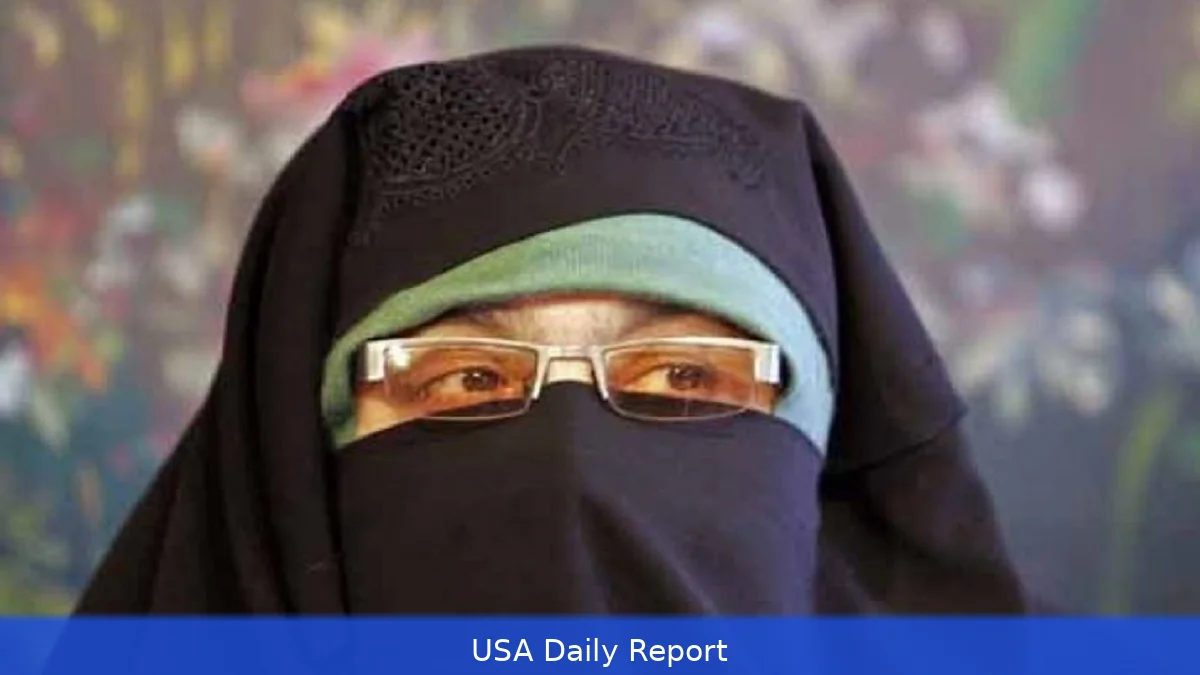
Aasiya Andrabi, a 64-year-old Kashmiri separatist leader, was handed three life sentences by an Indian court last month. The ruling sparked widespread criticism, highlighting India’s tough approach toward dissent in the disputed Kashmir region.
A Harsh Sentence Amid Political Tensions
On March 24, a special court in New Delhi convicted Aasiya Andrabi, founder of the banned women’s group Dukhtaran-e-Millat, sentencing her to three life terms. Two of her close associates, Sofi Fehmeeda, a 36-year-old wheelchair user, and 61-year-old Nahida Nasreen, were also jailed for 30 years each. All three were arrested back in 2018 under the Unlawful Activities Prevention Act (UAPA), India’s strict anti-terror law.
Andrabi was originally charged with waging war against the Indian state, fundraising for terrorist activities, and membership in a terrorist organization. But Judge Chander Jit Singh’s 290-page verdict found no solid proof supporting these serious accusations. Instead, the court convicted her on lesser counts like promoting hostility between communities, undermining national unity, and instigating public disorder. Key terrorism-related charges, including financing terrorist acts and involvement in armed rebellion, were dropped.
Speech or Crime? The Debate Over Andrabi’s Conviction
What stands out is the court’s reliance on Andrabi’s speeches and public statements rather than concrete acts of violence. The judgment mentions videos and posts where she allegedly endorsed stone-pelting and armed resistance, but it also notes there was no direct link between her rhetoric and specific violent incidents. This court acknowledged her influence might inspire some Kashmiris—especially young people—to view Kashmir as illegally occupied and consider violence as a method of resistance.
That said, legal experts and activists have slammed the verdict, arguing that Andrabi’s conviction essentially punishes her political beliefs and speech. The UAPA, critics say, has been broadened over the years to target ideological dissent rather than just violent acts.
Initially introduced in 2008 by the Congress-led government, the law was strengthened significantly by Prime Minister Narendra Modi’s administration, allowing authorities to label individuals as terrorists without substantial evidence.
Human rights groups say this case shows a broader trend of India cracking down on government critics in Kashmir. They argue that criminalizing speech undermines democratic principles and stifles legitimate political debate in a region already fraught with conflict.
Context: Kashmir’s Long-Standing Conflict
The backdrop to Andrabi’s sentencing is the decades-long dispute over Kashmir, a Himalayan territory claimed by both India and Pakistan. Since 1947, Kashmir has been a flashpoint for multiple wars and ongoing unrest. The Indian government revoked Kashmir’s special autonomous status in 2019, a move that intensified tensions and led to widespread protests and arrests.
Groups like Dukhtaran-e-Millat have been part of the separatist movement seeking Kashmir’s independence or merger with Pakistan. Andrabi, known for her fiery speeches and activism, has long been a polarizing figure.
While supporters view her as a freedom fighter, Indian authorities label her a threat to national security.
Political and Economic Implications
India’s tough stance on Kashmir affects both the country and its relations abroad. Domestically, the crackdown on dissent fuels resentment among Kashmiris, potentially deepening alienation and unrest. The ongoing conflict deters investment and development in the region, which suffers from high unemployment and limited infrastructure, slowing economic growth.
Internationally, the case adds to criticism of India’s human rights record. The U.S. And other countries often balance strategic partnerships with India against concerns about civil liberties. This Andrabi verdict could complicate diplomatic ties, especially as the U.S. Pushes for stability in South Asia amid rising competition with China and Pakistan’s influence.
Here's the thing — for the U.S., Kashmir remains a sensitive issue. American policymakers have long supported peaceful dialogue between India and Pakistan but rarely take a strong public stance on Kashmir’s political status. Human rights concerns, however, increasingly factor into bilateral relations, with advocacy groups calling for more pressure on New Delhi to respect dissent and free speech.
Economically, instability in Kashmir affects regional trade and connectivity projects, including those linked to China’s Belt and Road Initiative. The area’s security situation influences U.S. Investments in India and the broader Indo-Pacific strategy. A volatile Kashmir could hamper efforts to strengthen regional alliances and maintain open trade routes.
Looking Ahead
Aasiya Andrabi’s case makes us question how India balances security with civil rights. It highlights the dangers of broad anti-terror laws that can be used to silence political opposition. As India continues to assert control over Kashmir, the risk of further alienation and unrest remains high.
The U.S. keeps a close eye on India’s treatment of dissent in Kashmir to gauge what might happen in the region. This verdict reveals how far India will go to silence separatists, which could influence regional politics for a long time.
Aasiya Andrabi’s sentencing marks a stark moment in Kashmir’s troubled history, reflecting India’s tough stance on dissent. How this will affect Kashmir’s future and India’s relations with the world remains uncertain.


