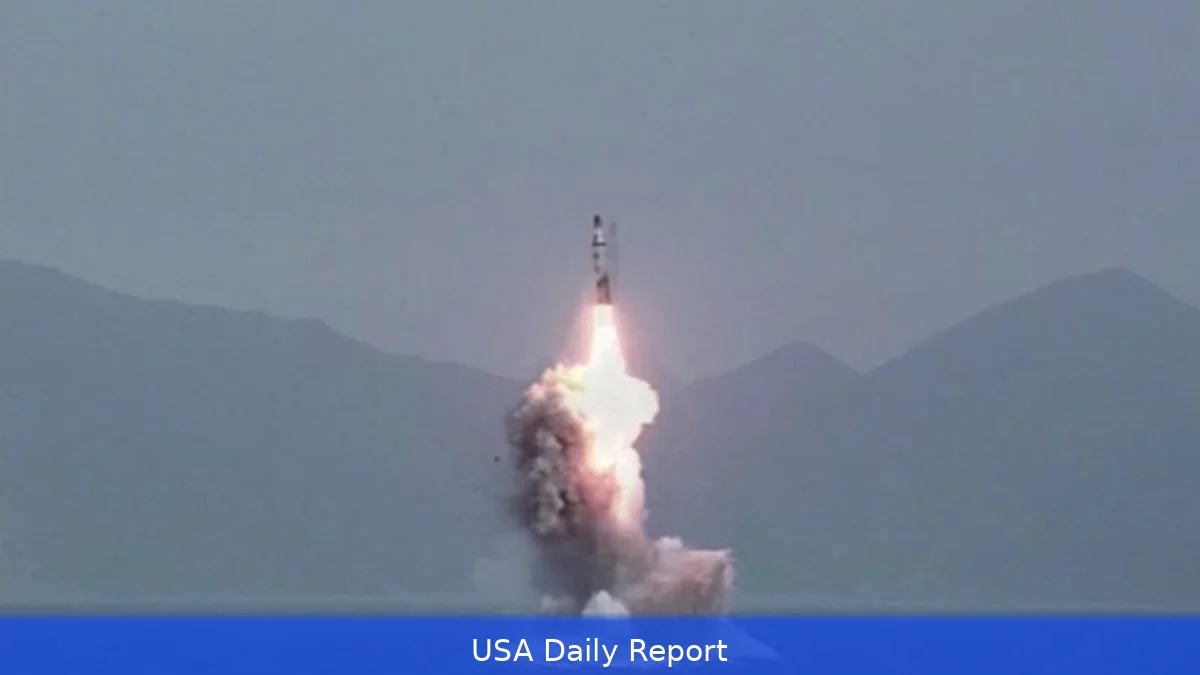
North Korea announced this week that it has tested ballistic missiles armed with cluster-bomb warheads, marking a big development in its weapons capabilities. The tests come amid ongoing hostility with South Korea and heightened concerns from the U.S. And its allies.
Missile Tests and New Weaponry
North Korea’s state media reported that its recent weapons tests, conducted over three days starting Monday, included ballistic missiles fitted with cluster-bomb warheads. The short-range Hwasong-11 missiles look a lot like Russia’s Iskander missiles. They fly low and can maneuver to avoid missile defenses.
According to the Korean Central News Agency, these cluster munitions can destroy areas covering 6.5 to 7 hectares, packing a powerful punch. This indicates Pyongyang is working to enhance both the destructive reach and tactical flexibility of its missile arsenal.
North Korea didn’t just fire missiles; it also showed off anti-aircraft weapons, electromagnetic systems, and carbon-fiber bombs, pointing to a wider effort to upgrade its military tech.
Regional Military Responses
Here's the thing — south Korea’s Joint Chiefs of Staff confirmed detecting multiple missile launches from North Korea’s eastern coast on Wednesday, with missiles flying between 150 and 434 miles before landing in the sea. At least one projectile was launched from near Pyongyang on Tuesday.
Japan’s Defense Ministry reported that none of the missiles entered its exclusive economic zone, easing immediate fears of direct provocation toward Tokyo. Meanwhile, the U.S.
Military assessed that the launches didn't present a direct threat to the United States or its allies at this time.
South Korean officials are still analyzing the data, sharing findings with U.S. And Japanese counterparts to better understand the advancements North Korea claims in its weapon systems.
Political Climate and Diplomatic Stalemate
The launches highlight persistent tensions between North and South Korea, dashing hopes for improved relations. Pyongyang recently reiterated its hostility toward Seoul, branding South Korea its "most hostile enemy state." A vice foreign minister derided South Korea’s efforts to revive stalled dialogue as foolish.
Sure, since 2019, North Korean leader Kim Jong Un has halted nearly all diplomatic relations with both Seoul and Washington, following the breakdown of nuclear talks with former U.S. President Donald Trump.
Instead, Kim has accelerated development of nuclear-capable missiles aimed at U.S. Allies in Asia and the American mainland.
North Korea’s deepening ties with Russia and China add complexity to the geopolitical balance, with those relationships potentially influencing the dynamics of any future negotiations or conflicts.
Implications for the United States and Allies
While these missile tests didn’t directly threaten the U.S., they still pose a serious challenge to security and stability in the Indo-Pacific region. Washington continues to rely heavily on alliances with South Korea and Japan to counter North Korea’s military advances.
Using cluster-bomb warheads on ballistic missiles changes the game and could make missile defense much harder. These weapons are designed to spread submunitions over a wide area, raising concerns about civilian harm and escalating the risks of conflict.
Rising tensions might mess with trade routes and markets, since the Korean Peninsula plays a key role in global supply chains. Investors and policymakers watch closely for any signs that military developments might trigger sanctions, conflict, or instability affecting trade with China, South Korea, and Japan.
Diplomatic talks with North Korea are still stuck, so the U.S. is focusing mainly on military readiness and deterrence. However, without dialogue, the risk of miscalculation or escalation remains high.
Related Articles
- Why Keeping the Strait of Hormuz Open Matters for US Trade and Energy Security
- Iran and US Halt Hostilities Amid Ceasefire Claims: What’s Really at Stake?
- Conflict with Iran Threatens Global Food Supply Chain Amid Rising Costs
These missile tests with cluster-bomb warheads show North Korea is stepping up its military game, ready to raise tensions with South Korea and push back against U.S. influence. How Washington and its allies respond could shape security dynamics across East Asia for years to come.


