
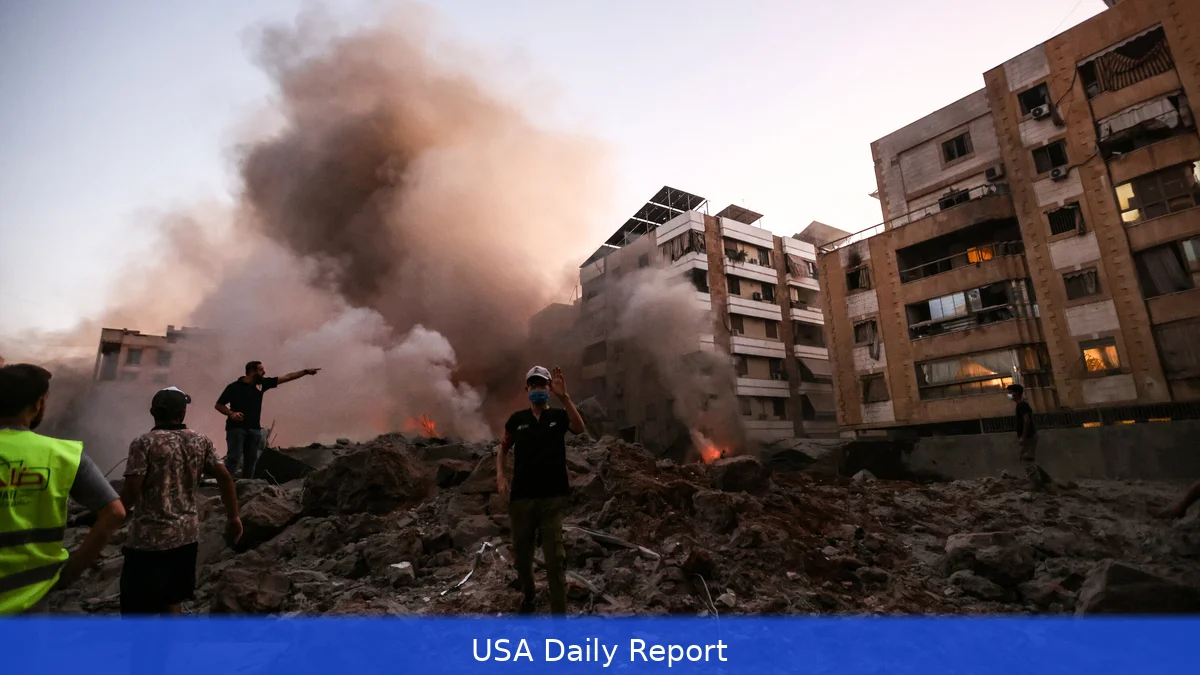
Beirut’s streets still echo with fear after Israel launched its most intense air attacks on Lebanon in years. The devastation has left hundreds dead and thousands wounded, fueling uncertainty over a fragile ceasefire and raising questions about regional stability.
Devastation Amid Confusion
On a recent day in central Beirut, Em Walid was tending to her clothing store when the sky erupted with explosions. The violence was a stark reminder of the sharp escalation in hostilities between Israel and Lebanon. At least 254 people have died and over 1,160 were injured in a series of strikes targeting Beirut, its suburbs, southern Lebanon, and the Bekaa Valley. These numbers could rise as rescue efforts continue amid the rubble.
The timing of the attacks added to the shock. They came just hours after a ceasefire brokered by Pakistan between the US and Iran went into effect. While Pakistan and Iran maintained Lebanon was part of this two-week truce, Israel and the United States disagreed. US President Donald Trump called Lebanon a “separate skirmish,” and Israeli Prime Minister Benjamin Netanyahu declared the truce excluded Lebanon.
That discrepancy has sown confusion and fear among Lebanese civilians, many of whom had hoped for a respite from violence. "Even the street cats outside started running," Walid recalled.
Because no one’s sure if Lebanon is part of the ceasefire, it’s been harder to bring peace and help those in need.
The Broader Conflict
Since early March, Israeli attacks have surged again after Hezbollah, backed by Iran, fired rockets. Though a ceasefire had been nominally in place since late 2024, Israel’s near-daily strikes have killed hundreds of Lebanese civilians, deepening resentment and tension.
Hezbollah’s March 2 rocket attack was its first response to more than a year of Israeli ceasefire breaches. It came just days after the assassination of Iran’s Supreme Leader Ayatollah Ali Khamenei, an operation carried out by the US and Israel. That assassination marked the start of a broader US-Israel campaign against Iran, dragging Lebanon into the escalating conflict.
Since then, Israeli bombing and a ground invasion have killed about 1,700 people and forced over 1.2 million to flee their homes. The humanitarian toll has been staggering, with many fleeing their homes amid ongoing violence.

Political and Regional Stakes
Israeli leadership appears determined to press its advantage in Lebanon.
Netanyahu’s government views the current fluid situation as an opportunity to weaken Hezbollah’s capabilities. Analysts like Dania Arayssi of the New Lines Institute warn that the US-Iran deal could complicate Israel’s campaign if it includes a ceasefire with Iranian proxies like Hezbollah.
Hezbollah, for its part, insists on its right to respond to Israeli aggression. The group has vowed that the blood of those killed won't be forgotten and framed its resistance as a legal defense against occupation. The persistent attacks and counterattacks risk further destabilizing Lebanon and the surrounding region.
Lebanon’s weak government and economy are facing serious trouble. This country is already grappling with political instability, economic collapse, and a refugee crisis. Renewed violence threatens to unravel any progress toward recovery and deepen sectarian divides.
Implications for the United States
Lebanon’s conflict is closely linked to the US’s bigger goals in the Middle East. Washington’s alliance with Israel and its confrontational stance toward Iran shape much of the regional dynamics. The Pakistani-brokered ceasefire aimed at curtailing US-Iran hostilities, but Lebanon’s exclusion complicates that goal.
For the US, the ongoing clashes raise concerns about escalating violence spilling beyond Lebanon’s borders. Increased instability could disrupt energy supplies, strain diplomatic relations, and fuel anti-American sentiment in the region.
Economically, the fighting could impact global oil markets. Lebanon’s proximity to major pipeline routes and shipping lanes means any regional flare-up risks reverberating through energy prices worldwide. The US economy, still recovering from recent shocks, could feel the effects if oil prices spike again.
And the humanitarian crisis in Lebanon puts pressure on American and international aid agencies. Millions displaced need urgent assistance, and the US faces calls to increase support amid complicated political calculations.
Human Impact and Uncertain Future
Everyday Lebanese people are stuck in the middle of these big political fights. Displaced families try to return home while fearing fresh attacks. Businesses like Em Walid’s face ruin amid the chaos. The psychological toll is immense, with widespread fear gripping communities.
No one knows what’s next for Lebanon. The divergent interpretations of the ceasefire, ongoing Israeli operations, and Hezbollah’s defiance create a dangerous stalemate. Without clear diplomatic breakthroughs, the violence could spiral further, dragging the entire region deeper into conflict.
For now, Lebanon waits — afraid and uncertain — as global powers wrestle over its fate.
Related Articles
- Sinai live-fire drills revive Oct. 7 fears
- Ukraine Accuses Israel of Accepting Grain From Occupied Crimea
- Bennett-Lapid bloc trails Likud by 1 seat
The latest wave of violence in Lebanon shows the fragility of peace efforts tied to the wider US-Iran conflict. How Washington and its allies choose to engage in the weeks ahead may define the region’s stability and Lebanon’s path forward.
This article was created with AI assistance.


