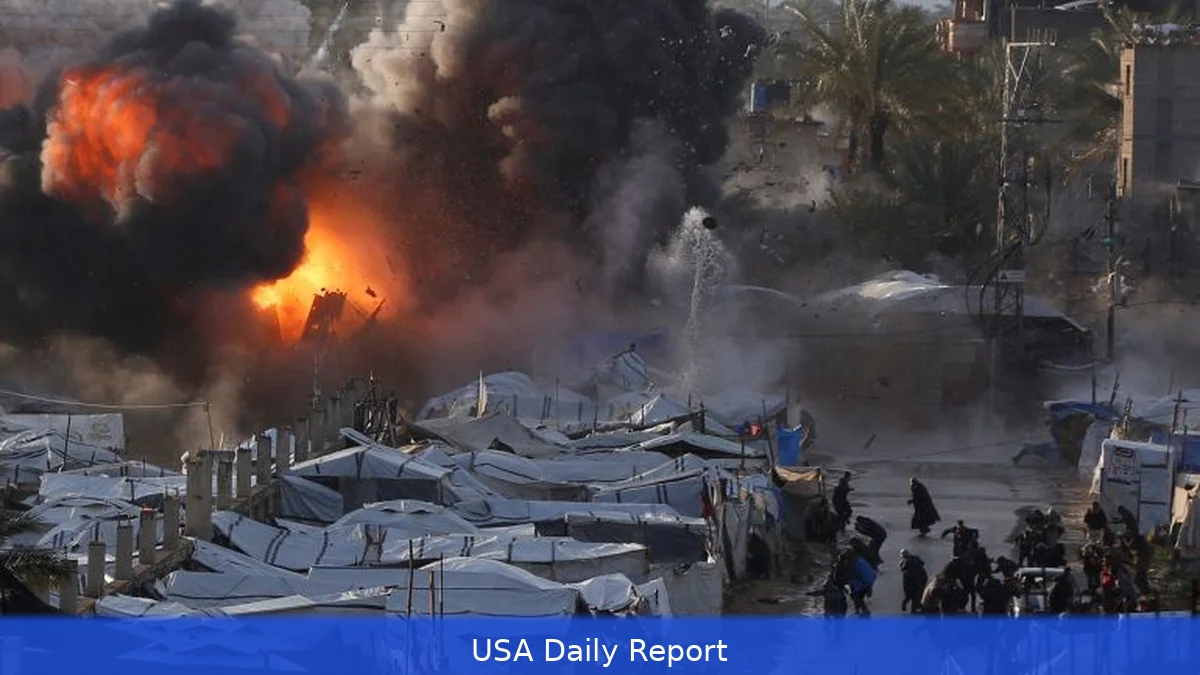
Six months after a ceasefire put forward by President Trump, Gaza hasn't seen the large increase in aid that was promised.
What was promised — and what followed
People expected President Trump's ceasefire to open Gaza up for more humanitarian aid and ease the blockade that’s been holding the area back. The promise was straightforward: stop the fighting, relax the rules, and allow more food, fuel, and medical supplies in. But six months on, the surge of aid that many expected hasn't materialized, and restrictions on deliveries remain tight.
Look, the promise changed expectations. Diplomats, aid workers and families in Gaza all took the pause in hostilities as a signal that the choke points on aid would be eased. Yet the daily reality on the ground — limited access, slow approvals and tight controls on what and how much can move in — has meant the volume of relief hasn't climbed to the levels needed for recovery or basic stability.
On-the-ground impact
The failure to expand aid flows affects more than relief convoys. After months of constrained access, public services and markets struggle to restart. Hospitals operate with limited supplies. Shops sell what they can source, often at rising prices. Repair work on damaged infrastructure stalls when materials can't get through. Families coping with displacement and loss remain dependent on piecemeal shipments instead of a steady, predictable supply chain.
Point is, a ceasefire alone doesn't restore a functioning economy or a stable humanitarian system. Those outcomes depend on a steady stream of goods and predictable rules for entry — neither of which have arrived in force since the pause in fighting.
Humanitarian groups now say that knowing what to expect is just as important as how much aid arrives. When deliveries require repeated approvals or are routed through constrained checkpoints, planning becomes impossible. That raises costs and reduces the effectiveness of aid. Aid agencies have to divert staff and funds into logistics and negotiating access rather than delivering services.
Why the surge didn't happen
There are several reasons a promised increase in aid can stall. Political agreements often slow to translate into operational changes. Security concerns can keep blockades in place even after hostilities pause. And bureaucratic hurdles — from customs to convoy coordination — can delay or limit shipments.
The net effect: what was supposed to be a quick ramp-up turns into months of stop-start deliveries.
And there are consequences inside Gaza beyond humanitarian stress. Businesses that saw hope in a reopening can't rely on it. Construction projects stay on hold. Unemployment and the informal economy remain sources of pressure for families that hoped the ceasefire would mean a faster return to normal life.
Political fallout and U.S. Interests
The stalled aid surge has political consequences for Washington. The U.S. Government — under any administration — faces pressure from lawmakers, humanitarian groups and voters to show results when they back or broker ceasefires. If a pause in fighting doesn't bring visible relief, it erodes confidence in diplomatic efforts and gives critics ammunition to argue that talks produce little on the ground.
For U.S. Policy, the difference between a ceasefire that opens borders and one that doesn't is meaningful. A successful aid flow can stabilize communities, reduce the risk of renewed violence and improve U.S. Credibility in the region. A failed or stalled rollout can do the opposite — it can create the impression that agreements are symbolic rather than practical.
Economically, restrained aid also has indirect effects that matter to the U.S. A slower recovery in Gaza keeps demand for reconstruction imports muted. It prolongs humanitarian operations funded by American taxpayers and non-governmental organizations. And it can fuel instability that raises regional energy and security risks — factors that can affect global markets and U.S. Strategic planning.
Operational and diplomatic fixes that matter
Fixing the aid shortage takes more than just promises. It calls for operational steps: clearing supply routes, streamlining approvals, and agreeing on what kinds of goods can move freely. It also means international actors — including the United States — need to press for those steps if they want the ceasefire to deliver on its humanitarian promise.
Aid planners stress that clear timelines and openness are crucial. When agencies know when and how much to expect, they can scale programs and deploy staff efficiently. Without that information, donors — including the U.S. Government — face hard choices about long-term funding and emergency spending.
Longer-term implications
The ceasefire gave a rare chance to move from emergency help to rebuilding. That window narrows the longer the aid surge is delayed. Reconstruction projects become more expensive, local markets stay fractured, and the social fabric that would support recovery frays further. The economic pain doesn't end at Gaza's borders — it ripples into neighboring areas that rely on cross-border trade and stability.
For Washington, the question is both strategic and domestic. Strategically, U.S. Policymakers need to show that their diplomatic moves can produce concrete results. Domestically, constituencies that pushed for a humanitarian focus will expect to see measurable outcomes. If those outcomes don't appear, political pressure can build on the administration to change course or to push harder in multilateral forums.
What to watch next
Keep an eye on whether the practical steps match the diplomatic promises. Are checkpoints being eased? Are convoy approvals happening faster? Is the variety and volume of goods growing? If the answers turn from 'no' to 'yes', it will signal that the ceasefire is starting to deliver. If not, the ceasefire risks becoming a temporary pause rather than a pivot toward recovery.
There's also a domestic timeline in Washington. Lawmakers who backed diplomatic efforts will want briefings and evidence of progress. Aid agencies will continue to press for clearer rules and more resources. Those domestic debates will shape U.S. Engagement and funding decisions in the months ahead.
Bottom line
The ceasefire offered a path to ease Gaza's blockade and boost humanitarian aid. Six months on, that promise hasn't been fulfilled — and the gap matters for lives on the ground, for regional stability, and for U.S. Policy credibility.
Related Articles
- Lebanon reels after deadliest day as Israel agrees to direct talks in Washington
- How Washington Could Turn a Fragile Ceasefire Into a Lasting Peace
- Trump's Strait of Hormuz threat raises risks and leaves hard choices unchanged
Six months after President Trump's ceasefire, restrictions on aid to Gaza remain tight.


