
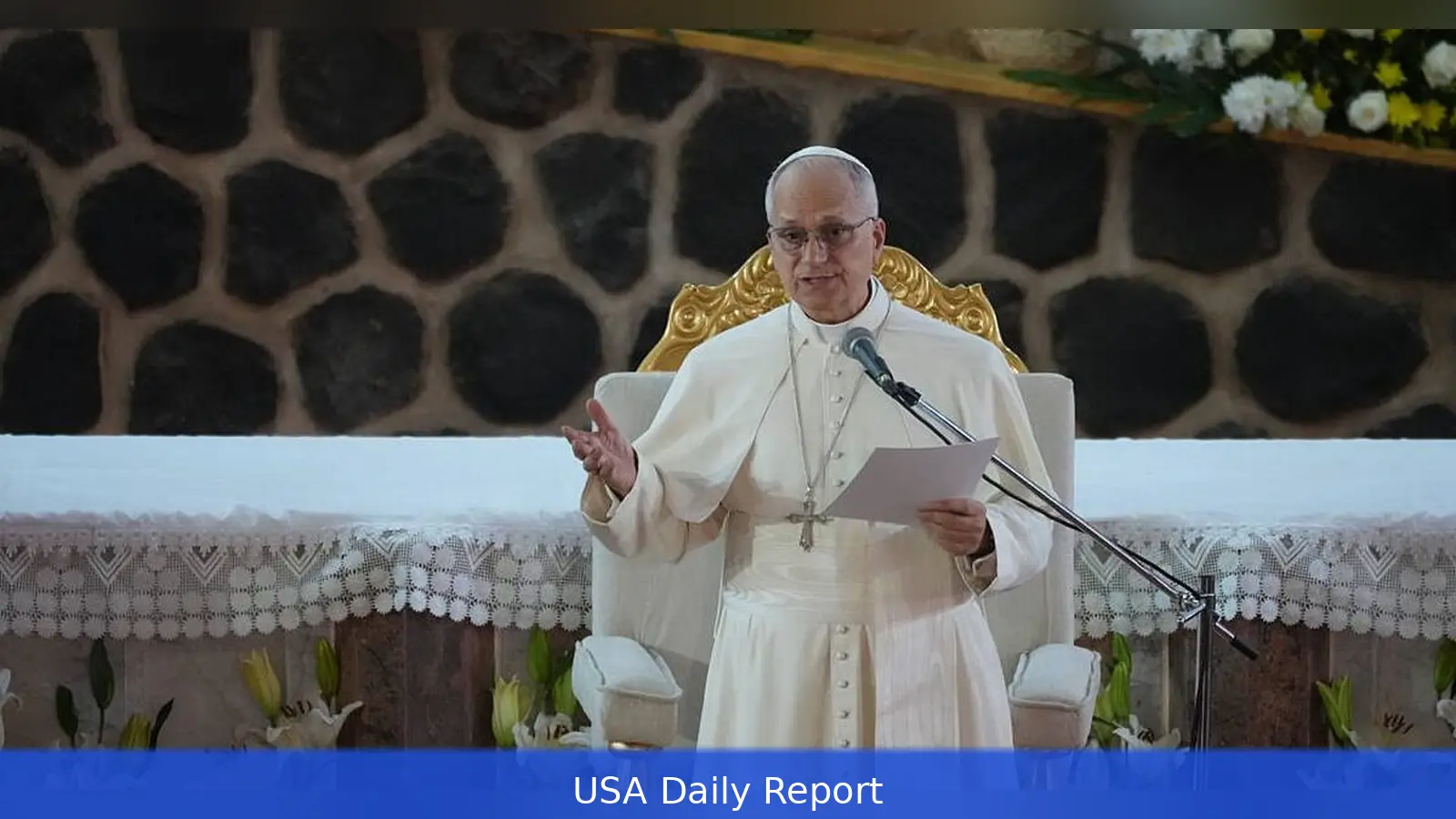
Pope Leo condemned outsiders who exploit Africa during Mass in Cameroon. He also highlighted the importance of interfaith respect after visiting a mosque.
Pope's rebuke at Mass
At Mass in Cameroon he called out outsiders for exploiting local people and resources, and the congregation heard him make that point clearly. He cast his words as a moral rebuke, accusing outside actors of profiting while communities suffered — a direct charge aimed at unjust deals.
In the homily and remarks that followed the service, the pope called attention to patterns of extraction and unfair deals that he said leave ordinary people worse off. He urged those gathered to resist resignation and to insist on respect for communities, their land and their labour.
The tone was pointed. It stood out during a visit otherwise focused on pastoral care and interreligious outreach.
Setting and symbolism
The comments came amid a multi-day visit in Cameroon that mixed liturgical events with encounters across faith communities.
The pope's stop at a local mosque earlier in the trip drew particular notice. He described that visit as meaningful and used it to underline a simple message: despite differing beliefs and practices, people can live together in peace.
The remark followed the Mass and served as both a religious and diplomatic signal — a reminder that faith leaders can press for social justice while promoting coexistence.
Why the message matters
His comments sit between two debates: how foreign business has shaped African economies and how perceived unfairness fuels political backlash.
Foreign companies and governments have long been involved in Africa's mining, oil, gas and forestry industries, often sparking local complaints. Those activities have helped build infrastructure and export earnings, but they've also left many communities feeling shortchanged when environmental harm, weak governance or opaque contracts limit local benefits.
When the pope criticizes exploitation, it puts those local grievances in the spotlight and makes them harder for officials to ignore. That matters because religious leaders often shape public sentiment in ways that elected officials and international investors can't easily counter. When the head of the Catholic Church singles out exploitation, it lends moral weight to demands for greater transparency and fairer terms.
Implications for foreign policy and business
Expect diplomats and business leaders to take note — the pope's words rarely pass unnoticed in those rooms. Governments that maintain close ties with African states — including the United States — monitor civil-society signals that could affect stability or influence electoral politics.

U.S. Policymakers balance several priorities in Africa: development cooperation, security partnerships and trade. Growing public pressure over perceived exploitation can push local governments to renegotiate deals, which in turn can alter the risk profile for foreign investors. For American firms operating in extractive sectors, that can mean legal and reputational risk, and potential demands for more local content, higher taxes or stricter environmental safeguards.
At the same time, Washington's diplomatic posture often emphasizes good governance and anti-corruption. The pope's comments may add moral urgency to those aims, encouraging U.S. Agencies and lawmakers to press for stronger oversight, more support for civil society, and aid that focuses on institutions as much as projects.
Economic ripple effects
When communities rise up over perceived exploitation, it can halt production and squeeze supply chains. That has immediate commercial consequences. Commodity prices react to production interruptions and investor sentiment. Banks and insurers factor political risk into lending and underwriting decisions, which raises financing costs for projects deemed controversial.
American companies that source raw materials from Africa or that invest in extraction face practical choices: engage more deeply with local stakeholders, increase transparency, or step back from projects that could spark sustained backlash. Each option carries costs and trade-offs.
Political dynamics inside Cameroon and beyond
The pope's sermon touched a broader regional concern: how African leaders manage foreign investment and domestic expectations.
Governments that are seen as complicit in lopsided deals risk losing legitimacy. That can play into opposition politics and can complicate relations with donor countries. Religious leaders' public interventions can amplify grievances and raise mobilisation risks.
For countries where the Catholic Church retains strong influence, the pope's words can shape debate at the national level. They may also encourage local bishops and civic groups to press for accountability in contracts and for policies that deliver more tangible benefits to communities.
Interfaith angle and social cohesion
The pope framed his critique in moral terms and paired it with an explicit call for peaceful coexistence across religions. His praise for the mosque visit stressed that different beliefs and practices need not preclude mutual respect.
By pairing economic justice with interfaith outreach, he tries to cut two problems at once: the root causes of conflict and the risk that economic anger turns religious. It's a message intended to cut across political divides and yearnings for social stability.
What That could mean for U.S. Engagement
The U.S. mixes aid, security deals and trade efforts in its Africa policy, and those strands often collide when resource issues flare. Public pressure from a religious leader might push U.S. agencies to rethink how they back governance and resource-management reforms. It might also steer congressional attention toward legislation that conditions aspects of bilateral assistance on contract transparency or environmental safeguards.
Private-sector actors could see pressure from multiple directions: civil-society campaigns inspired by moral leaders, stronger regulatory demands from host governments, and greater scrutiny by investors worried about reputational harm. Each of those pressures can reshape dealmaking and the kinds of projects that move forward.
Longer-term stakes
Religion and morality have long influenced political life in Africa. The pope's intervention is part of that pattern. It reiterates a theme that resonates with many citizens: that foreign investment should lift lives, not simply extract value.
If the public takes the message to heart, governments may face higher expectations. That's likely to produce clearer rules for investors, more community demands for benefit-sharing, and a shift in how international partners approach development — toward greater transparency and local participation.
How quickly those changes appear is uncertain. Policy reforms can take years. But moral pressure from a global spiritual leader can accelerate debate and give local activists a potent framing for their demands.
Related Articles
- Pope Leo Urges Cameroon to Root Out Corruption
- IMF warns against broad fuel subsidies
- Magyar urges quick handover amid Hungary veto standoff
“I think the visit to the mosque was significant and to say that although we have different beliefs, we have different ways of worshiping, we have different ways of living, we can live together in peace,” Pope Leo said afterwards.
This article was created with AI assistance.


