
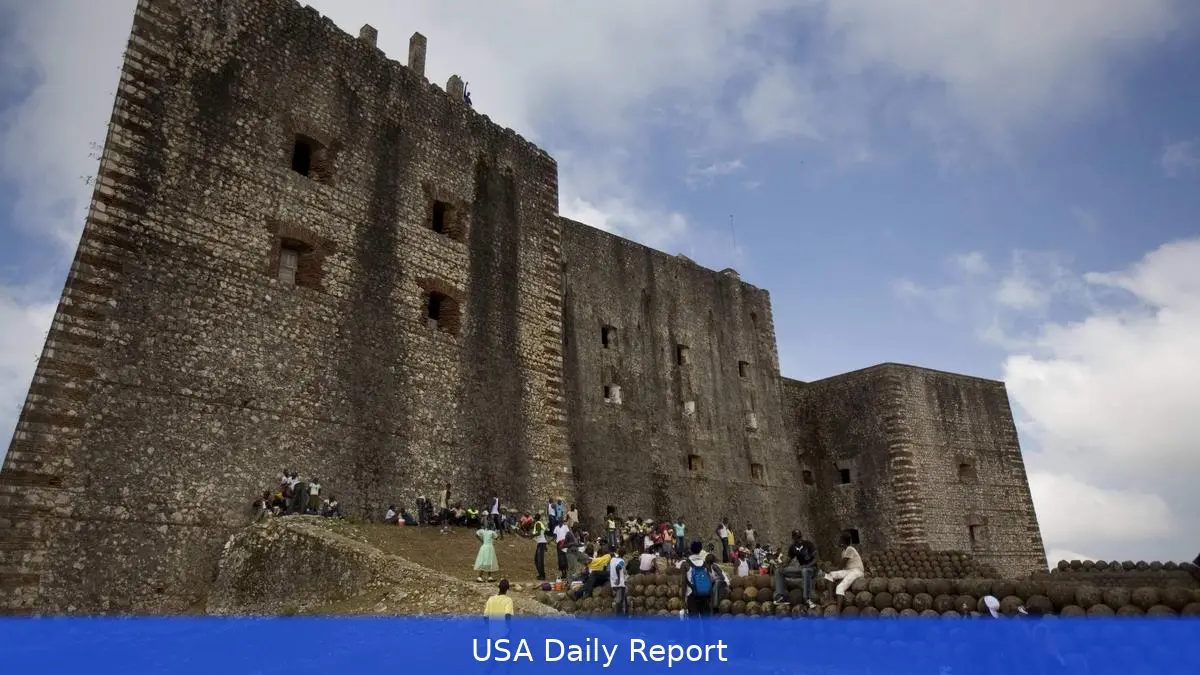
At least 25 people died in a stampede at a Haitian mountaintop fortress Saturday. Dozens more were injured and many remained unaccounted for.
What happened at the Citadelle
A crowd surged and panicked on Saturday at the Citadelle Laferrière, a mountaintop fortress north of Cap-Haïtien, leaving at least 25 people dead and dozens injured, municipal officials said. Local authorities said many attendees were taking part in traditional festivities when a situation of extreme overcrowding — and what they described as deficiencies in crowd management — set off the crush.
First responders and hospital staff treated dozens of people for asphyxiation, trampling and loss of consciousness, municipal officials in Cap-Haïtien said in a public statement. The Haitian National Police announced it had opened an investigation to determine exactly what happened and to identify the sequence of events that led to the fatalities.
Many of the wounded were carried to hospitals in the region. Police said 30 people remained hospitalized the day after the incident, and autopsies were underway on at least some of the victims as authorities worked to confirm identities and causes of death.
Scenes on the mountain
Some bodies remained at the site on Sunday, as families and investigators crowded the historic complex.
Rescue workers were still moving injured visitors to medical facilities while police tried to secure the area and manage an inflow of relatives and onlookers.
Donaldson Jean, whose sister had been among those killed, described the loss as a personal tragedy. "Morning and night, she was studying for the genius program," he said.
"She would come and ask me to help with homework before dinner. Look how (I) lost her." His account put a human face on the disaster and showd the event's toll on families who had been attending the festivities.
The episode, officials said, began during a crowded celebration. Municipal authorities directly tied the stampede to severe overcrowding and to lapses in crowd control measures. The exact point of origin for the panic remained under investigation by police.
Official response and the investigation
The Haitian National Police urged the public to cooperate with investigators and to avoid spreading rumors while authorities worked to establish facts. Police said they were conducting interviews and collecting evidence at the site as part of a broader inquiry.
Haiti's national government extended condolences to the families of the victims in an official communication, while local officials called for patience as forensic work proceeded. Autopsies were being carried out on Sunday, according to the municipal statement, as part of efforts to confirm the death toll and the circumstances of each fatality.

Authorities haven't released a final figure for the number of people who attended the festivities. Nor have they publicly outlined who was responsible for on-site crowd management, or what, if any, permits or safety plans had been approved for the day’s events. The investigation will probably address those gaps.
Why the incident matters
Right now, the focus has to be on the victims. Families want answers. Local officials want to know how a routine gathering turned deadly.
Officials' early statements pointing to overcrowding and crowd-management failures raise questions about safety protocols at public sites that draw large numbers of visitors. The Citadelle, perched atop a mountain and accessible via limited approaches, creates physical constraints that can make crowd control more complicated than at flat, open venues.
When safety systems fail or aren’t enforced, even a small problem can quickly turn into a deadly crush. Municipal leaders acknowledged that shortcomings in how the crowd was managed played a role; investigators will likely focus on whether organizers and authorities had taken reasonable steps to direct flows of people, provide medical readiness, and maintain clear egress routes.
Public confidence in local governance can be strained after such a disaster. Officials have already promised investigations and forensic work. How fast and how transparently those inquiries proceed could shape public reaction in Cap-Haïtien and beyond.
Wider effects in Haiti
The tragedy adds to a long list of challenges facing Haitian authorities who must manage public safety with limited resources. Emergency medical capacity, policing, and event oversight are all stretched in many parts of the country. Municipal statements about deficiencies in crowd management directly point to gaps in planning and execution.
When a well-known public site sees a tragedy like this, local governments face intense pressure to explain what happened and stop it from happening again. Families of the dead and injured will expect rapid answers. So will community leaders and civil authorities, whose credibility rests on delivering both facts and accountability.
Investigations and forensic work don’t happen overnight. Autopsies were under way on Sunday, and police asked residents not to spread rumors while authorities worked. Those procedural steps are standard but can feel slow to grieving families seeking immediate closure.
Human toll amid tradition
Sunday’s victims included young people who had attended the event as part of school outings, municipal authorities said. One father carried his daughter’s covered body from the site — a detail that reinforced the personal and communal grief felt across the area.
Traditional festivities draw residents and visitors to cultural sites, and organizers often rely on informal local systems to manage crowds. When those systems fail, the consequences can be severe.
Local authorities blamed crowd-management failures; police investigators will now try to reconstruct how the sequence unfolded, who had responsibility for crowd control, and whether measures in place were adequate for the number of people on site.
Next steps
Investigators from the Haitian National Police are gathering evidence and interviewing witnesses at the fortress and nearby hospitals. Municipal authorities said they will continue cooperating with the police inquiry. Autopsies are expected to help clarify the precise causes of the deaths and to aid in identifying missing people.
Families and community leaders are calling for accountability, and municipal officials have signaled they will pursue answers. The process of identifying victims, completing autopsies and compiling an official casualty list can take days or longer, depending on resources and the pace of the investigation.
Right now, rescue workers and medical staff remain focused on treating the injured and documenting what happened. Local officials stressed the need for calm while police complete their work, and they urged the public to avoid spreading unverified information.
Related Articles
Police said 30 people remained hospitalized and autopsies were underway.
This article was created with AI assistance.


