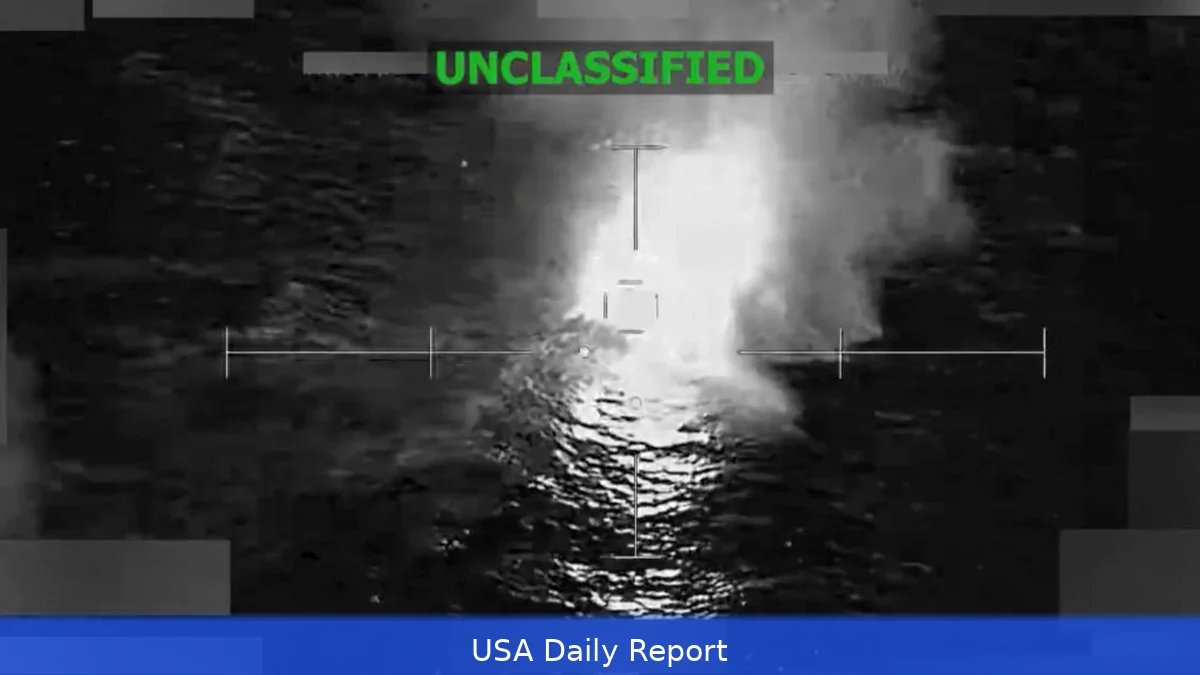
Five people died after the U.S. Military struck two small vessels Saturday. The attacks add to a string of similar strikes tied to Washington's campaign against drug traffickers.
What happened
U.S. Southern Command said its forces struck two boats in the eastern Pacific on Saturday, destroying both vessels and killing five people while leaving one survivor, whom the military says was rescued from the water. The command posted the announcement on X and said it informed the U.S. Coast Guard to activate search-and-rescue systems for the survivor.
Videos posted on X showed small boats speeding across the water before each exploded in a bright blast. U.S. Southern Command didn't publish evidence that the boats were carrying illegal drugs; the military said the vessels were targeted along known smuggling routes.
Count, context and past strikes
The latest deaths raise the toll from U.S. Strikes on suspected drug-smuggling boats to at least 168 people since early September, according to the military's own tally. That's the figure U.S. Forces have released as they step up so-called counter-drug operations at sea.
These strikes are part of a wider policy the Trump administration calls a direct fight against cartels. President Donald Trump has described the U.S.
As being in "armed conflict" with cartels and has used the term "narcoterrorists" to describe the people his administration says it's targeting.
Critics have pushed back. They say the administration has shown little public evidence tying those killed to terrorist activity, and they question both the legal basis for the strikes and whether the campaign actually tackles the flow of deadly synthetic opioids hitting the United States.
Why critics say the strikes may miss the point
Analysts and opponents note that much of the fentanyl blamed for overdoses in the U.S. Typically crosses into the country over land from Mexico. Production and precursor chemicals are often linked to global supply chains, with the NPR report noting chemicals imported from China and India figure into production.
The maritime campaign raises strategic questions: hitting small boats might stop some trafficking, but critics say it doesn't tackle the factories or supply chains that produce the drugs and their precursors. The U.S. Military hasn't released detailed evidence tying each targeted boat to larger cartel operations.
How the strikes fit into larger U.S. Operations
The maritime strikes have continued even while the U.S. Military has also been focused on the Middle East. For several weeks in recent months, U.S. Forces were engaged in a war with Iran, according to reporting on U.S. Operations.
And President Trump on Sunday signaled another escalation on the other front. He said the U.S. Navy would begin a blockade of ships entering or leaving the Strait of Hormuz after cease-fire talks with Iran in Pakistan ended without agreement. The Strait of Hormuz is a key chokepoint for commercial shipping; roughly 20% of global oil normally passes through that waterway.
U.S. Central Command clarified that any blockade would involve Iranian ports. The announcement ties together two very different uses of military pressure — counter-narcotics operations in the Western Hemisphere and maritime interdiction aimed at Iran — under one administration's broader use of force abroad.
Political and legal implications
Domestically, the strikes and the new statement about a blockade play into the Trump administration's law-and-order posture. The president has justified the boat attacks as necessary to stem the flow of drugs and to prevent overdoses in the United States.
But legal questions remain prominent. International law scholars and civil liberties advocates have argued that use of lethal military force outside declared battlefields requires rigorous legal justification. The administration hasn't publicly released legal memos or detailed evidence to back the repeated description of those killed as "narcoterrorists." That lack of disclosure has fed skepticism in Congress and among legal observers.
And the political debate could have budgetary consequences. Sustained maritime operations and naval blockades require ships, aircraft, personnel and logistics. Those commitments can draw on already stretched defense resources, especially when forces are also tied up in other theaters.
Economic ripple effects
Right now, the immediate economic link is clearest with the announced blockade of the Strait of Hormuz. Because about 20% of global oil flows through that corridor, any move that interrupts shipping there could push oil markets and shipping costs higher. U.S. Central Command's statement that a blockade would involve Iranian ports makes that possibility more tangible.
Even just talk of a blockade tends to unsettle traders. Markets respond to the risk of disrupted shipments. Higher freight rates and elevated insurance premiums for ships operating in contested waters tend to add to import costs for U.S. Businesses and consumers.
On the drug side, the economic impact is less direct but no less important. Overdose deaths and addiction carry major social and fiscal costs in health care, criminal justice and lost productivity. The administration argues that aggressive interdiction at sea will reduce those costs. Critics say it's an incomplete answer because it doesn't choke off production on land or stem the chemical supply chains that feed the market.
Operational questions and next steps
The U.S. Coast Guard confirmed it was coordinating the search for the survivor rescued after Saturday's strikes and said it would provide updates when available. U.S. Southern Command said it had notified the Coast Guard to activate search-and-rescue systems necessary to recover survivors.
That coordination shows the hybrid nature of these missions: they're military operations with law-enforcement elements and humanitarian follow-up. But the military's public statements leave open core questions that critics and some lawmakers are asking for answers to — including what intelligence tied specific boats to trafficking, which legal authorities were invoked for each strike, and how the administration measures success.
Frankly, the government's choice to keep certain evidence close to the chest may be for operational reasons. Still, the lack of transparency complicates how Congress, courts and the public evaluate the program.
Regional reactions and diplomatic risk
So far the public record in U.S. Statements focuses on enforcement and deterrence. There has been less public detail about consultations with regional governments where strikes occur, or how neighboring states are reacting to U.S. Forces engaging suspected traffickers in international waters near their coasts. The military says it targets boats on known smuggling routes; it hasn't spelled out which routes or how it verifies where each vessel is headed.
That ambiguity can inflame regional tensions. Countries in Latin America may welcome assistance against traffickers even while expressing concern about foreign military operations near their waters. The administration's simultaneous moves on Iran add a diplomatic layer: Washington is signaling it will use force abroad across multiple theaters.
Whether that approach reduces the flow of deadly drugs into U.S. Communities remains an open question for lawmakers and policy-makers.
Related Articles
- Trump's Strait of Hormuz threat raises risks and leaves hard choices unchanged
- Iran urges supporters back to streets as Islamabad talks stall and Washington warns of blockade
- How Washington Could Turn a Fragile Ceasefire Into a Lasting Peace
President Donald Trump has said the U.S. Is in "armed conflict" with cartels and has called those targeted "narcoterrorists."


