
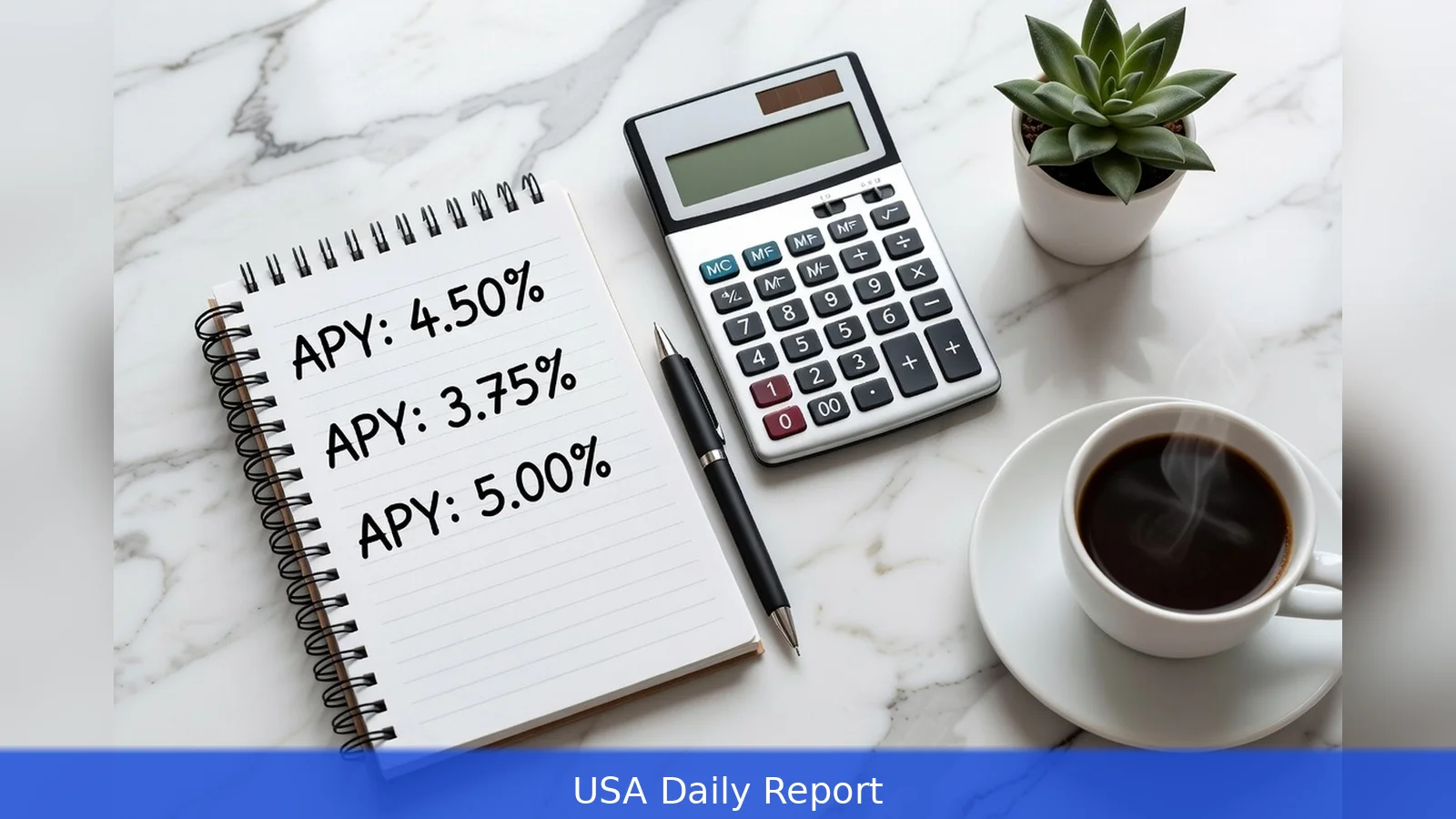
High-yield savings accounts have made holding cash more rewarding. After years of near-zero rates, online banks and modern fintechs now offer APYs that meaningfully outpace traditional brick-and-mortar savings. It matters because even a small interest difference adds up over time, helping your cash grow into a solid cushion. In this guide, you'll learn what high-yield savings accounts pay, which fees to watch for, how to compare offers, and smart ways to use them for emergencies and short-term goals. Read on to find out how to choose the right account, avoid common pitfalls, and respond when rates change. Keep this guide handy for when you want to rebalance your cash or look for better rates.
How high-yield savings accounts work and what APY means
High-yield savings accounts (HYSAs) are straightforward: you deposit money, the bank pays interest, and you can withdraw or transfer under the account’s rules. An account is called “high-yield” because of its annual percentage yield, or APY. APY includes compound interest, so it tells you how much you actually earn in a year if you leave money parked with no withdrawals. Banks use APY since it shows the real earnings including compounding, unlike simple interest.
APY varies with market interest rates, bank strategy, and promotional offers. When the Federal Reserve raises its policy rate, banks generally raise deposit rates; when the Fed cuts, deposit rates tend to fall. But banks respond at different speeds. Online banks with low overhead can move faster and often pay higher APYs than big national branches. Some institutions advertise a headline APY that applies only to balances up to a cap or only for a promotional period. Always read the fine print: look for whether the APY is variable and whether the rate applies to all balances or to tiers.
Compounding frequency matters. Accounts that compound daily deliver slightly more interest than those that compound monthly, all else equal. Most HYSAs compound daily and credit interest monthly. That means your balance earns interest every day; the bank posts the earned interest to your balance on a regular schedule.
While compounding differences are small, they add up on large balances.
Interest is taxable as ordinary income. If you hold a lot in HYSAs, expect IRS Form 1099-INT if the account pays more than a de minimis amount.
For investors comparing HYSAs with tax-advantaged accounts, remember that IRAs and 401(k)s offer tax benefits but usually don’t provide the same liquidity or immediate access as a savings account. Also note that interest rates are advertised as APY at the account level, not APY after taxes. Your after-tax return depends on your tax bracket.
People often confuse APY with APR. APY describes money you earn. APR describes borrowing costs. Don’t mix them up. Another is FDIC insurance. Deposit accounts at FDIC-member banks are insured up to $250,000 per depositor, per ownership category, per bank. Credit unions offer similar protection through the National Credit Union Administration (NCUA). If your cash exceeds $250,000, think about spreading it across different ownership types, banks, or using FDIC sweep services to stay insured.
Finally, think about real returns. Inflation erodes purchasing power. A high-yield savings account beats low-yield checking accounts and some money market funds for safety and liquidity, but if inflation runs higher than your APY, your cash loses value in real terms. Use HYSAs for emergency funds and short-term goals, not as a replacement for equities or longer-term fixed income when you seek growth.
Where to find the best APYs: online banks, big banks, credit unions, and fintechs
High-yield savings accounts are available from several places: online-only banks, traditional national banks that operate an online division, credit unions, and fintech firms that partner with banks. Each channel has pros and cons.
Online-only banks often lead on headline APY. They don’t pay for many branches and may pass the savings to customers. Features tend to be digital-first: seamless mobile apps, fast electronic transfers, and straightforward fee schedules. If you value the highest possible APY and a smooth app experience, these banks are a common choice. But they may lack in-person service if you prefer face-to-face banking.
Big banks with national branch networks are competitive on convenience. Some large banks maintain online-only savings brands with better APYs than their branch products.
The trade-off: branch-backed banks often provide easier cash deposit options, integrated checking bundles, and physical relationship managers. If you need cash deposits or regular in-person help, these banks can make sense even if APYs lag the pure online players.
Credit unions often pay solid rates and may offer personalized service. Membership criteria vary: some serve specific communities or employers, while others are open to anyone who joins an affiliated organization. Credit unions are insured by the NCUA up to similar limits as the FDIC. If you like local relationships or cooperative governance, check local credit unions for competitive pricing.
Fintech firms and neobanks have reshaped the market by pairing slick apps with bank partners. They can offer attractive introductory rates, bonus APYs for meeting conditions, or features that automate savings. But be cautious: fintechs may rely on partner banks for FDIC coverage, and promotional APYs often expire or require behavior like direct deposit or debit-card use. Check whether the account uses direct bank charters or third-party custodians and confirm insurance and disclosure details.
No matter where you search, compare the base APY for the balance you expect to keep, not just the flashy promo rates.s. Check for minimum balance tiers, balance caps on bonus rates, and expiration dates for promotions. Also look for fee structures that could offset a higher APY: some accounts charge maintenance fees or paper-statement fees that erode returns. Finally, remember that the best APY today can change quickly as banks adjust rates; treating HYSAs as part of an active cash management plan will keep you earning competitive returns.
Fees, minimums, and transaction limits: what to watch for
High APY means little if fees and rules eat the earnings. When evaluating an account, start with these three dimensions: fees, minimums, and transaction limits.
Fees are obvious killers. Look for monthly maintenance fees, inactivity fees, excessive withdrawal fees, or outbound wire transfer charges. Many top HYSAs advertise no monthly fee, but secondary fees may apply for paper statements, overnight wires, or replacement checks. If your plan needs occasional wires or check deposits, calculate how fees cut into interest. For example, a $10 monthly fee on a modest balance can wipe out what you earn in interest for months.
Minimum deposit and balance requirements vary widely. Some accounts open with zero dollars and pay the same APY on any balance. Others require a minimum opening deposit or tiered balances to reach the top APY. If you plan to keep a small balance—say, an emergency cushion of $1,000—make sure the product pays top APY at that level. Also watch for balance caps. Some promotions pay a high APY up to a specified cap; amounts above that cap earn a lower rate.

Transaction limits used to be simpler: Regulation D limited certain withdrawals to six per statement cycle. Since 2020, regulatory enforcement of that limit was lifted, and many banks changed their own policies. Still, individual banks may apply limits—commonly around six convenient transfers per month—or charge an excess withdrawal fee. Some banks now advertise unlimited electronic transfers. Verify the policy and whether internal transfers between accounts at the same bank count against the limit. For active savers who move money frequently between checking and savings, a low transfer cap can be a major annoyance.
Other limits affect convenience: daily transfer caps, ACH hold times for large incoming transfers, maximum deposit amounts for mobile check deposit, and outbound wire limits. If you plan to move a lump sum or frequently rebalance cash, choose an account with generous transfer windows and high daily limits. Also confirm the bank’s policy on instant transfers or push payments; some banks offer same-day or instant transfers for a small fee or within a linked network.
Finally, consider overdraft and linked-checking relationships. Some HYSAs link to checking accounts for overdraft protection and may transfer funds automatically for a fee. A well-integrated checking-savings pair can reduce overdraft risk and provide convenience, but check the terms: automatic transfers might count toward monthly limits or trigger fees. Read fee schedules carefully and run a quick math test: subtract expected fees from projected interest to see net return on your balance size.
How to choose the right high-yield savings account for your goals
Picking the right HYSA depends on why the money exists. Are you funding a 3–6 month emergency fund, saving for a down payment or wedding, or temporarily parking cash between investments? Your time horizon, need for liquidity, and tolerance for account complexity should drive the choice.
For emergency funds, prioritize liquidity and reliability. Choose an account with easy withdrawals, no surprise transfer caps, and solid customer service. FDIC or NCUA insurance is non-negotiable. If you prefer one-stop banking, a national bank with both checking and savings might reduce friction during a stressful withdrawal. But if pure yield matters more, an online-only HYSA with faster rate adjustments could be better.
For short-term goals—six months to three years—rate matters more but so does the certainty of returns. You might split cash between a HYSA and short-term certificates of deposit (CDs) or Treasury bills to lock in yields for a portion of the balance. Laddering CDs smooths rate risk and provides scheduled liquidity, while a HYSA gives flexibility for unexpected needs. If you expect the need to tap the funds at irregular times, favor the HYSA’s liquidity.
If you’re optimizing taxable returns across your household, consider ownership and tax reporting. Interest is taxed to the account owner(s).
Joint accounts split tax reporting among owners, which can matter if you and a partner are in different tax brackets. For larger balances, think about spreading funds across multiple FDIC-insured banks or ownership categories to maintain full insurance coverage.
Behavioral features matter too. Some accounts let you set up automatic round-ups, bucketed savings goals, or recurring transfers tied to payday. These features can help maintain an emergency fund without thinking about it. Others offer sweep programs that automatically move excess cash into higher-yield vehicles; they’re great for hands-off savers but inspect liquidity rules closely.
Also weigh customer service and digital tools. A slick mobile app helps if you deposit checks by phone, set up instant transfers, or need real-time balance updates. If you prefer human help, research branch access, phone hours, and whether the bank provides relationship managers. Finally, think about account portability. If you expect to move banks for a better rate, choose a bank with streamlined electronic transfer and minimal closure friction so you can switch when rates change.
Step-by-step: opening, funding, and managing a HYSA
Opening a high-yield savings account is usually quick, but a smart setup minimizes headaches later. Follow these steps for a smooth experience.
1. Gather documents. You’ll typically need a Social Security number or taxpayer ID, a valid U.S. Photo ID, contact information, and funding details for the external account you’ll link. If you open a joint account, gather each owner’s documents. For credit unions, check membership eligibility—some allow instant membership via a small donation or joining an affiliated organization.
2. Compare and choose. Use a shortlist of 3–5 banks or credit unions and compare the APY you’ll realistically earn, fees, balance requirements, transfer limits, mobile features, and insurance. If a promotional APY looks attractive, confirm the qualification steps and expiration date. Make a note of customer service channels and hours in case you need help later.
3. Open the account online or in-branch.
Most HYSAs open fully online in 10–20 minutes. If you want a paper trail, request electronic disclosures and save the confirmation emails. If you open in-branch, the teller can walk you through linking accounts and immediate deposits.
4. Fund and link external accounts. Fund the new HYSA either by initiating an ACH transfer from an external checking account, depositing a check, or transferring from another account at the same institution. For ACH links, banks may use micro-deposits to verify ownership, which can take 1–3 business days. Once the external account is verified, set up any recurring transfers you want—automatic contributions are the most reliable way to build savings.
5. Test transfers and monitor hold times. Try a small test transfer in both directions so you know how long deposits and withdrawals take. Some banks place holds on large mobile deposits for several days. Also learn the bank’s business-day cut-offs for same-day processing and whether transfers initiated on weekends process the next business day. That knowledge prevents surprises when you need cash fast.
6. Configure alerts and statements. Enable balance and activity alerts to detect fraud and to keep tabs on interest postings. Choose electronic statements to reduce fees and receive faster tax documents like 1099-INT. Set up contact preferences and multi-factor authentication to secure access.
7. Revisit periodically. Markets and banks change. Every few months, review whether your HYSA still offers a competitive APY and still meets your needs. If not, move the funds or split them. Automated rules can help: keep your emergency fund in the HYSA and sweep excess above a threshold to short-term CDs or Treasury bills for higher locked yield.
Strategies to maximize return and common mistakes to avoid
High-yield savings accounts are safe and flexible, but you can squeeze more yield with a few tactics and avoid common pitfalls that shrink returns.
Use rate stacking strategically. You can split cash across a HYSA for liquidity and short-term CDs or Treasury bills to lock a portion at a higher rate. Laddering—staggering maturities—lets you lock some yield while keeping regular liquidity from maturing instruments. If short-term rates are attractive, a CD ladder of three to 12 months can outperform keeping the full balance in a HYSA, while still offering periodic access.
Harvest promotions carefully. Many banks offer cash bonuses or elevated promotional APYs to attract new customers. Bonuses can be worthwhile, but calculate net benefit after tax and conditions. Promotions often require direct deposit, a minimum balance, or multiple transactions. Verify if the bonus is taxable income and how long the higher APY lasts. Don’t chase every sign-up bonus—the time and effort to meet conditions can offset the payout.
Watch out for compounding illusions. Some banks advertise great headline rates but compound infrequently or restrict the highest rate to a portion of balances. Always compute expected interest for your balance and time horizon. Use online calculators or do the math: principal × (1 + APY)^(time fraction) − principal approximates earned interest for short periods when compounding is frequent.
Account structure matters for protection. If you hold more than the standard insurance limit, split funds across ownership categories—individual, joint, trust—or multiple banks. Some banks and custodians offer sweep programs that distribute deposits across multiple banks to extend FDIC insurance automatically. These are practical for large cash balances but read mechanics and fees first.
Don’t ignore taxes. Interest income adds to taxable income.
For sizeable balances, plan for the tax bill; consider keeping some cash in tax-advantaged accounts if liquidity and purpose allow. Also factor in state tax rules—some states tax interest differently or offer breaks, which can affect net return.
Avoid treating a HYSA like a long-term investment. For capital growth, stocks and diversified portfolios historically outpace savings rates over long periods. Use HYSAs for safety, liquidity, and predictable nominal returns. If your savings goal is beyond three to five years, consider adding bonds or equities to combat inflation over the long term.
Finally, maintain discipline. The best HYSA won’t help if you constantly raid your emergency fund for discretionary spending. Automate savings, set subaccounts or buckets for different goals, and treat the HYSA as a core part of your cash strategy rather than a convenience fund for impulse buys.
High-yield savings accounts put idle cash to work without risking principal. They’re the natural home for emergency funds, short-term goals, and portions of your cash allocation you want to keep liquid. When choosing an account, prioritize FDIC or NCUA insurance, realistic APY for your balance size, transparent fees, and transfer rules that match your cash habits. Use online banks for top rates, credit unions or big banks for convenience, and fintechs for automation—mix and match to suit your needs. Reassess accounts regularly: rate environments change and switching when a materially better option appears preserves your yield. I think the most important factor here is matching liquidity needs to account terms; yield only matters if the account actually gives you the access you need.
This article was created with AI assistance.


