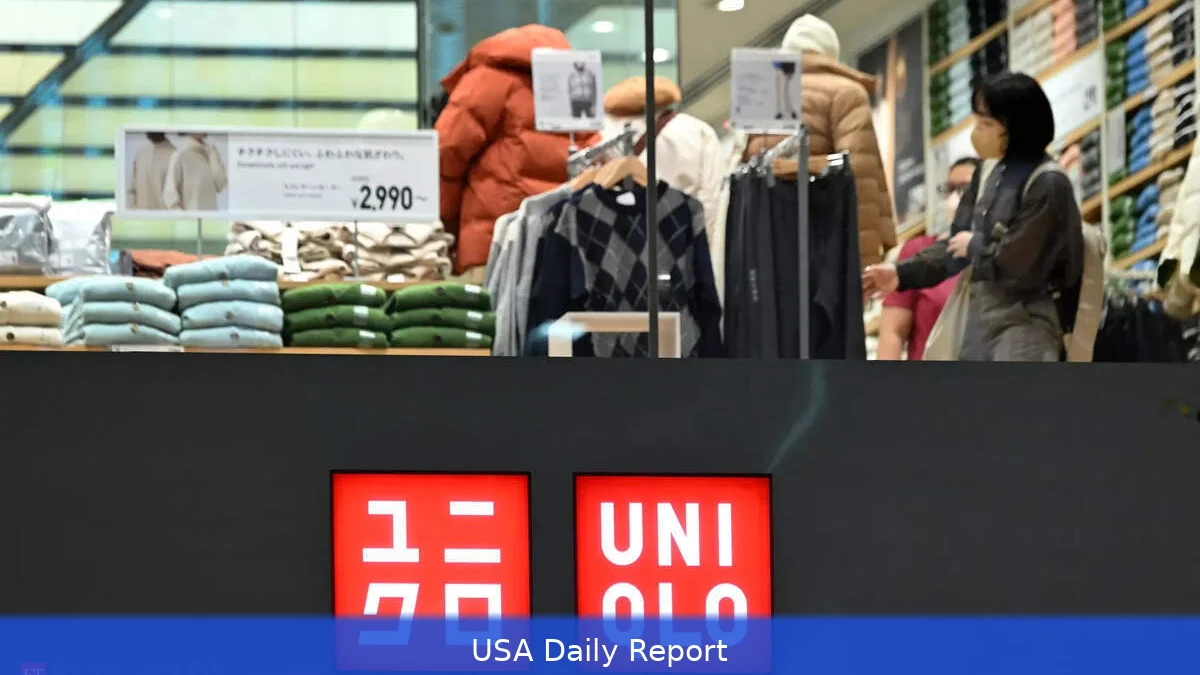
Fast Retailing, the parent company of Uniqlo, reported a sharp 29.4% jump in quarterly operating profits, pushing it to raise its full-year earnings forecast. The Japanese retail giant is on track for its fifth consecutive year of record profits despite challenges from rising costs and geopolitical tensions.
Profit Beats Expectations Amid Global Expansion
Fast Retailing's operating profit soared to 189.8 billion yen ($1.19 billion) in the three months ending February, up from 146.7 billion yen a year earlier. That’s well above the average analyst estimate of 161.6 billion yen. The company wasted no time raising its full-year operating profit forecast, now expecting 700 billion yen compared to an earlier 650 billion yen.
A nearly 30% profit jump in a quarter is impressive for any global retailer, especially with supply chain and energy price challenges. This strong showing sets the stage for a fifth straight year of record earnings for Fast Retailing, which owns Uniqlo, the casual wear brand known for affordable basics and innovative fabrics.
This shows Fast Retailing’s international expansion is working. While domestic sales in Japan have benefited from a tourism boost thanks to a weak yen, growth overseas is where the real momentum is. Uniqlo now operates more than 2,500 stores globally, expanding aggressively in Europe and North America to diversify beyond its largest overseas market, China.
Geopolitical Risks and Rising Costs
Still, the company isn’t ignoring the risks. Its fiscal second quarter wrapped just before U.S.-Israeli air strikes on Iran kicked off, sending oil prices higher and rattling global supply chains. The Middle East conflict has already pushed key suppliers like Teijin Frontier to hike polyester fiber prices by 20%, a major input for Uniqlo’s popular fleeces and basics.
Fast Retailing acknowledged some impact from the Middle East situation, particularly higher transportation costs in affected markets, but said it doesn’t expect major production or logistics disruptions for the full fiscal year. CFO Takeshi Okazaki flagged growing difficulties with air freight from Southeast Asia to Europe, warning that if the conflict drags on, the company will inevitably feel the effects since chemical production depends heavily on crude oil.
Europe’s retail sector is also bracing for fallout, with giants like H&M and the British supermarket Co-op warning that prolonged turmoil could push prices higher and squeeze consumer spending. Fast Retailing’s cautious stance reflects the wider uncertainty gripping global markets amid geopolitical tensions.
Supply Chain Challenges and Market Dynamics
Fast Retailing’s supply chain, centered in Asia, has faced pressure for years due to shifting U.S. Tariffs and now the added burden of rising raw material and freight costs. The company’s ability to manage these challenges will be key to maintaining profit growth.
Shares of Fast Retailing’s Tokyo-listed stock fell slightly by 0.5% ahead of the earnings release, though the stock has gained over 18% in 2026. Investors seem to be weighing the bright earnings report against looming cost pressures from oil and freight.
Domestically, Fast Retailing benefits from a Japanese consumer market that’s rebounding thanks to increased tourism and a weak yen making local shopping more attractive. But growth in mainland China has cooled, with slower consumer spending forcing the company to close some stores and restructure operations there.
Global Expansion: Europe and North America in Focus
Uniqlo’s footprint outside Asia is growing fast. Since 1984, starting from a single store in Hiroshima, the brand has spread to thousands of locations worldwide. Its Europe and North America operations have posted annual sales growth rates of 30% to 50% since fiscal 2022.
That’s a key part of Fast Retailing’s strategy to reduce reliance on China, where consumer sentiment has softened due to economic headwinds. The company aims to build a more balanced global presence, capitalizing on growing demand for casual, affordable apparel in Western markets.
Still, supply chain costs and geopolitical risks might test The strategy. Higher polyester and freight prices could push retail prices up, potentially dampening demand. Yet Fast Retailing’s mix of functional basics and competitive pricing has helped it remain resilient so far.
Fast Retailing’s founder, Tadashi Yanai, Japan’s richest man, has aimed to make the company a global leader, and these results suggest he’s making progress despite challenges.
Related Articles
- US Stock Rally Stalls as Doubts Over Iran Ceasefire Cool Market Optimism
- Property Taxes Climb Faster Than Inflation, Stretching Homeowners’ Budgets Nationwide
- Bissell Recalls 1.7 Million Steam Cleaners Over Serious Burn Risk
Raising its profit forecast despite rising costs and geopolitical tensions shows Fast Retailing’s strong operations and strategy. Still, inflation and supply chain issues ahead will test its global growth in the coming quarters.


