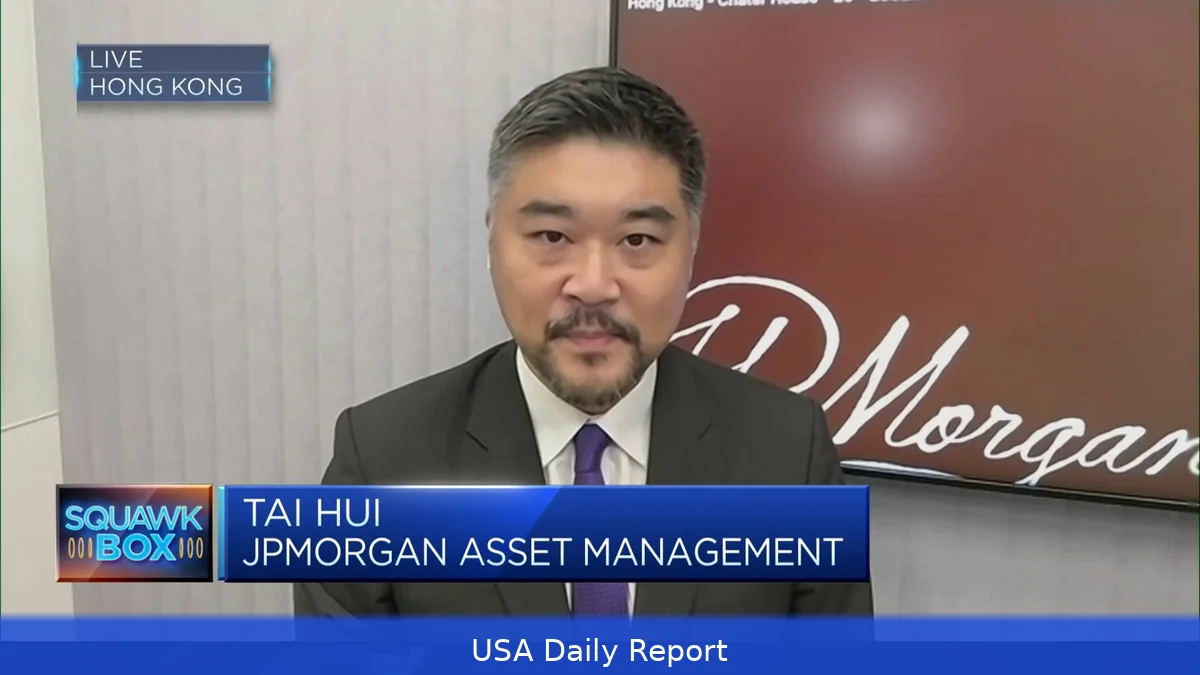
The Federal Reserve is holding steady on interest rates, but Wall Street’s view on rate cuts is shifting unevenly. JPMorgan Asset Management warns that while markets expect cuts, risks lurking under the surface could delay any move.
Fed Holds Rates Amid Economic Uncertainty
The Federal Open Market Committee (FOMC) kept interest rates unchanged between 3.50% and 3.75% during its March meeting, signaling a cautious stance as global tensions and economic indicators tell a complicated story. Fed Chair Jerome Powell described current monetary policy as "appropriate," emphasizing that inflation remains somewhat elevated and growth solid, but job gains are modest.
Still, the Fed’s outlook suggests one rate cut could come this year, with another anticipated next year. That’s a shift from earlier expectations and reflects uncertainty tied to ongoing geopolitical conflicts, notably in the Middle East, and their impact on energy prices and inflation.
Not everyone agrees with this wait-and-see approach. Governor Stephen Miran dissented, favoring a 25 basis point cut now. Meanwhile, the Fed’s Summary of Economic Projections raised inflation and GDP growth estimates for 2026, hinting at the complex forces at play.
Inflation is now expected at 2.7%, up from 2.4%, while GDP growth projections ticked up slightly to 2.4% from 2.3%.
"Most participants don't expect the next move to be a rate hike," Powell said, downplaying concerns about stagflation and highlighting the Fed’s intention to balance growth with inflation risks.
JPMorgan’s Stark Warning on Rate Cuts
JPMorgan Asset Management is pushing back hard against the market’s growing optimism for rate cuts this year. Oksana Aronov, the bank’s head strategist, argues that the bar for cutting rates is still very high given the sluggish growth and hidden risks emerging beneath the surface.
Her warning centers on the fallout from earlier Fed policy moves. The Fed’s prolonged easy-money stance encouraged risk-taking, especially in private credit markets where tighter conditions are now exposing weaknesses. That’s creating a tricky situation where problems are only slowly surfacing as refinancing becomes tougher.
"Loose financing conditions typically compress risk premiums, allowing weaker borrowers to access capital and delaying the recognition of underlying stress," Aronov said in a recent interview. "We’re seeing a gradual unwind that makes the Fed's next moves."
She also notes that longer-term Treasury yields are being pushed by factors beyond the Fed’s control, adding another layer of challenge. The bank’s revised forecast now suggests the Fed might even hike rates by 25 basis points in the third quarter of 2027, a sharp contrast to the earlier widespread expectation of rate cuts this year.
Wall Street’s Changing Views on Fed Moves
JPMorgan isn’t alone in revising its stance. Other major firms like Macquarie and Morgan Stanley have also pushed back on their earlier calls for imminent rate cuts. Macquarie now expects a Fed hike in December 2026, while Morgan Stanley delayed its predicted cut from June to September. Goldman Sachs and Barclays had already moved their rate-cut timelines further out, underscoring a broader hawkish shift on Wall Street.
That said, market pricing tells a complicated story. The CME FedWatch tool shows traders have largely priced out rate cuts for 2026, signaling skepticism about significant easing soon. Instead, there’s about a 30% chance of a rate hike by year-end, a complete reversal from January when cuts were widely expected.
The catalyst for this shift? Rising oil prices linked to the Middle East conflict, which are fanning inflation worries and have pushed energy costs higher globally. That’s helping to keep the dollar strong, boosting demand for US assets and complicating the Fed’s decision-making.
The Dollar’s Unexpected Surge
The US dollar has rallied sharply, posting its best month since late 2024. The Bloomberg Dollar Spot Index rose nearly 2.7% in March, driven by safe-haven flows and the fading hope for Fed rate cuts amid the ongoing turmoil overseas.
Wall Street’s playbook for the dollar was upended as traders who had been betting against it—some of the most bearish positions in years—scrambled to cover. JPMorgan strategists themselves flipped to a bullish stance this year, increasing bets on dollar strength.
Steven Englander of Standard Chartered Bank explained the sudden reversal by pointing to the elevated energy prices and geopolitical tensions, factors that typically boost demand for the dollar as a safe asset. He expects the dollar to strengthen further, possibly reaching a level near $1.12 per euro by year-end—the strongest since May.
Earlier this year, many firms like Goldman Sachs and Deutsche Bank forecasted a weaker dollar, expecting the Fed to ease policy more aggressively. But the war and surging energy costs have forced a rethink, raising doubts about the timing and scale of any rate cuts.
Complications Ahead for the Fed
JPMorgan’s Aronov and others warn that the Fed is walking a tightrope. On one side, inflation pressures are still real, and on the other, cracks in credit markets could worsen if rates stay too high or move unpredictably.
Aronov sees "second-order effects" emerging from years of loose financial conditions—risks that could amplify if the Fed tries to maneuver too quickly. If rates rise again, it could deepen stress in private credit and other vulnerable sectors, potentially triggering market instability.
Meanwhile, the ongoing geopolitical tensions add uncertainty to energy prices and inflation forecasts. The Fed’s room to act is limited, with officials wary of rocking the boat too much in either direction.
Investors face a complex picture where bond yields might stay range-bound, making income from fixed income investments more important than price gains. As Wells Fargo’s Luis Alvarado puts it, "Yield matters more than timing" in 2026.
Right now, the Fed’s cautious stance and mixed signals from markets leave a lot hanging in the balance. The timing of any rate cuts is still up for debate, and the conflict in the Middle East could be the wildcard that shifts the entire outlook.
Related Articles
- US Consumer Spending Slows as Inflation Keeps Pressure on Economy
- US Stock Rally Stalls as Doubts Over Iran Ceasefire Cool Market Optimism
- Treasury Yields Hold Steady Amid Mixed U.S. Economic Data and Rising Oil Prices
The Fed’s next moves depend on a delicate balance of inflation, growth, and geopolitical risks. With JPMorgan and others warning about hidden financial stresses, markets may need to rethink their bets on quick rate cuts. The dollar’s strength and inflation pressures mean the Fed can’t just cut rates without consequences. The big question: when, if ever, will the Fed feel safe enough to ease?


