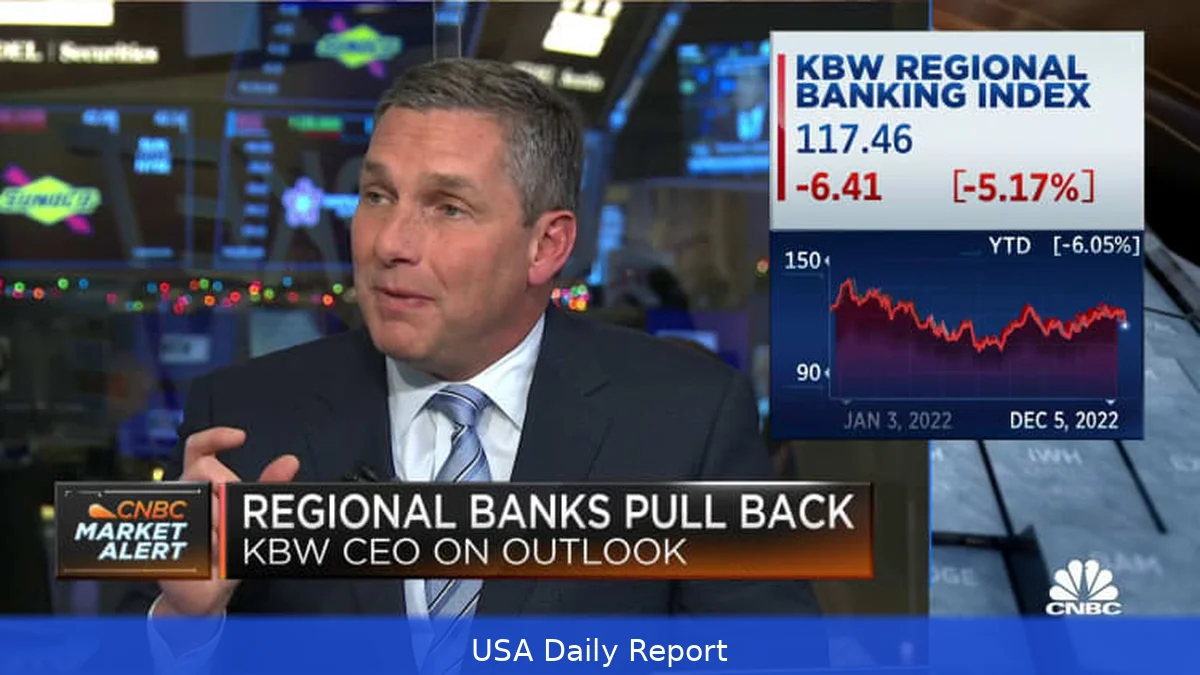
KBW CEO Thomas Michaud warned that bank buybacks might catch investors off guard.
Short, surprising message from the top
KBW Chief Executive Thomas Michaud told viewers on Bloomberg The Close that buybacks among banks could be larger or come sooner than many expect. He framed the comment against a backdrop of what he called economic resilience and the geopolitical uncertainty stemming from the war in Iran.
Look, banks aren't the same companies they were a decade ago. Capital rules tightened, but so did banks' ability to generate income.
Michaud didn't lay out a timetable during the interview. Instead, he argued that stronger-than-expected earnings and healthier balance sheets give lenders room to return more cash to shareholders — through dividends and share repurchases.
That alone could reshape investor returns from certain parts of the industry.
One-sentence reality check: buybacks matter.
Why buybacks could be bigger than people think
There are two forces at play, Michaud said. First, the U.S.
Economy has shown enough resilience to support loan growth and fee income for many banks. Second, many firms rebuilt capital after the last period of stress and now sit with buffers that let them contemplate returning capital without imperiling safety.
Those aren't tiny shifts. When a bank reduces share count with buybacks, EPS — earnings per share — can rise even if total profits move slowly. Investors who focus only on headline earnings may miss the impact. So buybacks can amplify shareholder returns.
Thing is, not every bank will act the same. Regional lenders with steady cash flow might push buybacks earlier. Big money-center banks with diverse revenue streams could favor consistent dividends. Michaud's point was less about uniform behavior and more about the potential scale and timing catching people by surprise.
Balance sheets, regulation and the playbook
Michaud also pointed to the structural changes in banking since KBW's founding. Keefe, Bruyette & Woods grew out of an era when investors bought bank stocks for yield and information was scarce. Today's banks publish much more data and undergo stricter regulatory scrutiny.
That history matters in two ways. First, regulations after past crises forced banks to build capital and stress-test their books. Second, modern reporting and active research — the very business KBW built since 1962 — make market reactions faster and more dispersed.
So while regulations mean banks can't frivolously distribute capital, they also mean boards and management teams are more deliberate. When they do decide on buybacks, they tend to have run the numbers. That deliberation can produce a sudden-looking decision when results clear the final hurdle.
And those decisions often hinge on a few concrete items: regulatory approvals where required, internal capital planning, and the bank's own forecasts for loan losses and funding costs. Michaud said those building blocks look healthier for many institutions right now.
Geopolitics and the risk variables
Michaud flagged the war in Iran as a wild card.
Geopolitical shocks can push energy prices, disrupt trade routes, and jolt investor sentiment. Any of those moves could change managements' comfort level around buybacks.
He didn't predict fallout, only that banks' positioning — their liquidity and capital — matters if markets lurch. Some banks could pause or trim plans; others might press ahead if their models show limited near-term impact.
Right now, the calculus seems tilted toward action for a portion of the industry. But a fresh shock could flip the script fast. That makes the near-term picture more about timing than inevitability.
What investors should watch
For shareholders hunting for yield or total return, buybacks are another lever. Look for three signals that often precede a meaningful repurchase plan: improving quarterly earnings trends, narrowing credit costs, and clear language from management in earnings calls about capital flexibility.
Also watch regulatory filings and board actions. Banks will typically disclose repurchase authorizations and their cadence in quarterly reports. Those nuggets matter more than broad market chatter.
KBW itself, founded in June 1962 by Harry Keefe Jr., Gene Bruyette and Norbert Woods, built its reputation on close study of regional banks and on active trading and research. That background informs how Michaud — as CEO of a firm that focuses on financial sub-sectors — views the mechanics behind buybacks and how they influence markets.
How That could shift investor behavior
If buybacks come faster or bigger than expected, portfolio managers could tilt toward undervalued franchises with strong capital generation.
That might lift some regional names that trade on low price-to-book multiples. It could also pressure passive funds to rebalance if indices respond to share-count changes.
But investors shouldn't assume every bank will move in sync. Some institutions will prioritize balance sheet growth, mergers and acquisitions, or tech investments over immediate buybacks. Boards will weigh long-term strategy against shareholder demand.
Basically, buybacks add another layer to stock selection. They're not the only factor. Yet in an environment where yield is scarce elsewhere, share repurchases can be a quick way to shift returns.
KBW's voice in the conversation
KBW has grown from a small research shop to a specialist financial-services platform. The firm merged with Stifel Financial in February 2013, and it now operates with a broader set of capabilities inside a larger broker-dealer network. That lineage gives Michaud both a historical lens and a market-facing view.
He speaks from a vantage that includes sales, trading and research — the three pillars KBW has emphasized since its founding. That practical angle helps explain why Michaud focuses on the timing and surprise element of buybacks, rather than treating them as a predictable, uniform policy across the sector.
One final practical note: shareholders who want exposure to potential buyback-driven gains should watch not just earnings but capital plans and regulatory commentary. Those documents often foreshadow action in a way headlines don't.
Related Articles
- Wave of $15 Billion U.S. IPOs Runs Headlong Into a New Phase of War
- 2026 US Tax Brackets Explained: How to Calculate What You Owe
- UBS Sees Gold Near $6,200 by Mid‑2026 as Central Banks and ETFs Keep Buying
Keefe, Bruyette & Woods was founded in June 1962 by Harry Keefe Jr., Gene Bruyette and Norbert Woods.


