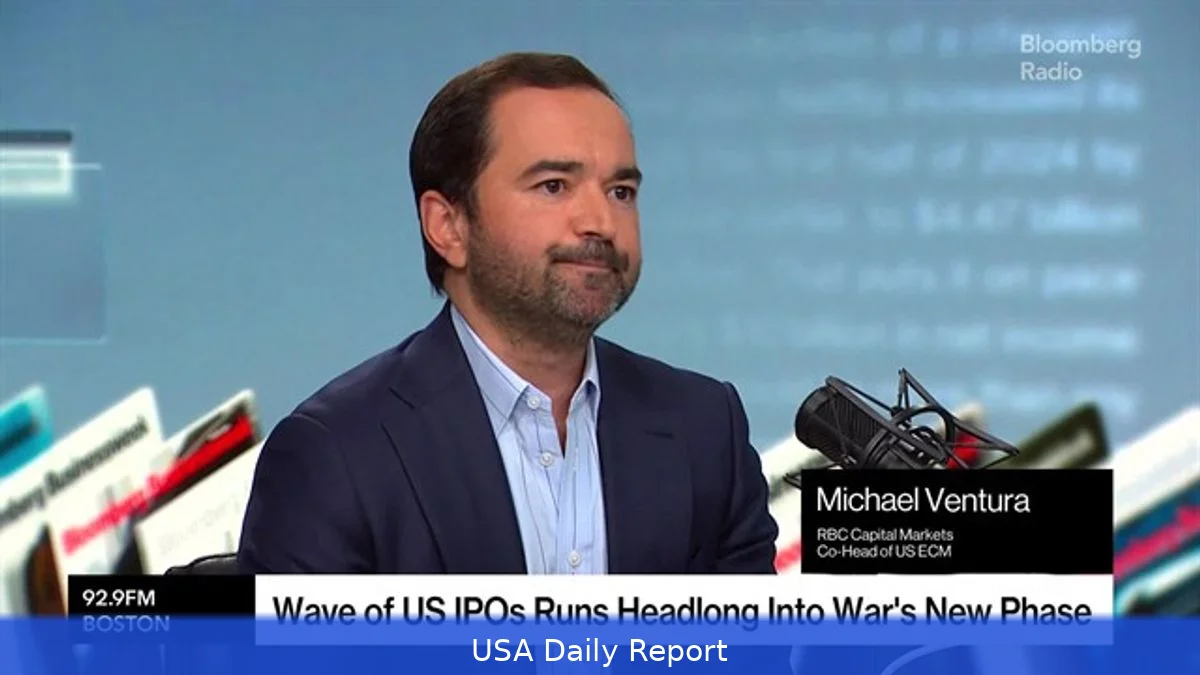
Roughly $15 billion in U.S. IPOs hit the pipeline this week.
Deals arrive as conflict shifts
Investment bankers had been readying a heavy slate of initial public offerings totaling about $15 billion when headlines turned to a fresh phase of fighting in the Middle East, according to the source document. Markets had been watching both the IPO calendar and geopolitical headlines closely. The source flagged a string of fast-moving developments — from revived deal talk by Donald Trump, former U.S. President, to reports about U.S. Plans affecting the Strait of Hormuz — that arrived while the IPO wave was unfolding.
Timing really matters when it comes to equity markets.
The original account lists a set of overlapping stories: a $15 billion U.S. IPO wave, shifting energy prices, and rapid political moves tied to the Iran theater. At one point the outlet noted that Trump revived talk of a deal, and that oil prices fell while stocks rose. Later in the same rundown, the outlet published headlines claiming U.S. Plans to block the Strait of Hormuz and reporting oil above $100 a barrel. The sequence creates a volatile backdrop for issuers and investors.
That volatility isn’t just theoretical. The source also mentions corporate activity in energy and industrial sectors during the same period — deals such as Halliburton securing a fracking arrangement in Argentina with YPF, and Hexagon’s acquisition of Waygate for $1.45 billion — underscoring how companies were still striking large transactions even as markets digested the geopolitical news.
Short window for IPO pricing
Underwriters typically try to price offerings when markets are calm. This source material suggests that bankers pushed ahead despite the headlines. One result: shares that were meant to debut in steady conditions faced a day-to-day news environment that moved oil prices, equities, and investor sentiment in rapid bursts.
Some parts of the financial world reacted fast. The outlet noted both downward moves in oil and upward moves in stocks tied to one set of brief comments, and sharp oil spikes tied to other reports. That kind of whipsaw can make it hard for IPOs to find stable reference points for valuation.
The source lists that advertisers were pressing Google in a separate arbitration story, and that corporate takeovers and rumors — Dell and HP Inc. Mentioned amid takeover chatter — were part of the same newsfeed that day. All those items feed into the mood among institutional buyers who set allocation levels in IPOs.
Geopolitics and oil: an awkward pairing for new listings
Energy headlines loomed large. The source cited a claim that U.S. Action around the Strait of Hormuz pushed oil above $100 per barrel; elsewhere the feed said oil fell on revived deal talk. Either way, energy was central to the narrative while deals were landing.
For issuers in energy or industrial sectors, that matters in a concrete way: revenue projections, project economics and the cost of capital all hinge on assumed commodity prices. The source mentions Halliburton’s Argentina fracking deal with YPF, described as worth "billions," and places that deal in the same news stream as the IPO wave. That juxtaposition illustrates how corporate strategy and capital markets moves can occur at the same time as major geopolitical shifts.
Nouriel Roubini, economist, is listed among the commentators in the source’s roundup. He’s referenced in the context of analyzing Iran war scenarios and the possibility of an oil shock. The outlet also carried references to other high-profile figures and items — Sam Altman, CEO of OpenAI, appears in the roundup — which shows how the newsfeed mixed macrosecurity risks, technology debate and big-ticket corporate activity in one continuous stream.
What underwriters and investors faced
Underwriters had to decide whether to press ahead, delay, or reduce the size of offerings. The source indicates the $15 billion figure for the IPO wave without giving a breakdown of individual deals or banks involved. It does, however, underline how concentrated issuance met a suddenly noisy headline environment.
And that matters for allocation and aftermarket performance. When new shares list into choppy markets, retail and institutional demand can diverge. The source’s list of related items — takeover rumors, advertiser pressure on big tech, and corporate M&A — shows how multiple forces collide when new supply hits the market.
Short paragraphs work well in this context.
Issuers in sectors linked to energy and geopolitics faced an especially narrow window to lock pricing assumptions.
Market signals and the messaging problem
The original feed showed messaging from political leaders and analysts landing almost alongside deal announcements. On one hand, a short-lived easing in energy prices coincided with reports that markets were rising. On the other hand, later entries in the same feed warned of sharply higher oil should a blockade be imposed near major shipping lanes.
That contrast creates a messaging problem for IPO teams. Prospective investors read the full news wheel, not single headlines. The source’s index-style presentation of breaking items — from the $15 billion of planned listings to reports of a possible Strait of Hormuz blockade — meant that the same audience saw optimistic and alarmed takes within minutes or hours.
Bankers might hesitate, but traders see chances.
Not everything in the feed was war-related. The source also mentioned an arbitration fight between advertisers and Google, and corporate deals including Hexagon’s $1.45 billion purchase of Waygate. Those items suggest capital markets and M&A activity continued apace even as geopolitical risk rose.
Even so, seeing big political figures and major corporate deals together shows how deal calendars can get crowded. and geopolitical calendars can collide unexpectedly.
Where this leaves the new listings
The piece from the source doesn’t list final outcomes for the IPOs — number of shares sold or aftermarket returns — but it does sketch a high-pressure moment when about $15 billion of planned issuance ran into a shifting war narrative and volatile energy prices. That’s a concrete fact in the reporting: issuance size and competing headlines arrived at the same time.
Decision-makers on both sides of deal tables watched headlines closely. Bankers pitching valuation ranges, and buyers deciding whether to commit capital, were doing so while oil price headlines and political statements moved through the same news cycle.
That’s the layout the source provides. The rest is up to market participants.
Related Articles
- Chinese Rare-Earth Stocks Rally as Markets Price in Tighter Supply and Higher Quotes
- SpaceX IPO Could Be a Meme Stock Bonanza — Retail Investors Should Tread Carefully
- IMF and World Bank Meetings Open in Washington as Middle East War Forces Major Forecast Rewrites
The source reports oil prices topping $100 a barrel amid claims the U.S. Planned to block the Strait of Hormuz.


