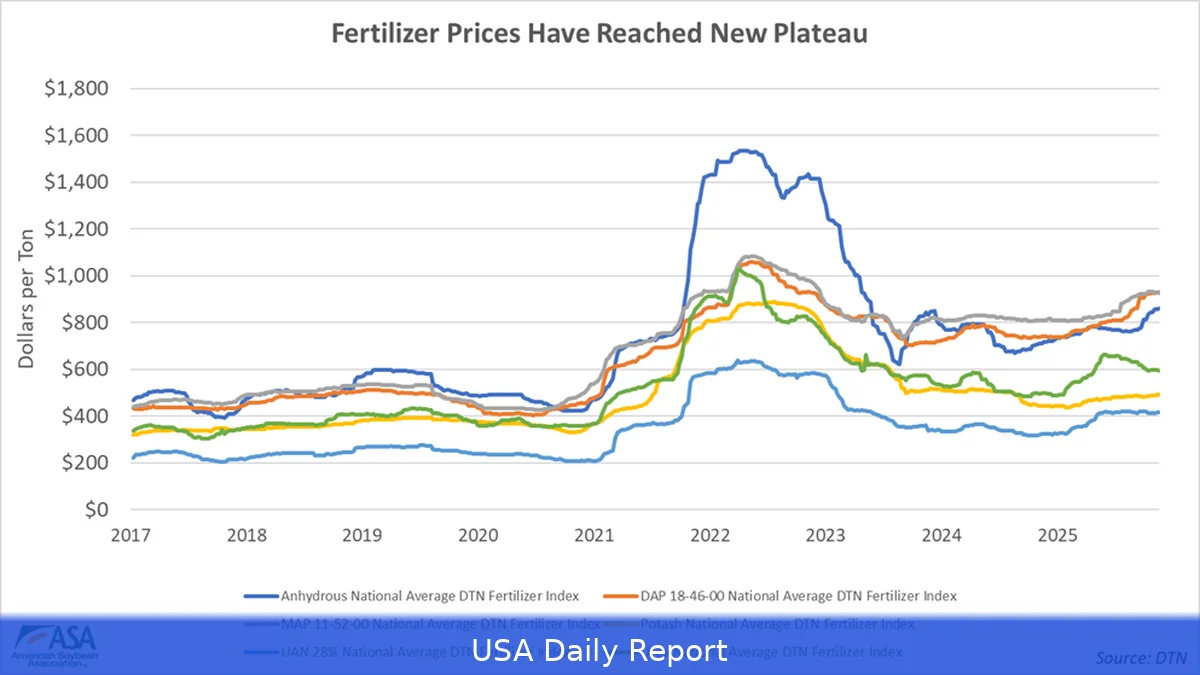
Doug Bartek worries about the spring. He said his inputs have been marked up so sharply that profits feel out of reach.
Costs keep climbing while prices lag
On a blustery morning near Wahoo, Nebraska, 60-year-old Doug Bartek shoveled soybeans into a conveyor and listed the bills that keep him awake at night: fuel, fertilizer, parts, seed and chemicals.
"Our biggest struggles are our inputs, be it fertilizer, seed, chemical, parts," said Doug Bartek, chairman of the Nebraska Soybean Association. "There has been so much drastic markup in all of these. And I just kind of feel like the farmer's kind of painted in the corner."
Look, the math is simple and brutal. Production expenses across U.S. Farms have risen for years, the U.S. Department of Agriculture data show. Operating costs for soybean production have stayed elevated since 2020 and the USDA projects they'll rise again in 2026.
At the same time, soybean prices haven't kept pace. Global supplies have swelled, in part because Brazil has increased output and overtaken the U.S. As the world's top soybean producer. "If we look at global soybean production over the past several years, it continues to set record, after record, after record," said Chad Hart, agricultural economist at Iowa State University. That glut is a big reason prices have been depressed.
Tariffs and a bruising trade fight
The trade dispute with China left fresh scars. The Trump administration imposed broad tariffs in April 2025 and China retaliated, effectively sidelining U.S. Soybeans from a top market for months. Farmers say the cut in exports pushed domestic prices even lower.
The two countries eventually struck a deal in late 2025. The agreement included Beijing's pledge to buy 12 million metric tons of soybeans by January and at least 25 million metric tons annually for the following three years — a promise meant to steady demand but not an instant fix for pocketbooks already strained by higher costs.
Justin Sherlock, a soybean grower and president of the North Dakota Soybean Growers Association, summed up the mood bluntly. "A lot of producers are pretty nervous going into this year," Sherlock said. "It looks like we're going to have another year of negative returns."
Fertilizer, fuel and the Strait of Hormuz
Then came the Iran war, which choked shipping lanes and pushed input prices even higher. The conflict disrupted traffic through the Strait of Hormuz, a key chokepoint for global energy flows. Fertilizer supplies tightened and fuel costs jumped — both direct hits to growers' balance sheets.
Thing is — a ceasefire announced April 7 gave farmers a glimmer of hope that bottlenecks might ease. But experts warn recovery won't be quick. They say shipping patterns, fertilizer production and global distribution chains need time to normalize, and that means farmers could keep paying higher input prices for months.
Joana Colussi, research assistant professor of agricultural economics at Purdue University, noted land costs also pressure margins. Midwest cropland values have climbed, and many growers rent some of the land they farm. Those rents and higher land prices add another fixed cost to an already tight equation.
How the squeeze plays out on the farm
Bartek runs roughly 2,000 acres with his family. On paper, soybeans are still among the top U.S. Agricultural exports. In practice, weak prices combined with rising inputs compress net income. Farmers who harvested a crop last year are carrying soybeans into this season, but stockpiles on hand don't offset the cost jump.
Producers describe a mix of factors beyond global markets: perceived price gouging by some suppliers for parts and chemicals; weather and planting delays; and the lag between when they buy inputs and when they sell grain. "There has been so much drastic markup in all of these," Bartek said, pointing to the list of pain points. "And I just kind of feel like the farmer's kind of painted in the corner."
Some growers are cutting back on fertilizer use or switching to cheaper seed and chemical options. Others are reworking budgets, delaying equipment purchases or seeking additional off-farm income. But scaling back inputs can reduce yields — a risky trade-off when margins are already thin.
Policy, markets and recovery paths
Policy moves and trade agreements can ease pressure — but not overnight. The late-2025 deal with China was meant to restore a key export market. Still, global inventories and Brazil's production gains mean the market won't rebalance quickly.
Analysts say several factors will determine the pace of recovery: how quickly fertilizer and fuel prices fall; whether China follows through on purchase pledges; and whether Midwest farmers can rein in land-related costs. The USDA's projection of rising operating expenses in 2026 suggests the next crop year could be another tight one for many producers.
There are local variations. Some farmers with lower rent burdens or diversified crops can weather low soybean prices longer. Others who lease more land or who have higher equipment debt are closer to the edge. Justin Sherlock noted that the mix of farm sizes and debt levels across states shapes risk in the region.
What farmers are doing now
Producers described pragmatic moves. They're negotiating with landlords, shopping for parts and chemicals more aggressively, and watching input markets for any sign of easing. Cooperative purchasing and group bargaining have cropped up in some places. Still, the cost of doing business remains elevated.
Bartek, who chairs the Nebraska Soybean Association, said growers are increasingly vocal about supply pricing. He's asked equipment dealers and chemical suppliers to justify price jumps. At the same time, farmers try to avoid decisions that could cut yields. "Our biggest struggles are our inputs," he said. "There has been so much drastic markup in all of these."
Even if China ramps up purchases as promised, experts say that extra demand will take time to work through global stocks and to shift prices upward for U.S. Producers. And a ceasefire doesn't instantly rebuild a fractured shipping system — vessels, production lines and distribution channels need time to catch up.
For many growers, the immediate challenge is cash flow. They need to buy seed and fertilizer now and won't get paid until harvest months from now. That timing mismatch forces difficult financial choices in the spring planting season.
Related Articles
- Markets Ignore a 70% Oil Surge. Earnings Estimates Might Not Be So Lucky.
- CATL Considers Up to $5 Billion Hong Kong Share Sale as Stock Hits New Highs
- China Turns Export Controls Into a Trade Weapon, Pressuring Global Supply Chains
"A lot of producers are pretty nervous going into this year," said Justin Sherlock, president of the North Dakota Soybean Growers Association.


