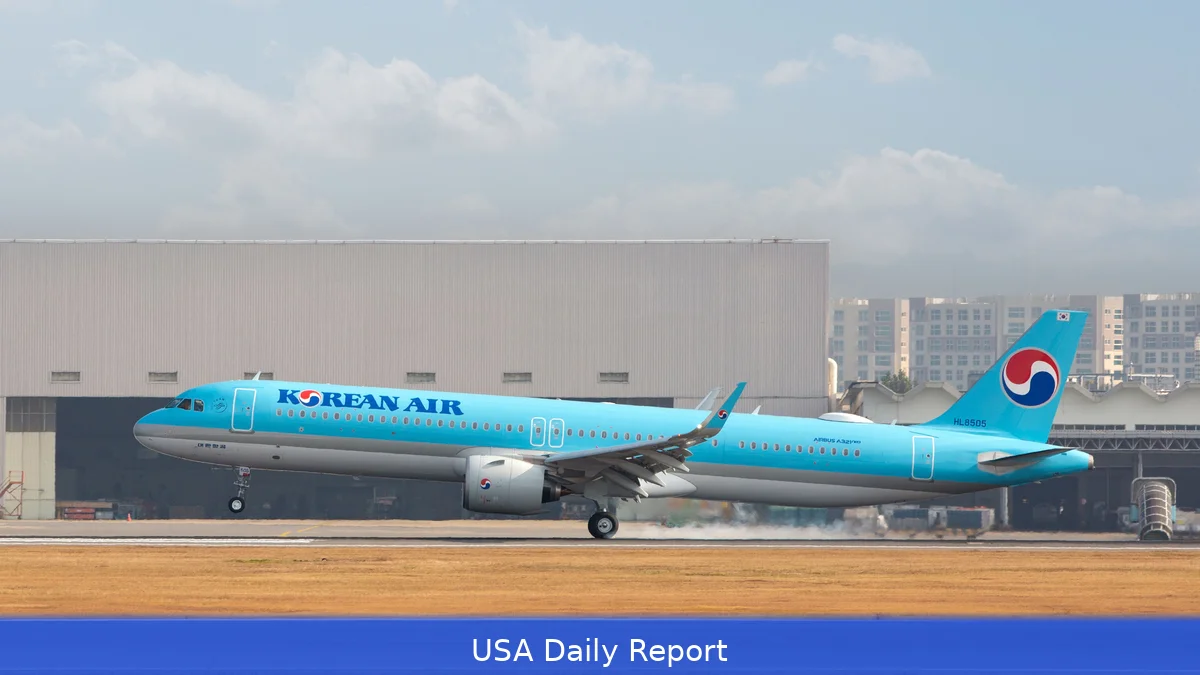
Korean Air posted record first-quarter revenue. The carrier beat expectations while flagging higher fuel and currency costs.
Big first quarter led by passengers and cargo
Korean Air said preliminary, separate-statement revenue for the first quarter came in at 4.5151 trillion won, driven by strong passenger travel and solid cargo demand. Operating profit on the same basis totaled 516.9 billion won, while net profit reached 242.7 billion won — all gains from a year earlier. Look, those are sizable moves: revenue rose 14% year-on-year and operating profit jumped 47% compared with the prior-year quarter.
The airline’s passenger business pulled most of the weight. Passenger revenue climbed to 2.6131 trillion won, helped by holiday travel during Lunar New Year and pickup on key transfer routes, including Europe. Cargo also contributed meaningfully: cargo sales rose to 1.0906 trillion won, supported by expanded fixed-volume contracts and flexible routing such as charters to meet stronger demand on Americas routes.
Why analysts call it an earnings surprise
Part of the upside reflects base effects from the prior year, when profits were dented by rising depreciation and maintenance as new jets joined the fleet. But the rebound was more than just arithmetic — Korean Air benefited from shifts in transfer demand across Asia after instability in the Middle East altered routing patterns.
That change pushed extra transfer traffic through Incheon and helped lift yields on some long-haul services. The carrier also captured seasonal cargo flows and the surge in shipments linked to newer growth areas such as AI device components and K-beauty products — niches the airline says it can flexibly target.
Hang on though — bigger costs are looming
Even with a strong first quarter, company and market watchers flagged growing risks for the current quarter. Higher international oil prices tied to Middle East tensions and elevated foreign-exchange rates are expected to hit operating margins more directly in the second quarter.
Korean Air has already moved to an emergency, company-wide cost management mode to blunt the impact of fuel-price volatility.
That shift means the carrier will try to contain costs through phased responses rather than a single sweeping action. The firm told reporters it plans to pursue company-wide efficiency steps and to adjust capacity and routing where needed to limit the rise in unit costs caused by more expensive jet fuel.
Strategy: chase transfer traffic, tweak cargo and routes
To offset weaker outbound demand from Korea, the airline plans to lure more transfer and outbound passengers from overseas markets.
That strategy leans on Incheon’s hub position and on routes where demand has already rebounded, including services to Europe. Korean Air also said it would try to secure cargo revenue in advance of peak seasonal demand and remain agile in switching routes to follow shifting freight flows.
Thing is — flexibility in routing and fixed-volume cargo contracts can blunt some fuel shocks, but they don't erase them. If jet fuel keeps rising, even well-filled planes will see margins squeezed because fuel is a major component of operating costs.
Where the numbers and history matter
Korean Air is South Korea’s largest airline by fleet size and international reach. The carrier traces its modern corporate form to 1969, when the Hanjin Group acquired the state-owned airline; since then it has grown a wide international network and a major cargo operation. According to public financial summaries and market listings, the airline serves well over a hundred international cities alongside a domestic network.
Industry watchers note the carrier's long-term strengths — a large fleet, deep cargo capabilities and a strong hub — all of which help when demand shifts rapidly. But fuel and forex swings can overwhelm those advantages quickly. The airline acknowledged that in its first-quarter results and in its move to emergency cost measures this month.
What investors and markets should watch next
Watch jet fuel benchmarks and the security picture in the Middle East. Both have been cited by analysts and the airline itself as immediate cost drivers for the second quarter. Also watch exchange-rate moves: a stronger dollar versus the Korean won raises costs for airlines that buy fuel and services in dollars while earning a large share of revenue in other currencies.
Operational signals will matter, too. Load factors and yields on long-haul transfer routes, the company’s ability to lock in fixed-price cargo deals, and how quickly Korean Air can flex capacity will all dictate whether the Q1 surprise is a one-off or the start of a sustainable rebound. The airline’s pivot to more charters and targeted cargo services shows management is already adjusting the playbook.
Risks beyond fuel
Basically, other unknowns could make the picture. A slower rebound in outbound leisure travel from Korea, fresh supply-chain disruption that hits cargo volumes, or a new wave of currency volatility would add pressure. Korean Air acknowledged muted outbound demand from Korea and signaled it would try to replace that with transfer and overseas-origin passengers.
At the same time, the airline faces normal industry headwinds — higher maintenance and depreciation from a growing fleet and competition on key routes. Those items weighed on profits last year and helped produce the big year-on-year swing in this quarter's results.
Bottom line for the near term
The first-quarter numbers showed clear momentum: record revenue, rising profits and stronger cargo returns. But rising fuel prices and exchange-rate pressure pose an immediate threat to margins in the second quarter. Management has launched emergency cost controls and plans to lean on transfer traffic and flexible cargo strategies to protect earnings.
For now, the facts are straightforward: Korean Air posted a strong Q1. The test will be whether those gains hold up once fuel costs are fully reflected in second-quarter operating statements.
Related Articles
- Goldman Sachs Flags Iran War as Growing Drag After Solid Quarter
- Goldman Traders Post Record Quarter as Bond Desk Falls Short
- Taiwan Seen as Key Beneficiary of AI-Driven Chip Spending, Analysts Say
Korean Air reported preliminary first-quarter revenue of 4.5151 trillion won and operating profit of 516.9 billion won.


