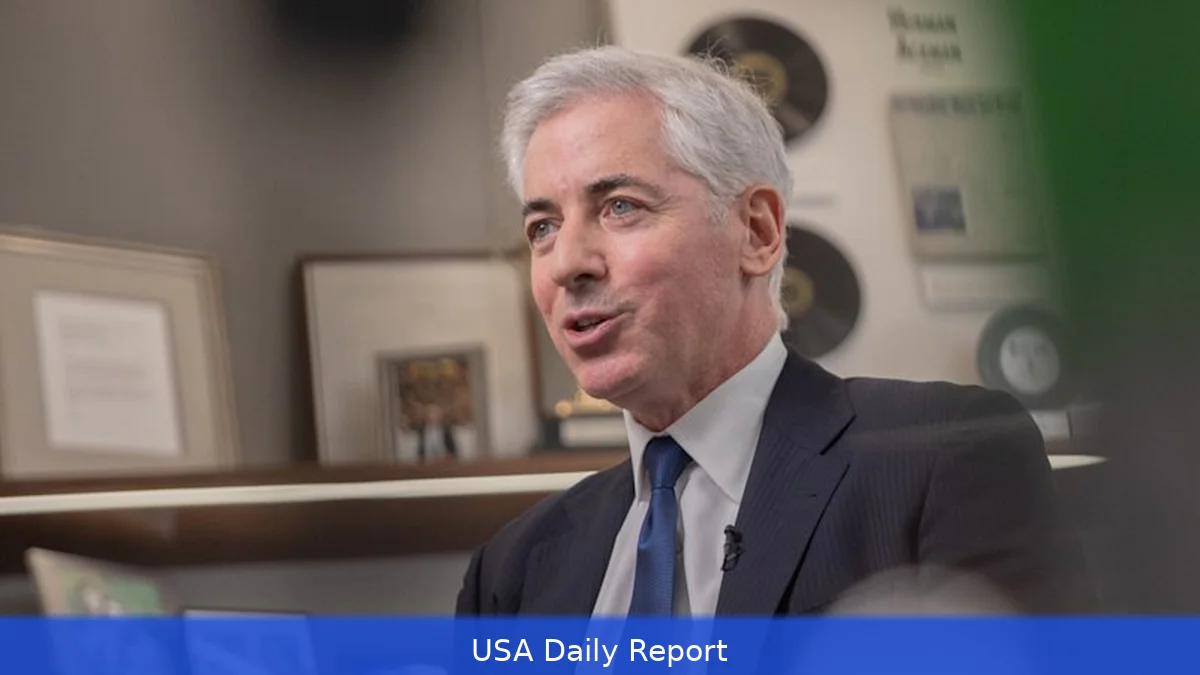
Bill Ackman has kicked off an IPO roadshow. He's marketing a combined listing that will bring his management company and a new fund to public markets. Pershing Square is aiming to list its management company and launch a closed-end fund that copies the hedge fund’s tightly focused approach.
Deal at a glance
Pershing Square is taking an unusual route to the public markets: a single transaction that will list both the firm that runs the hedge funds and a new investment vehicle that gives investors direct exposure to its strategy. Pershing Square has started a roadshow to market a combined IPO that will list both the manager and the fund. According to the filings, shares were pitched at $50 apiece and the deal is expected to raise between $5 billion and $10 billion.
Look, the size matters. This new vehicle, Pershing Square USA, is being set up as a closed-end fund, and the management company would list alongside it. The combined listing is unusual — sources describe the structure as rarely seen in asset management.
How the fund is built
Pershing Square USA will hold a tightly concentrated portfolio, roughly 12 to 15 North American-listed companies, the filing showed. That mirrors the concentrated, activist-style approach that Pershing Square Capital Management has used in its private hedge funds. Unlike an open-ended mutual fund or ETF, a closed-end fund issues a fixed number of shares and those shares then trade on an exchange.
A closed-end structure means the vehicle won't have to meet daily redemptions. That design gives the portfolio managers room to take large, long-term positions without worrying about sudden outflows. It also means market pricing can diverge from the net asset value, with shares trading at a premium or discount depending on demand.
Private commitments and pricing timetable
The transaction already has meat on the bones: about $2.8 billion in private placements were secured from institutional backers before the roadshow began.
About $2.8 billion in private commitments came from pension funds, family offices and insurance companies; those investors are slated to receive extra Pershing Square shares for taking part.
Pricing was targeted for April 28, with the new fund expected to list on the New York Stock Exchange under the ticker PSUS and the management company under PS. That timetable gives bankers a narrow window to convert private commitments into public demand and to sell the broader investor community on the combined structure.
Who’s running the deal
A syndicate of major investment banks is leading the offering.
Citigroup, UBS, Bank of America Securities, Jefferies and Wells Fargo Securities are listed as the deal’s lead underwriters. Those firms will carry the roadshow, meet institutional investors and help set final pricing based on demand.
Underwriters play a dual role here: they’re selling the fund story to investors while also pricing the management company’s ongoing revenue stream. That mix — fees from managing client capital plus the market value of a publicly traded management business — is at the heart of the pitch to investors.
Why the combined listing is unusual
Thing is — combining a management-company listing with a new fund in a single IPO transaction isn’t standard practice in asset management. Typically firms either spin off a management company in a traditional listing or launch a separate fund product later on. Pershing Square is doing both at once.
Investors will want clarity on fee splits, conflict-of-interest rules and governance — for example, how performance fees are split between the manager and the fund, and what safeguards protect outside shareholders. The filings lay out legal terms, but the market will ultimately judge whether the dual approach delivers clarity and value.
Background: a prior attempt
A similar plan was floated in 2024 but was pulled back shortly before launch, after Ackman and his team ran into market and structural hurdles. The earlier withdrawal left some investors cautious. It also gave the firm time to refine the deal mechanics and to secure the $2.8 billion of private support it now lists in the filing.
That earlier episode isn't just history; it’s context. Firms that try to marry a management listing with a fund vehicle need careful underwriting and willing long-term investors.
Securing $2.8 billion in private placements shows institutional backers are willing to seed the vehicle ahead of its public debut.
Who might buy in
That said, institutional interest is visible already, via the private placements. Pension funds, family offices and insurers have committed capital, the filings say, which suggests a mix of buyers who can hold capital for longer horizons than retail investors. Yet the public debut will test broader market appetite.
Retail investors who follow Pershing Square’s activist bets may get a chance to buy into the manager’s stock as well as the fund itself. That’s part of the offering’s appeal: giving outside investors a direct, listed way to access the manager’s concentrated investment approach without investing in its private hedge funds.
Practical implications for investors
A listed management company gives investors exposure to fee income, performance fees and the firm’s balance sheet. The closed-end fund, by contrast, offers direct exposure to the portfolio but with the quirks of a market-traded vehicle — price may not equal net asset value, and supply-demand dynamics can move the share price independently of the underlying securities.
For some investors, the pair could be attractive: one ticket for the manager’s ongoing economics, another for the actual holdings. For others, the structure may raise allocation questions about which ticker to buy and how to weigh the different risk profiles. The registration materials leave those choices to market participants.
Timing and next steps
With the roadshow underway, the immediate focus shifts to investor meetings and refining pricing based on demand. The underwriters will gauge appetite and adjust allocations before the targeted pricing date. If the market welcomes the combined offering, the listings will proceed as scheduled; if not, adjustments or delays are possible.
Still, the presence of institutional seed money reduces one layer of uncertainty. The $2.8 billion of private commitments is material. It gives the deal a starting base before the public tranche is sold.
Related Articles
- Wave of $15 Billion U.S. IPOs Runs Headlong Into a New Phase of War
- SpaceX IPO Could Be a Meme Stock Bonanza — Retail Investors Should Tread Carefully
- Goldman Traders Post Record Quarter as Bond Desk Falls Short
Pricing was targeted for April 28 and the shares were expected to list on the New York Stock Exchange under PSUS for the fund and PS for the management company.


