
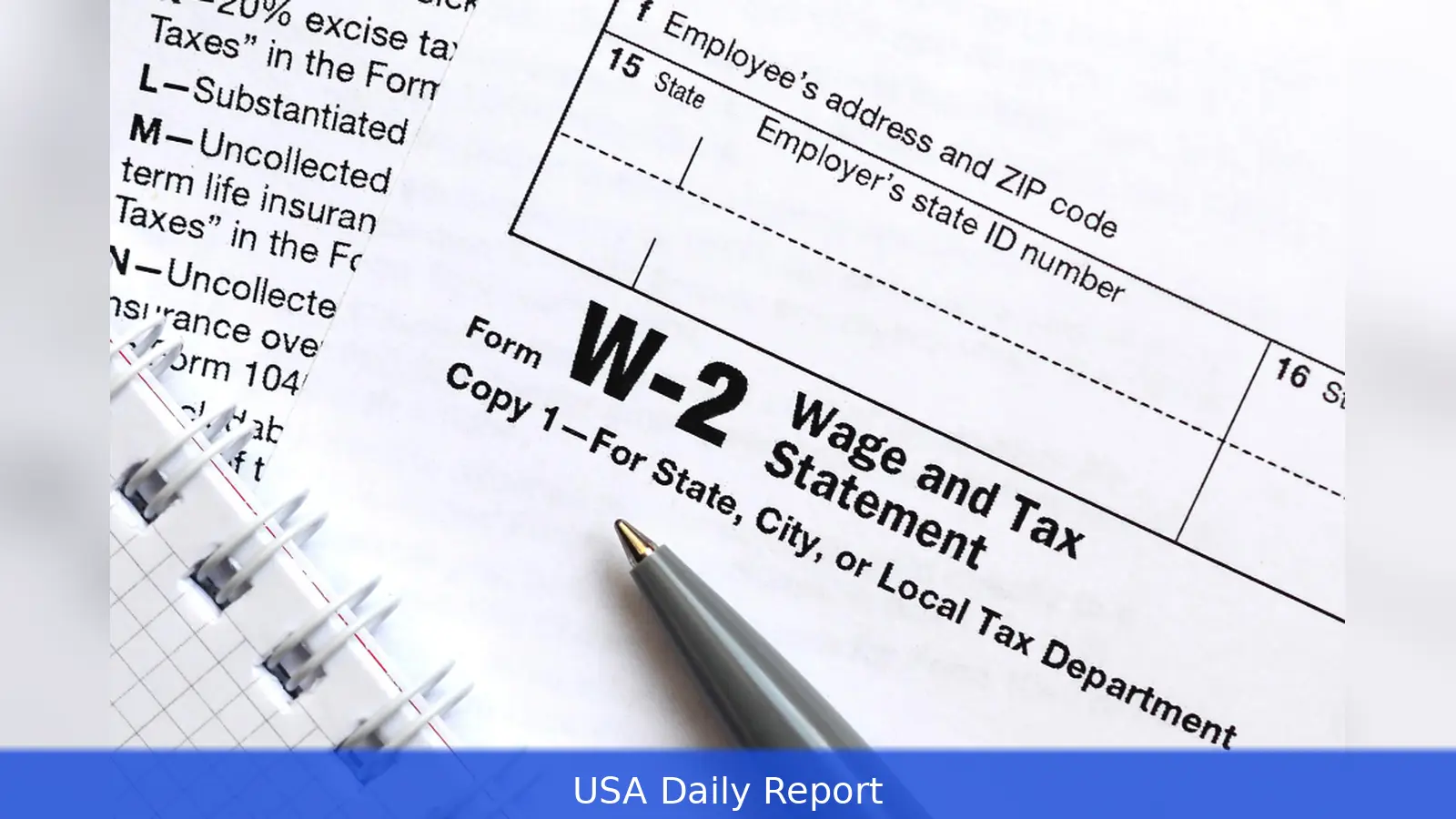
W-2 season matters every year. For 2026, employers must issue wage and tax statements that report 2025 pay and withholdings — and employees need those forms to file returns. This guide explains the W-2 form, who needs to file it, the 2026 deadlines, how employers and employees should handle filing, what it costs, common mistakes, and where to find official assistance.
Quick-reference summary
- Who files: Employers who paid employees for services in a trade or business during 2025 and withheld tax, or who paid $600+ in certain noncash compensation.
- Employer deadline (2026): Furnish W-2 to employees by Jan. 31, 2026 (for tax year 2025 wages this was Feb. 2, 2026 because Jan. 31 fell on a weekend). File Copy A with SSA by that same date or the next business day.
- Keep records: Keep copies of W-2/W-3 for at least 4 years.
- Corrections: Use Form W-2c to correct errors after filing.
- Official sites: IRS W-2 page (https://www.irs.gov/forms-pubs/about-form-w-2), SSA Business Services Online (https://www.ssa.gov/bso), USA.gov IRS info (https://www.usa.gov/irs).
Prerequisites
Before you start, get these in order.

- Employer Identification Number (EIN). You must have an EIN to file W-2s and W-3s.
- Accurate employee data: legal name, Social Security number (SSN), address. Match names to SSA records.
- Payroll totals for the calendar year: wages, tips, federal income tax withheld, Social Security wages and tax, Medicare wages and tax, any state/local withholdings.
- Access to filing channels: SSA Business Services Online for e-file, or paper Copy A if permitted in limited cases.
Step-by-step: Employers — prepare and file W-2s (numbered)
- Collect employee W-4s and verify SSNs. If an SSN is missing or incorrect, request the correct SSN immediately. Don’t guess — mismatched SSNs trigger SSA/IRS rejections.
- Calculate annual totals for each worker. Include wages, tips, taxable fringe benefits, retirement deferrals, and all federal, Social Security, and Medicare withholding for the calendar year.
- Fill out Form W-2. Complete all boxes that apply: Box 1 (wages, tips, other comp), Box 2 (federal income tax withheld), Box 3/5 (Social Security and Medicare wages), and state/local boxes if required.
- Prepare Form W-3. You must transmit Copy A of Forms W-2 with Form W-3. Check the “Hshld. Emp.” box on Form W-3 if you paid a household employee.
- Distribute employee copies. Furnish Copy B, Copy C, and Copy 2 to employees by Jan. 31 of the year following the tax year — for 2025 wages that meant Jan. 31, 2026 (adjusted to Feb. 2, 2026 when Jan. 31 fell on a weekend).
- File Copy A with the SSA. File electronically via SSA Business Services Online (https://www.ssa.gov/bso) which is free for employers. If you file paper copies, follow SSA print specifications and submit with Form W-3.
- File state W-2s where required. Many states require a copy or separate electronic filing. Check your state revenue department website for state-specific filing portals and deadlines.
- Keep records. Retain copies of W-2s and W-3 for at least 4 years, as required by SSA guidance.
- Correct mistakes with Form W-2c. If you discover an error after filing, prepare Form W-2c and send corrected copies to the SSA and to affected employees promptly.
Step-by-step: Employees — get and use your W-2
- Expect your W-2 by Jan. 31 each year. If you haven’t received it by early February, contact your employer first.
- If your employer doesn’t give you a W-2 on time, reach out to the Social Security Administration at ssa.gov or the IRS. The SSA can often confirm employer filings.
- Use the amounts in Box 1, Box 2, and the state boxes when filling out your Form 1040. Include Medicare and Social Security wage info where required, and reconcile any tip income reported.
- If your W-2 has errors and the employer can’t fix them before you file, you may use Form 4852 (Substitute for Form W-2) to file your return — but only as a last resort. Attach explanations and keep employer correspondence.
Costs, fees, and eligibility
You can file W-2s for free using the SSA’s Business Services Online. Many payroll providers charge monthly fees or per-employee fees; those vary widely — expect anywhere from $20/month for small DIY services to $100+ per month for full-service payroll, or about $1–$5 per W-2 for bulk filings with low-cost vendors.
There’s no employee fee to receive a W-2. Employers are responsible for preparing and delivering employee copies at no cost.
That said, limited exceptions: In very narrow cases you may not have to file a W-2 — for example, certain election workers or certain foreign agricultural workers paid less than $2,000 in wages and for whom no taxes were withheld. But if you withheld any income, Social Security, or Medicare tax, you must file a W-2 even if wages are small.
Official links and forms
- IRS: About Form W-2 — https://www.irs.gov/forms-pubs/about-form-w-2
- SSA Business Services Online (for e-filing W-2/W-3): https://www.ssa.gov/bso
- General federal info: https://www.usa.gov/irs
- If you must file a substitute W-2: Form 4852 — https://www.irs.gov/forms-pubs/about-form-4852
Tips — fast, practical moves
- Verify SSNs early. Matching names and SSNs to SSA records prevents rejections and penalty letters.
- Use e-file. Electronic filing through SSA BSO reduces errors and speeds processing. File early — don’t wait until the last week.
- Label boxes correctly. Employers often mix up Box 1 (federal wages) and Box 3 (Social Security wages) when pre-tax benefits or retirement deferrals apply. Double-check calculations.
- Watch household payroll. Even if you employ only one household worker, you must file Form W-3 to transmit Copy A and check the household box.
- Keep contact records. Save emails or delivery confirmations showing you furnished W-2s to employees — that helps if a dispute or penalty arises.
Common mistakes to avoid
- Wrong SSN or misspelled name. That’s the single most common error. Cross-check names exactly as shown on Social Security cards.
- Mixing taxable vs. Nontaxable amounts. Don’t include nontaxable reimbursements in Box 1. If you’re unsure, consult payroll software settings or an accountant.
- Missing the Form W-3. Some employers file W-2s but forget Form W-3 — SSA uses W-3 to reconcile totals and validate filings.
- Late employee delivery. Furnishing W-2s after Jan. 31 (or the next business day) can trigger IRS/SSA penalties and frustrate employees preparing returns.
- Not correcting errors. If you spot mistakes after filing, don’t ignore them — file Form W-2c without delay.
Alternatives and comparisons
If you’re an independent contractor, you won’t get a W-2 — you typically receive Form 1099-NEC from each payer who paid you $600 or more. Employers shouldn't issue a W-2 to contractors unless the worker is truly an employee. Misclassification risks back taxes, penalties, and liabilities for failing to withhold.
Payroll services vs. In-house: Small employers often outsource to payroll providers to avoid paperwork and keep up with changing rules. That usually costs more but reduces error risk. If you prefer in-house, use reputable payroll software that integrates SSA filing and produces compliant W-2 copies.
Related Articles
W-2 2026 matters because it ties last year’s pay to this year’s tax return. Employers: get SSNs right, file Copy A with SSA and hand employee copies by Jan. 31 (or the next business day). Employees: check your W-2 early, correct errors, and keep copies for at least four years. Official help is at the IRS and SSA sites listed above — follow their filing and correction procedures to avoid headaches and penalties.
This article was created with AI assistance.


