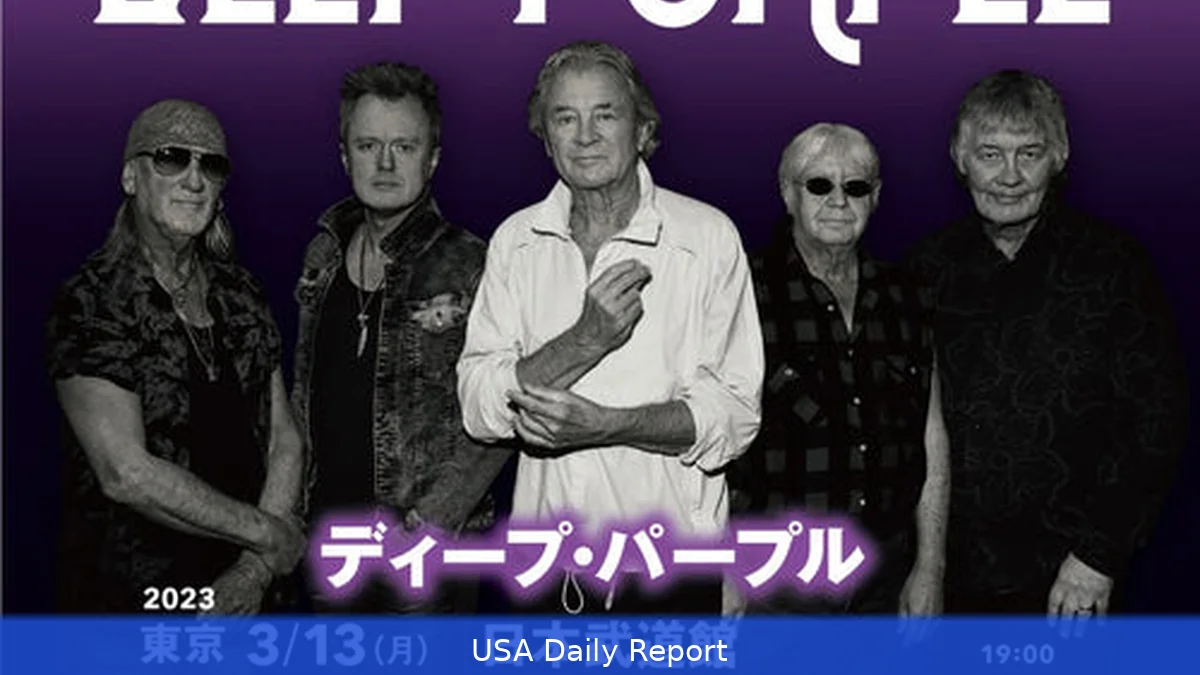
She reportedly told Deep Purple, "You are my god," during their meeting.
Fan to leader
Japan's prime minister, Sanae Takaichi, met members of the British rock band Deep Purple this week and told them, "You are my god," the BBC reported.
That line made headlines — it's rare to hear a head of government speak like a rock-star fan at an official event.
She's more than a casual fan. BBC reporting notes she once played keyboard in a Deep Purple tribute band and later took up the drums while at university — so much so that she was known to carry several sets of drumsticks because she'd break them during intense performances.
It felt like politics colliding with pop culture: a sitting prime minister recalling her musical past while meeting a band tied to classic rock.
Why the meeting mattered
This meeting matters for a few reasons. First, it humanizes a leader in ways that routine policy announcements usually don't. Second, it draws attention to the cultural ties between Japan and the United Kingdom. And third, it gives both parties a soft-power moment that can be amplified by media across borders — including in the United States.
But when a politician openly embraces a cultural icon, public attention often shifts from dry policy debate to questions of image and identity.
That matters in domestic politics. Politicians who show a personal side can gain sympathy or attention that affects polling, fundraising and the news cycle. For Takaichi, a leader with a well-documented musical hobby, the meeting with Deep Purple reinforces a personal brand that mixes conservatism with pop-culture cred.
And on the diplomatic front, such meetings are a reminder that statecraft isn't only formal treaties and trade negotiations. Cultural exchanges, museum visits and music meet-and-greets are part of how countries relate to each other — and how leaders build rapport with foreign publics.
Soft power, amplified
Soft power isn't a new idea. Still, moments like this compress it into a soundbite that's easy to share and repeat.
For Japan, a country that invests in cultural outreach — from anime to cuisine — a prime minister publicly celebrating a British band shows a willingness to meet partners on cultural ground rather than only on economic or security terms.
For the United Kingdom, Deep Purple's status as a storied act gives the band an unofficial ambassador role. The band's presence at a meeting with a Japanese leader becomes part of the story of bilateral goodwill.
And for audiences in the United States, the moment provides a familiar frame: political figures courting popular culture to broaden appeal. American politicians have long used celebrity encounters to reach voters. The Takaichi–Deep Purple meeting fits that pattern and offers U.S. Media an appealing cross-border human-interest angle.
Economic angles and ripple effects
There are modest economic implications tied to such cultural moments.
Music-related attention can boost streaming, sales and concert interest. That, in turn, helps record labels, concert promoters and related businesses — many of which operate globally, including in the U.S.
If Japanese fans respond by revisiting the band's catalog or buying concert tickets, promoters and streaming services in the United States could see a knock-on effect. International publicity often moves listeners across platforms, and that translates into royalties and licensing that cross national lines.
Point is, the effect is rarely huge on its own. In today's attention-driven media world, a prime minister's remark can give artists and their partners a small, measurable bump.
Political calculus
Takaichi's musical past and the meeting with Deep Purple also carry political signals beyond culture.
Domestically, the image of a music-loving leader can soften perceptions among voters who might otherwise view politicians as distant or overly technocratic. That can be politically useful when attention is elsewhere — during budget battles, elections, or policy debates.
On the international stage, such informal interactions can ease some diplomatic friction. When leaders or senior officials share cultural affinities, it can make subsequent conversations — on trade, security or partnerships — a touch friendlier. The personal rapport established in a casual meeting sometimes shades formal negotiations, even if it doesn't alter policy directly.
They won't change core strategic priorities; formal policy and agreements still guide defense and trade decisions. Japan's defense ties, trade talks and alliance commitments aren't determined by rock concerts. But they add texture to relationships that are otherwise defined by spreadsheets and memos.
How this touches the United States
The United States sits at the intersection of many of these threads.
U.S. Companies handle much of the music distribution and streaming infrastructure that turns attention into revenue. So when an international event nudges interest in a band, some of the financial flow goes through U.S.-based firms or services.
Also, the U.S. Has a long-standing security alliance with Japan.
Any move that shapes public perceptions of Japanese leaders — even pop-culture moments — is of interest to American diplomats and analysts who track Tokyo's domestic politics. A leader who connects with broad audiences differently may affect the tone of public debates around cooperation, even if not the substance.
Look, the impact on U.S. Policy is indirect. But the media cycle it creates can shift what domestic audiences focus on, and public focus matters. Attention can change priorities for politicians and media organizations in Washington.
Risk and reward
There are risks when politicians court pop culture.
One risk is trivialization: critics may say a leader is using celebrity stunts to distract from policy failures. Another risk is mismatch: if a leader's favored cultural reference falls flat with key constituencies, the intended boost can backfire.
But the rewards are visible — increased name recognition, more control over the narrative, and an image that's easier to communicate than a lengthy policy paper. For Takaichi, who has a genuine musical background, the gamble is less about gimmick and more about authenticity.
That authenticity is part of today's politics. Voters want people who seem real — even when 'real' means sharing odd hobby details on camera.
What to watch next
Keep an eye on how the story is covered in Japanese and international outlets, and whether the encounter becomes part of campaign messaging or official visits.
Watch for any uptick in Deep Purple's streaming numbers or ticket sales in East Asia — small signs, but concrete ones. Also watch whether Japanese political opponents or commentators use the meeting as a talking point.
One more thing: cultural diplomacy moments often reappear in unexpected discussions — from trade roundtables to tourism campaigns. The band meeting could surface in those conversations, too.
Related Articles
- Hezbollah Supporters Rally Outside Lebanese PM's Office as Talks with Israel Loom
- Trump Says He’s ‘Optimistic’ on Iran Truce as Questions Grow Over Hormuz and Next Steps
- Xi greets Taiwan opposition leader in Beijing as Chinese drills ramp up near island
"You are my god," said Sanae Takaichi, Prime Minister of Japan, to the members of Deep Purple.


