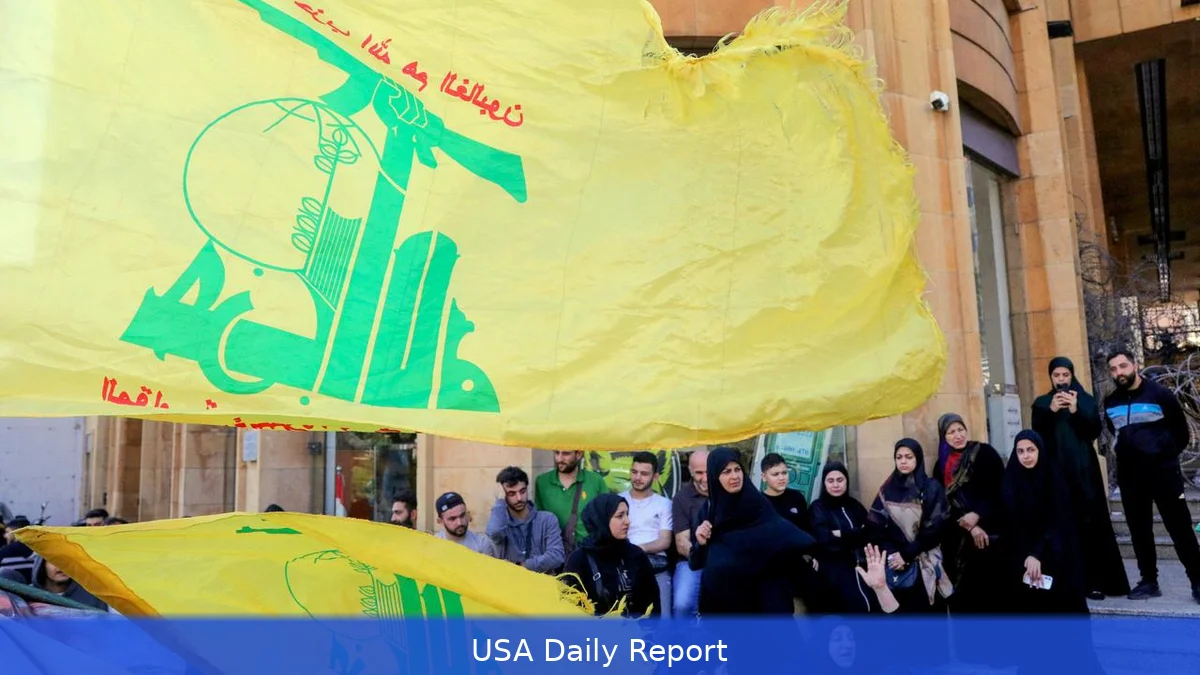
Israel won't discuss a ceasefire with Hezbollah. Officials said that refusal came before formal negotiations with Lebanon in Washington next week. Ambassadors met late Friday to finalize arrangements at the State Department.
Diplomatic opening — but limits are clear
Look, Israel has agreed to sit down with Beirut. Yechiel Leiter, Israel's ambassador, told reporters the planned Tuesday meeting at the State Department marks the start of formal negotiations with the Lebanese government.
But he also drew a hard line. "Israel refused to discuss a ceasefire with the Hezbollah terrorist organisation, which continues to attack Israel and is the main obstacle to peace between the two countries," Leiter said, according to Israeli statements. That stance means the talks will focus on state-level issues rather than negotiating directly with the Shiite militia that controls large parts of southern Lebanon.
The two sides dispatched ambassadors to Washington and held late-night discussions on Friday to hammer out the logistics. Diplomats from both capitals are due to meet at the State Department on Tuesday, even though Lebanon and Israel have no formal diplomatic ties.
The timing couldn't be worse; strikes along the border have left the area tense and unpredictable. Israeli air strikes across Lebanon have kept the border area volatile. The Lebanese National News Agency reported an air strike on Saturday destroyed a residential building in Mayfadoun, in Nabatieh district, killing three people. Media outlets also reported that an earlier large-scale assault left more than 1,000 people killed or wounded.
Iran, Pakistan and competing ceasefire views
Tehran has pushed a different message. Mohammad Bagher Ghalibaf, speaker of Iran's Parliament, said Iran won't take part in negotiations unless hostilities in Lebanon stop and frozen Iranian assets are released.
"Tehran wouldn't engage in negotiations without a ceasefire in Lebanon and the release of frozen Iranian assets," he said, according to the Iranian official account.
That stance clashes directly with Israel's refusal to tie talks to a Hezbollah ceasefire. Iran also continued punitive measures elsewhere — keeping the Strait of Hormuz effectively closed for a time, according to the reporting. Iran's action shows it's leveraging economic pressure and strategic chokepoints to strengthen its bargaining position.
Separately, mediators have been trying to thread a needle between the parties. Pakistan hosted talks between U.S. And Iranian representatives, with a U.S. Delegation that included Vice President JD Vance, envoy Steve Witkoff and adviser Jared Kushner arriving in Islamabad. Officials said the Islamabad talks were part of a wider effort to calm regional fighting and to define exactly what the pause between Washington and Tehran covers.
Washington's tightrope
President Donald Trump told reporters he had asked Israeli Prime Minister Benjamin Netanyahu to scale back bombardment, warning that continued strikes could undermine the fragile pause between the U.S. And Iran. Reuters, citing Axios, reported that both Lebanon and the Trump administration sought a temporary halt to hostilities ahead of the Washington meeting — although the White House didn't publicly confirm that request on Friday.
Washington is juggling two roles — mediator and Israel's security partner — which pulls U.S. policy in competing directions. It has to balance pressure on Israel to avoid wider escalation while trying to maintain leverage in back-channel talks with Iran. Officials view the Washington meeting as a way to put Lebanon and Israel on a diplomatic track without directly addressing nonstate actors like Hezbollah.
That distinction is politically sensitive in Washington. Some U.S. Lawmakers and aides insist direct engagement with Lebanon's government is necessary to reduce civilian harm and prevent a wider war. Others worry that any formal negotiation that doesn't include Hezbollah's cessation of fire will be limited in effect, because the militia remains a dominant military force on the ground in southern Lebanon.
On the ground and at sea — the stakes for markets
Military action in Lebanon and Iranian pressure on maritime routes have immediate economic implications. The temporary closure of the Strait of Hormuz — a chokepoint for global oil shipments — reverberates through energy markets even when it lasts only briefly. Tanker operators, insurers and commodity traders watch such moves closely because they can push prices and shipping costs higher.
Neither Israel nor Lebanon are large oil exporters, yet regional conflict touches global energy flows. U.S. Consumers could see higher gasoline prices if tensions persist or widen to include major oil producers. Investors also track the situation for its potential to unsettle global markets, push up risk premiums and spur flight-to-safety flows into U.S. Treasuries.
The strikes and Israel's refusal to negotiate over a Hezbollah ceasefire risk sharpening political divisions at home in both countries. In Israel, repeated strikes and the decision to refuse negotiations over a Hezbollah ceasefire could harden public opinion and narrow political space for any concessions. In Lebanon, the government faces pressure to show it can protect civilians and revive governance in areas battered by years of instability.
What the Lebanese government has requested
Lebanese officials, according to reporting, have urged Israel to pause attacks ahead of the Washington meeting. The request is part of a broader appeal from Beirut and allied mediators to create space for diplomacy. Lebanon's case to the U.S. Is simple: talks will be far harder to hold if bombardment continues and civilians keep dying.
At the same time, Hezbollah remains a central player. The militia has launched cross-border strikes in retaliation for Israeli actions, and its capabilities complicate any state-to-state negotiation. Israeli negotiators have said they will treat Hezbollah as an armed group separate from the Lebanese state, a distinction that Lebanese officials may find hard to accept given Hezbollah's political and military integration in the country.
Paths forward and risks
Officials in Washington plan to push for a negotiated freeze in frontline violence while keeping the focus on state-level issues, diplomats said. That's a delicate balancing act. If Israel maintains its refusal to discuss a Hezbollah ceasefire, any agreement with Beirut risks being incomplete — lacking the means to enforce a halt to militia attacks.
And if Iran keeps insisting on a Lebanon ceasefire as a precondition for broader engagement, that raises the odds of stalemate. The Pakistani-brokered contacts between the U.S. And Iran underline how many moving pieces there are — Tehran, Washington, Jerusalem, Beirut and nonstate actors like Hezbollah — each with different priorities and red lines.
Still, the Washington meeting will test whether bilateral diplomacy between Lebanon and Israel can advance at all when neighboring powers insist on linked outcomes. It will also test U.S. Mediating capacity — and how far the administration is willing to press each side to de-escalate military operations before a negotiation is formally convened.
Related Articles
- Israeli strikes deepen Lebanon crisis as hospitals warn of collapse and Strait of Hormuz reopens dispute
- Vance Flies to Pakistan to Start Negotiations Over Iran as Tensions and Ceasefire Claims Hover
- Trump Says He’s ‘Optimistic’ on Iran Truce as Questions Grow Over Hormuz and Next Steps
"Israel agreed to begin formal peace negotiations," Yechiel Leiter, Israel's ambassador, said as he announced the talks.


