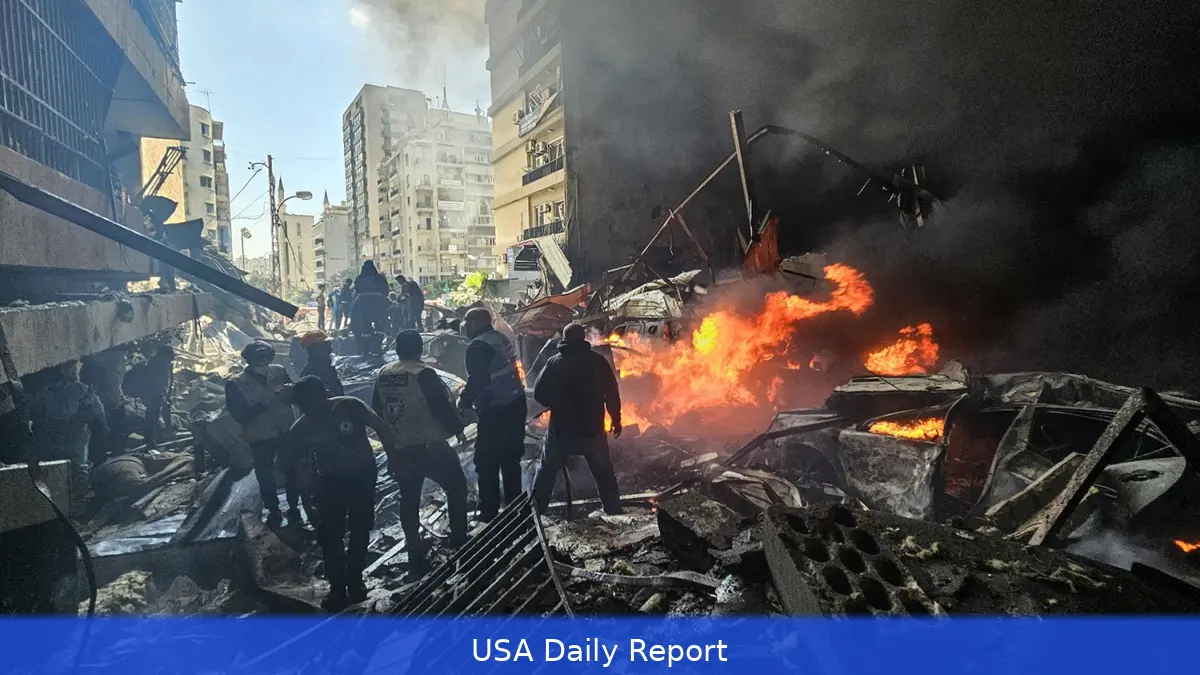
Israel unleashed its most extensive military offensive on Lebanon in recent days, killing more than 180 people and threatening a fragile ceasefire agreement involving Iran. The strikes have sent shockwaves through the region, threatening diplomatic efforts and stirring economic and political uncertainty.
Unfolding Conflict and Ceasefire Fragility
On Wednesday, Israel intensified its air campaign against Lebanon, targeting areas across Beirut, southern Lebanon, and the Bekaa Valley. The attacks came just as Iran had declared a ceasefire in its own conflict with the U.S. And Israel, raising concerns over the durability of the broader truce. Lebanese authorities reported that the death toll from these strikes surpassed 180, with hundreds more injured. The strikes represent a sharp escalation that risks unraveling the tentative diplomatic progress made in recent weeks.
The Lebanese civil defense and the country's Health Ministry provided differing casualty figures, with the ministry citing over 200 deaths in the latest wave of attacks. This adds to a grim tally of more than 1,500 Lebanese casualties in the ongoing hostilities that have stretched over five weeks. The scale of the destruction has prompted widespread evacuations and emergency responses in the affected areas.
Diplomatic Tensions and Regional Repercussions
The timing of Israel's strikes signals a calculated decision to continue pressuring Hezbollah, the Lebanese militant group backed by Iran, despite the ceasefire declared between Iran and the U.S. Israel's leadership has been clear about its intent to degrade Hezbollah's capabilities, even as it participates in negotiations helpd by the United States. This dual approach exposes rifts within the delicate diplomatic framework attempting to stabilize the region.
Here's the thing — iran's Parliament Speaker Mohammad Bagher Ghalibaf condemned the attacks, calling them a breach of the ceasefire framework agreed upon by all parties. French President Emmanuel Macron echoed concerns after discussions with both U.S.
And Iranian officials, stressing that any ceasefire must also cover Lebanon to be credible. These statements highlight the broader international unease regarding the expanding violence.
Honestly, meanwhile, Iran threatened to suspend shipping traffic through the Strait of Hormuz, a critical chokepoint for global oil supplies, as a potential response to the attacks. Such a move could have profound implications for the global economy, particularly energy markets, by disrupting one of the world's most vital oil transit routes.
U.S. And Israeli different policy directions
U.S. And Israeli officials appear to be dealing with a complex balancing act. President Donald Trump acknowledged in an interview that Lebanon was not included in the ceasefire due to Hezbollah's involvement but suggested that the issue would be addressed separately. This stance underlines a divergence in how the U.S. And Israel are approaching the conflict, with Israel keen to maintain military pressure on Hezbollah while the U.S.
Focuses on broader negotiations with Iran.
The split makes people wonder about the unity of the U.S.-Israel alliance in wartime and the potential for internal disagreements to affect the course of the conflict. As the U.S. Leads diplomatic efforts aimed at de-escalating tensions with Iran, Israel's military actions in Lebanon make the situation, potentially undermining talks and increasing the risk of wider confrontation.
Economic and Political Impact
The recent strikes exacerbate an already volatile situation in Lebanon, which is grappling with a severe economic crisis marked by currency collapse, inflation, and widespread poverty. The destruction and loss of life from the airstrikes add to the country's humanitarian challenges and threaten to destabilize its fragile political landscape further.
The broader regional instability also poses risks to global markets, especially energy prices. With Iran threatening to close the Strait of Hormuz, oil prices could spike, affecting everything from gasoline costs in the U.S. To the operational expenses of businesses worldwide. Investors are likely to watch the developments closely, as any escalation might trigger market volatility.
Politically, the strikes put pressure on international actors to address the conflict decisively. France's call for a full ceasefire that includes Lebanon reflects a growing consensus that piecemeal agreements won't hold. The situation demands coordinated diplomacy involving all key players, including the U.S., Iran, Israel, and regional stakeholders.
Related Articles
- Iran Emerges Stronger After Ceasefire, Shifting Regional Power Dynamics
- Lebanon Faces Turmoil as Israeli Strikes Shake Fragile Ceasefire
- Trump and NATO Chief Discuss Partnership Amid Ongoing Gulf Tensions
As Israel maintains its offensive against Hezbollah in Lebanon, the delicate ceasefire involving Iran faces serious threats. The unfolding violence not only endangers lives but also complicates international diplomacy and risks further economic disruption. What happens next could reshape the region’s stability for months to come.


