
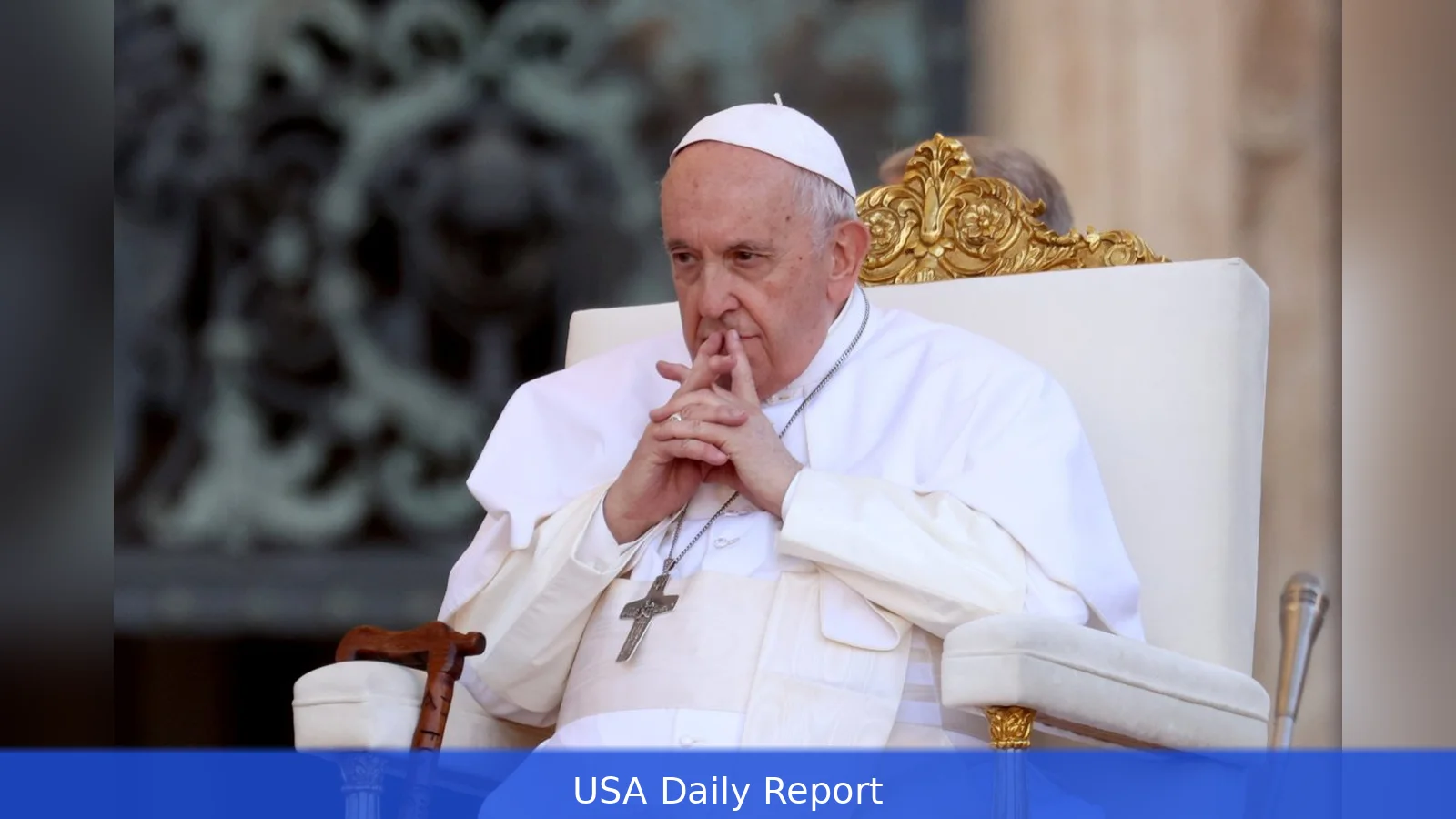
Pope Francis accused leaders of diverting their countries' wealth into arms.
Sharp rebuke in Cameroon
Pope Francis spoke from a cathedral in Bamenda, calling out what he described as leaders who steal national resources and then spend the profits on weapons that fuel cycles of violence. He said such choices "perpetuat[e] an endless cycle of destabilisation and death," a line that drew audible reaction from those gathered. The remarks came just days after a public spat involving former US President Donald Trump, making the comments resonate beyond the region where he was speaking.
Bamenda sits in northwestern Cameroon. It's a region where local leaders and aid groups report recurring unrest and insecurity. The Pope chose a place touched by instability to make his point — and that made the message sharper for local audiences who live with the fallout of competing armed groups and limited state services.
What he said and why it matters
In Bamenda, Pope Francis framed the issue around resource theft and the choices leaders make with those proceeds. "Those who rob your land of its resources generally invest much of the profit in weapons," he said. That sentence tied together extraction, corruption and militarization in one line.
The Pope went beyond moral criticism and linked resource theft to militarization: stolen resource profits often end up funding weapons, which reduces jobs and safety for ordinary people. Poorer public services, weaker institutions and greater instability often follow. Those consequences then become the justification for still more military spending — the vicious circle he warned about.
International political ripple effects
The speech came shortly after other public attention around the Pope, which increased coverage; the provided source does not document any exchange with Donald Trump. That spat raised the profile of the Pope's comments in international media and among policymakers, especially in Washington, where debates over foreign policy, defense sales and humanitarian aid are ongoing.
When a global religious leader criticizes leaders’ choices, it can change how politicians and the public debate arms sales and aid — though the single source here doesn't provide evidence of such influence. Governments that export weapons face increased scrutiny when a moral authority links such exports to instability and human suffering. For countries with strong domestic Catholic constituencies — including the United States — the Pope's words can resonate in public debate and among elected officials.
Economic angle: resources, profits and arms
The Pope's argument hinged on a basic economic dynamic: resource extraction generates rents, and who controls those rents determines how they're used. When corrupt networks capture resource wealth, they can use it to buy military power rather than invest in schools, hospitals or infrastructure.

That matters for international investors and trading partners. Countries seen as diverting resource income into repression or conflict risk facing sanctions, reduced investment and reputational damage. So the claim isn't only moral — it's economic. Less investment and more instability feed into lower growth and poorer fiscal outcomes for ordinary people.
In the U.S., where government decisions cover both weapons exports and aid, such papal comments may be used by critics on either side of those debates; the source does not claim the Pope mentioned the United States. U.S. Decisions about arms sales, military assistance and conditionality on aid are already politically charged. A Vatican critique of militarization can add moral pressure on lawmakers who balance strategic partnerships against human-rights concerns and long-term stability goals.
How this touches U.S. Politics
U.S. Policymakers won't be forced to change course by a single papal speech. Still, the intervention can shift public conversations. The United States has a big Catholic population whose views can influence congressional priorities, especially in districts where faith-based advocacy groups are active. That often shows up during votes on foreign assistance, refugee resettlement and oversight of defense exports.
And administrations — whether Republican or Democratic — frequently cite moral and strategic rationales when justifying foreign policy. When the Pope frames military buildup as a product of resource plunder and corruption, it supplies language that critics of unfettered arms transfers can use. Legislators who already push for tighter oversight of weapons exports may find new moral cover.
Regional consequences and the peace agenda
The Pope's comments weren't limited to abstract ethics. He spoke in a region that has suffered from local conflicts, and his words are likely to land with civic leaders and clergy who work on reconciliation and humanitarian relief. That can change the tenor of local advocacy: religious leaders often bridge communities and can press national governments to reconsider resource governance and arms procurement policies.
For mediators and aid agencies, the message is a reminder that peacebuilding efforts must address underlying economics as well as immediate security needs. Donors and international organizations that fund stabilization programs may interpret the remarks as support for projects that promote transparency in extractive industries and oversight of security spending.
Vatican diplomacy and global messaging
Pope Francis has long mixed pastoral outreach with diplomatic signaling. Here, his public rebuke serves both roles: it's pastoral for congregations in conflict-affected regions, and diplomatic in its implications for heads of state and foreign capitals that finance or enable arms flows.
The Vatican often raises economic-justice themes, which some diplomats say can shape discussions in international forums; the source offers the Pope's sentence but does not make this broader claim. When the Pope highlights how resource theft funds weapons, he amplifies longstanding concerns about governance that the Vatican has raised in international settings. That can nudge multilateral discussions, including those about transparency in extractive industries and the responsibilities of exporting states.
What's next
Expect the Pope's remarks to be picked up by advocacy groups and some lawmakers who are pushing for more scrutiny of arms transfers and tighter conditions on aid. Religious networks in affected countries may also intensify calls for accountability from political leaders. Whether that results in concrete policy shifts depends on domestic politics in each country — and on whether secular and religious actors can translate moral pressure into specific reforms.
Still, the underlying point the Pope made — that diverting resource wealth into weapons harms ordinary people and fuels instability — is likely to stay part of debates in capitals that export arms and in parliaments that fund development programs.
Related Articles
- U.S., Iran Talks Face Push to Extend Ceasefire
- Ceasefire in Lebanon as Important, Ghalibaf Says
- War Exposes India's Clean Energy Gaps
"Those who rob your land of its resources generally invest much of the profit in weapons, thus perpetuating an endless cycle of destabilisation and death," Pope Francis said at the cathedral in Bamenda.
This article was created with AI assistance.


