
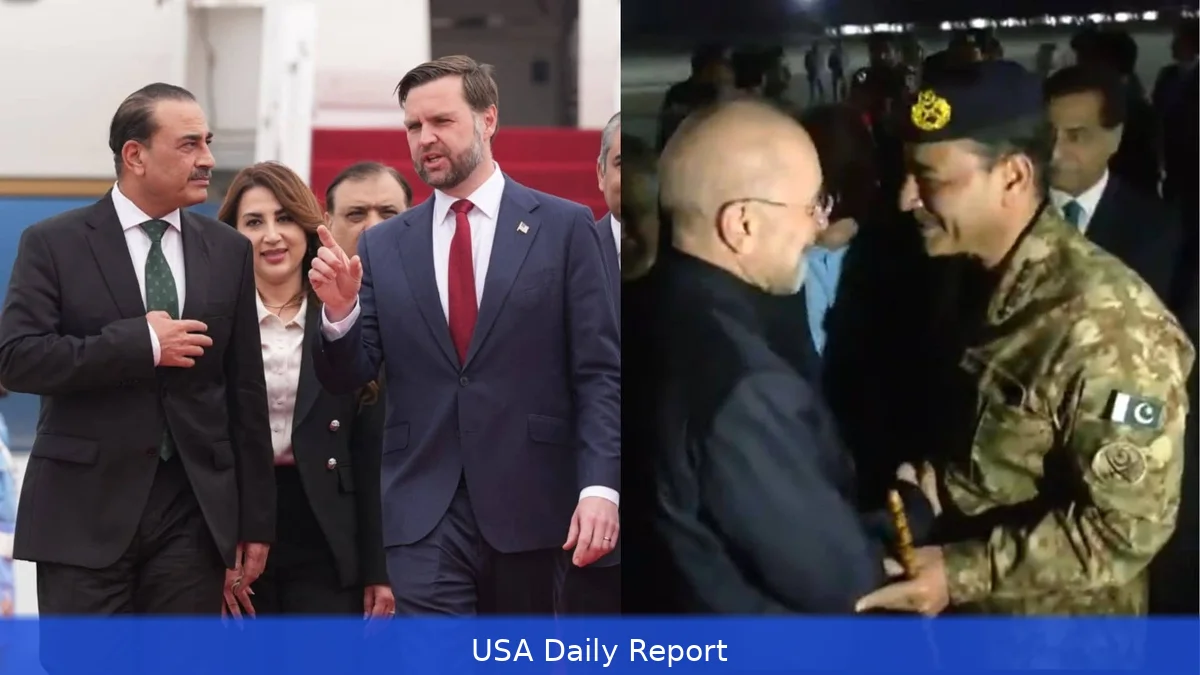
Negotiators left after 21 hours in Islamabad. No deal was reached to make the ceasefire permanent.
Stalled diplomacy after one long day
The 21-hour negotiating session in Pakistan's capital ended with no agreement to end the fighting that has raged for more than six weeks. Vice President JD Vance, who led the U.S. Delegation, said the United States had presented what he called a final proposal before departing Islamabad.
The talks' length showed a rare moment of direct diplomacy between Washington and Tehran, even though they failed to produce a settlement. Pakistan's Foreign Minister Ishaq Dar said Islamabad will keep acting as a venue and facilitator for future talks.
Each side accused the other of wrecking the chance for a permanent ceasefire. Those mutual accusations threaten a fragile pause in large-scale strikes and counterstrikes, which have already killed thousands and shaken global energy markets.
Diplomats and officials were blunt about the outcome. "We leave here with a very simple proposal, a method of understanding that's our final and best offer," Vance told reporters before boarding his flight out of Pakistan. He added that he had been in frequent contact with President Donald Trump and senior members of his national-security and economic team during the negotiations.
What U.S. Envoys said
Vance spoke publicly flanked by special envoys Steve Witkoff and Jared Kushner. He said he had been in touch repeatedly with President Trump, Secretary of State Marco Rubio, Treasury Secretary Scott Bessent and Brad Cooper, the head of U.S. Central Command, while the talks were under way.
"We were negotiating in good faith," Vance said, according to his remarks in Islamabad. He warned that failure to clinch a deal was bad news — and he framed that cost as falling more heavily on Iran than on the United States.
Trump himself signaled a tough posture during the talks. The president said Washington had achieved battlefield gains, citing strikes that killed Iranian leaders and damaged military facilities. "Whether we make a deal or not makes no difference to me … because we've won," he said while the negotiations continued.
Tehran's reaction and public mood
Iran's Foreign Ministry spokesman Esmaeil Baghaei told state media that no one had realistically expected the talks to conclude with a final agreement in a single session. Baghaei's comments were carried by Iran's IRIB broadcaster and reflected the view that diplomacy could require multiple rounds.
On the streets of Tehran, residents expressed a mix of skepticism and cautious hope after weeks of air strikes and other attacks that have left widespread destruction, according to reporting from The Associated Press. More than 2,000 Iranians have been killed in the U.S.-Israel war on Iran, officials and local reporting say.
That public mood matters politically for Tehran's leaders. The government must weigh domestic pressure for both a durable halt to fighting and a posture that doesn't appear to have conceded key demands — a balancing act that helps explain why negotiators didn't sign off on a single-session deal.

Military moves, denials and the Strait of Hormuz
The U.S. Military reported that two destroyers transited the Strait of Hormuz ahead of planned mine-clearing operations — a first since the war began. That movement was characterized by U.S. Officials as preparatory steps in contested waters that are vital to global shipping.
Iran's state media published a countering account, reporting that the country's joint military command denied the U.S. Claim about the transit. So public statements from both sides have contained competing versions of the same events, complicating efforts to build trust after the negotiations.
Actions such as the destroyer transit, and Tehran's denial of it, highlight how fragile the pause in major operations is. They also raise practical questions about how to secure sea lanes and carry out technical work such as mine-clearing when both parties are suspicious of each other's moves.
Energy markets and the wider economic ripple
Global oil and gas prices have climbed since the war began more than six weeks ago. That price pressure is one of the clearest economic consequences linked directly to the conflict, and it's a driver of the urgency behind talks that aim to stabilize the region.
Higher energy prices push up costs for households and businesses and spill over into financial markets. U.S. Policymakers and industry observers have watched those shifts closely while diplomats tried to lock in a more lasting halt to hostilities.
Administration figures involved in the talks included officials with responsibility for both security and economic policy — an indication that Washington tied battlefield and financial considerations together in Islamabad. The presence of top military and economic leaders at the negotiating table showed how intertwined the stakes had become.
How analysts read the failure
David Des Roches, a professor at the Thayer Marshall Institute, told Al Jazeera that Washington used the Islamabad talks to clarify its position while holding firm rather than changing course.
"There's a defining of the goalposts," Des Roches said, noting that the U.S. Laid out what it would and wouldn't accept.
That approach may have hardened Tehran's response. If each capital believes the other isn't willing to shift, then bridging the gap becomes harder. And repeated rounds of blame after an unsuccessful session tend to erode the political capital needed to bring skeptical domestic audiences on board for compromise.
Still, Pakistan's offer to keep hosting talks preserves a diplomatic path forward. Negotiations rarely move in a straight line; they typically need several rounds to bridge key gaps.ey can stall and then resume under new conditions. The question now is whether either side will return to the table with new incentives or red lines softened.
What the U.S. Faces at home
The failed session puts the U.S. Government in a delicate political spot. The administration can point to battlefield gains and to the fact it showed up at the negotiating table. But it also must live with an outcome that risks renewed fighting and continued pressure on energy prices.
That tension plays out in Washington policy circles and on Capitol Hill. Officials who backed talks will have to explain why a prolonged ceasefire wasn't secured, while critics will seize on the lack of a deal to argue for tougher measures or a different strategy.
And U.S. Commanders remain active in the region — coordinating military movements and, as officials said in Islamabad, overseeing operations intended to keep shipping lanes safe and address threats such as sea mines. Those activities will continue to be watched closely in the U.S. And abroad.
Bottom line: diplomacy took a step forward by creating a direct channel, but the step didn't go far enough to lock in peace.
Related Articles
- Iraqi Parliament Picks Kurdish Politician Nizar Amidi as President, Ending Months-Long Deadlock
- Asha Bhosle, Bollywood’s iconic voice, dies at 92
- Orbán’s 16-year rule on the line as Hungary votes in a tense, unpredictable election
"The bad news is that we haven't reached an agreement, and I think that's bad news for Iran much more than it's bad news for the United States of America," said Vice President JD Vance.
This article was created with AI assistance.


